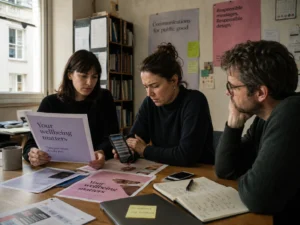
Co-creation in international cultural projects: five steps to putting it into practice
Co-creation becomes meaningful when partners know what they can influence, have the resources to participate and can see the impact of their contribution.
Sharing knowledge and experiences to transform your communication

Co-creation becomes meaningful when partners know what they can influence, have the resources to participate and can see the impact of their contribution.

Culture can leave more than visibility behind. When it provides access, continuity and decision-making power, it creates valuable conditions for democratic life.

Saying AI was used is not enough. This article explains when to disclose it, what a useful notice should include and how to document human review.

The EU AI Act for communications teams is about more than learning new tools. This guide explains the 2026 requirements and how to turn them into clear rules for use, review and transparency.

A decision may be well-founded yet still come across as poorly explained. This happens in a call for proposals where

A campaign can carry a responsible message while being distributed through an experience that pressures people. Trust is also designed.

Cultural practices can support civic repair by creating recognition, shared presence and institutional learning without reducing culture to propaganda.

Media literacy should not sound like a lecture. Its value lies in helping people read, question, verify and participate more thoughtfully. Spotting a hoax is the starting point, not the destination.

Diverse voices in a multi-stakeholder programme are not the problem. The problem is the absence of an architecture that organises them without silencing them. How to design narrative coherence when multiple actors, logics and audiences must communicate the same programme without fragmenting or becoming uniform.

Institutions keep designing messages for public feeds while their audiences make decisions in WhatsApp groups no institutional algorithm can reach. The problem is not technical. It is a question about how trust works when public visibility disappears and what remains are relationships.

When a deepfake involving your organisation surfaces, the first instinct is to treat it as a technical emergency. But what determines the real damage is not the fake content itself — it is what your organisation does, or fails to do, in the hours that follow. That is a communication decision.

Is your team already using AI without clear rules in place? This practical guide shows how to build an AI editorial policy for communication: what to allow, who reviews it, and how to disclose its use without putting trust at risk.

A story can work and still cause harm. This practical guide helps you gather and publish testimonies with real consent, context and dignity, without turning people into “communication material”.

When you need to make better decisions in institutional communication, you don’t need a huge survey. With light, ethical methods you can spot frictions, misunderstandings and useful signals—and turn them into concrete tweaks to message, channel and coordination.

Ever written a methodology that sounds “perfect”… and then dies in the first implementation meeting? Here’s a 7‑block backbone and a final checklist to make it practical, measurable, and actually doable.