It’s a familiar scenario. Several people are connecting from different cities and time zones. A name, a timetable, a budget and several commitments made to the funder are already on the table.
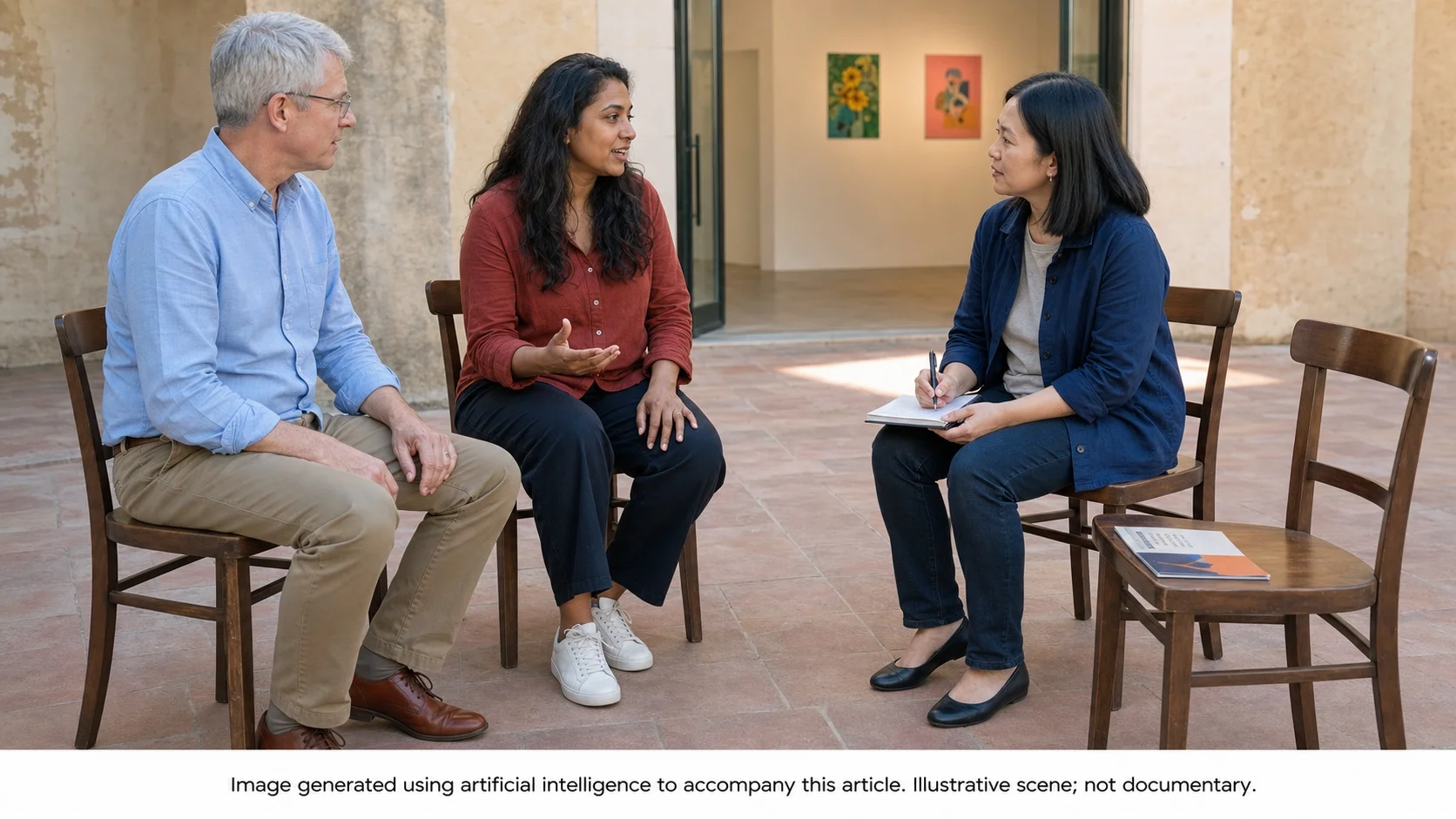
The meeting begins with a promising statement: “We want to co-create this project with you.”
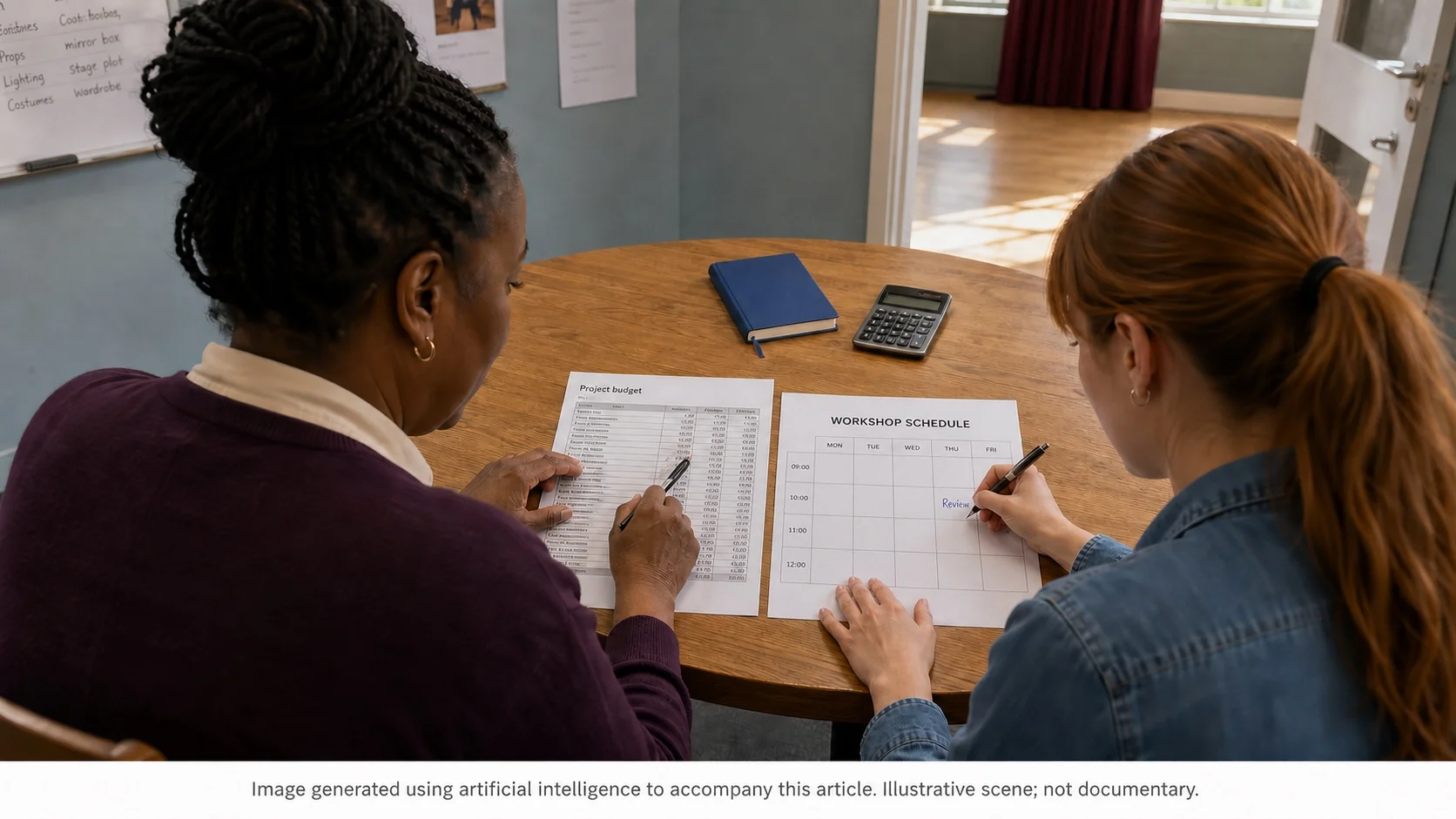
Ideas, questions and proposals start flowing. As the conversation progresses, it becomes clear that there is little room for manoeuvre on certain decisions. Perhaps an activity can be adapted, but the budget has already been allocated. Or a local organisation is asked to mobilise the community, even though it has not been involved in defining the project’s purpose.
The conversation can still be useful. It also reveals an important discrepancy: the number of people invited, and the workshop’s positive atmosphere say little about the influence they will have afterwards.
Co-creation in international cultural projects becomes credible when partners are involved at every stage, know which decisions they can influence, have the resources to participate, and recognise the impact of their contributions on the outcome. Legal, budgetary or institutional constraints can form part of the process, provided they are clearly explained.
In short, co-creation means sharing influence over relevant decisions and creating the conditions to exercise that influence. To put this into practice, five issues need to be addressed: what can be changed, who is involved, how responsibilities are shared, what time and budget are required to sustain the work, and how the collaboration will be evaluated.
What does co-creation mean in an international cultural project?
Co-creation requires agreeing on the extent to which decisions are made jointly.
In a consultation, an organisation listens to input but retains the final decision. In co-design, various parties jointly define objectives or activities. Co-production involves sharing both the implementation and the creation of outcomes. Joint governance extends that influence on priorities, resources and major changes.
These forms describe different degrees of influence; they do not constitute a universal scale. Furthermore, they can coexist within the same project.
An institution may need to retain legal responsibility whilst, at the same time, sharing decisions on artistic, budgetary or communication matters. The important thing is to explain honestly what degree of influence exists at each stage.
A clear consultation can be more respectful than a so-called ‘co-creation’ with no scope for change.
The Organisation for Economic Co-operation and Development (OECD) guidelines on participation offer a useful reference: these processes require scope for influence, clear expected outcomes, time, resources and subsequent feedback on how the contributions have been used.
Building on this, I propose organising the design around five decisions.
Decision 1: clarify what can be changed
Before inviting partners or participants, it is advisable to draw up a decision map.
Can they influence the problem the project will address? The artistic approach? The activities, the audiences, the timetable or the budget? Will they be involved in communication and evaluation? Which elements are determined by the call for proposals, the contract or legal liability?
In any project, they are set in advance. These constraints may be reasonable and even necessary. The difficulty arises when partners only find out too late, after participating with the expectation that they could still influence them. Frustration then stems from the gap between the scope that seemed open and the scope that existed.
It is advisable to explain this from the outset: ‘This objective has already been agreed, but we can decide together on the activities, the allocation of resources and how to present the results.
It is also worth explaining what has happened to the proposals received. When an idea cannot be incorporated, the team should explain why and highlight which contributions have shaped the project. This way, those who took part can recognise the impact of their input, even if the outcome does not include all proposals.
Decision 2: deciding who takes part and when they join the process
When a local partner joins after the main decisions have been taken, their scope is usually limited to adapting or developing activities that have already been defined. Their knowledge can greatly improve the outcome, but it comes too late to shape the purpose and priorities.
Involving them from the earliest stages allows discussion of that purpose, identification of flawed assumptions, and adaptation of the design to the context. It also helps to identify which people and which perspectives are still missing.
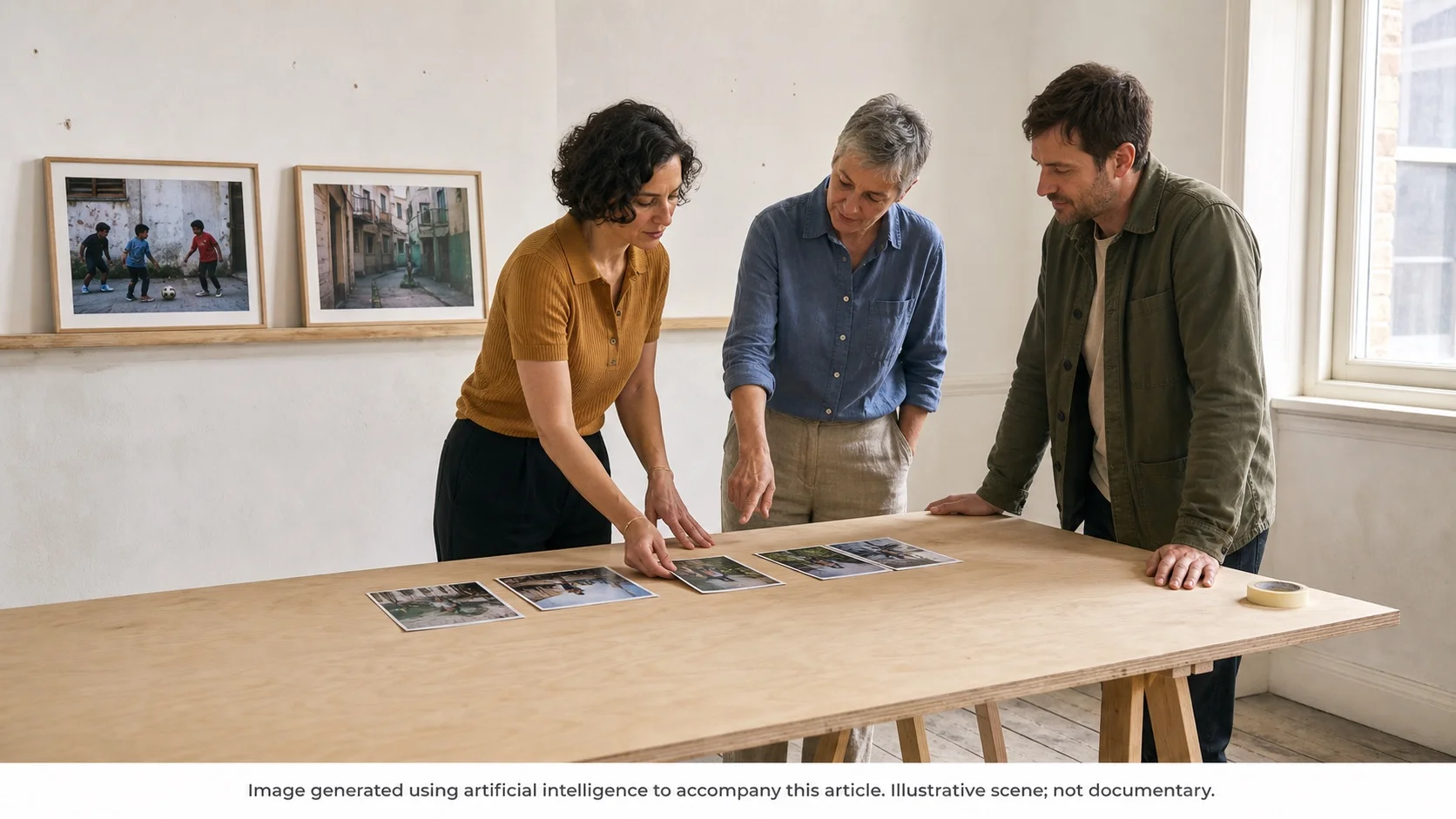
Here, representation and influence must be analysed separately. A person may appear in every photograph yet still have little say in decisions. An organisation may also be treated as the voice of a much more diverse community.
The European Union National Institutes for Culture (EUNIC) framework on fair collaboration calls for a review of the inequalities and power dynamics present in cultural relations. Its materials apply this reflection to different stages of the project, from preparation through to evaluation.
In practice, participation requires translation, accessibility, connectivity, preparation time, travel and compatible timetables. An invitation that does not meet these conditions limits participation to those who can afford the associated costs.