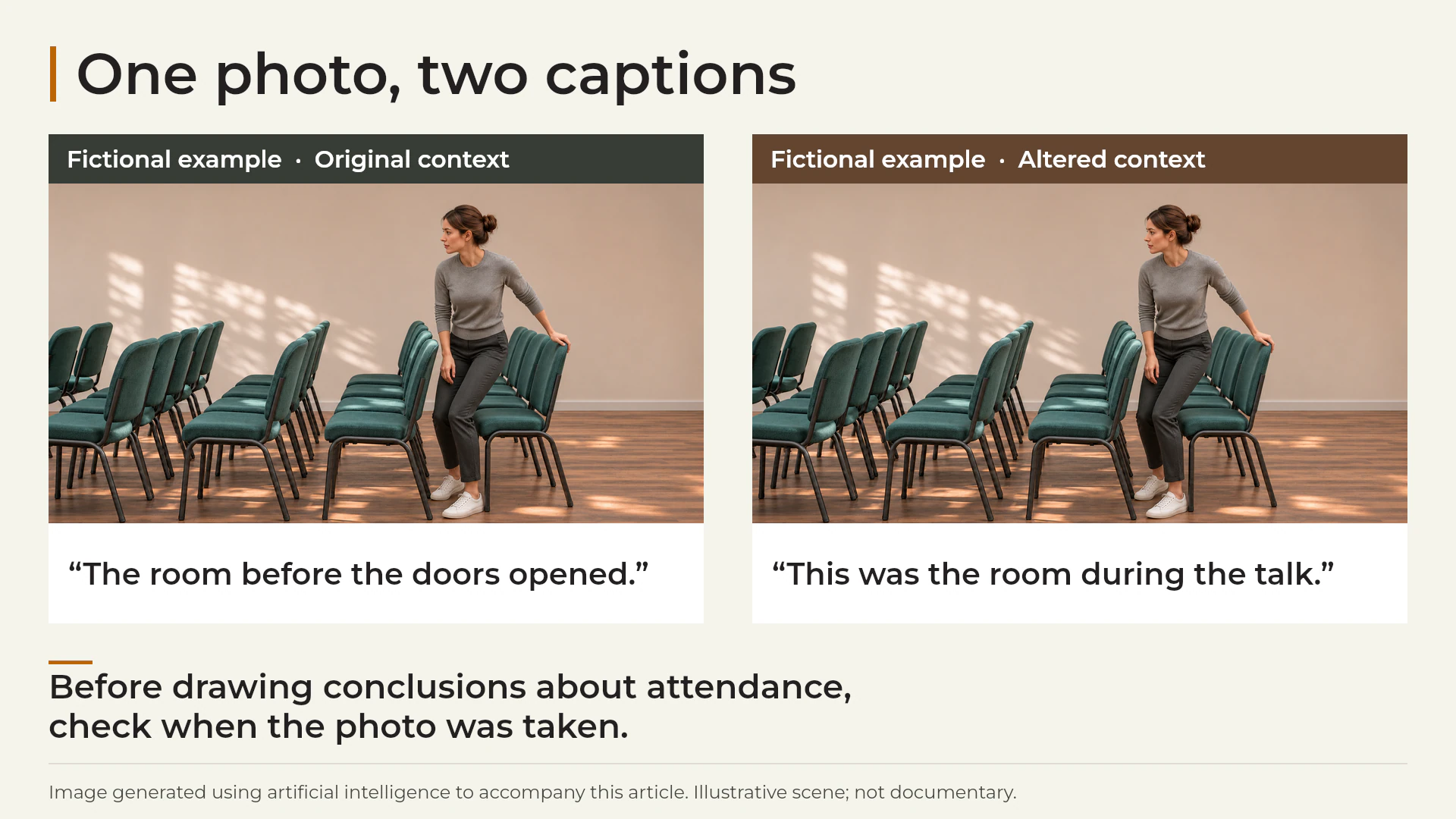
When an organisation prepares a consultation or announces a programme, it is understandable that it would want to stay one step ahead of misleading information. Decisions need explaining, people may be affected, and teams need to respond consistently. The difficulty arises when interpreting the public’s doubts: some stem from deception; others, from an incomplete explanation or a disagreement that deserves to be heard.
Prebunking involves preparing people to recognise misleading arguments or manipulative techniques before they encounter them. For those in charge of institutional communication, effectiveness depends on carefully selecting what to anticipate, verifying it, and keeping the conversation open about the institution’s own actions. A preventative campaign must fit within that relationship with the public.
Before acting, understand where the doubts come from
Imagine several universities in different countries launching a scholarship programme. Before opening the call for applications, their teams receive questions about who will be eligible to apply, how applications will be selected, and why certain requirements have been chosen. They want to prepare a communication strategy to avoid confusion and worry that misleading messages may already be circulating.
In such a situation, it would be wise to examine the questions before deciding on a campaign strategy. Perhaps one university still lists conditions on its website that the others have already corrected. Perhaps the requirements are correct, but difficult to understand. Some people may understand them perfectly well but still consider them unfair. Each possibility requires a different response.
A contradiction between channels requires a correction; an insufficient explanation, greater clarity; a disagreement, reasons and space to discuss them. If, furthermore, someone might take a statement out of context and attribute a different meaning to it, prebunking can teach people to recognise this tactic and seek out the full statement.
I think it is important to pause here because preventing disinformation can miss the mark if an uncomfortable question ends up being interpreted as a problem with the public. Before preparing a campaign, we need to clarify what the public needs to know and what the organisation can address. In my work advising on communication strategy, I help teams analyse these needs and define their priorities before deciding what actions to take.
To begin, review the questions received via customer service channels and speak to some of the people the programme is aimed at. Applied research methods in institutional communication help to link these queries to changes in messaging, channels or coordination. This information will enable you to decide whether a preventative intervention is needed and what it should address.
What prebunking offers and when it is best used
One benefit is teaching people to recognise mechanisms that may recur across different messages. For example, an authentic photograph may be used to describe an event that took place elsewhere or on a different date. A preventative piece can show how its meaning changes and explain what to look for to recover the original context.
The learning goes beyond simply remembering that a particular photograph was misleading: it enables people to know what to check when faced with a similar one. Recognising a sign of manipulation is a reason to scrutinise the message more closely and find out whether it contains false, incomplete or out-of-context information.
Prebunking anticipates, whilst debunking corrects a falsehood that the person has already received or that is currently circulating. They can coexist within the same strategy. An experiment published in 2024 involving 5,228 participants from four European countries found favourable results with both approaches. In the messages about climate change and COVID-19 studied, correction had a slight advantage on some measures.
For an organisation, this allows for different responses depending on the situation. If it can anticipate misinformation relevant to its audience, it makes sense to prepare a preventive explanation. If a falsehood is already affecting specific decisions, people will also need clarification on what is happening.
How to prevent misinformation without treating the public condescendingly
Someone who shares a misleading message may be trying to help another person. They may be concerned about a grant, a service or a decision affecting their community. Recognising this possibility changes how you address them: it is more respectful to examine what information is missing together than to start by pointing out their lack of judgement.
The practical guide from Cambridge, BBC Media Action and Jigsaw recommends getting to know your audience and avoiding a patronising tone. One way to apply this to institutional work is to test the message with some intended recipients and listen to their reasoning. If they interpret the message differently from what was intended, the team will have an opportunity to revise the explanation before disseminating it.
In an international programme, such testing can also reveal whether a particular expression sounds odd in another language or whether an example requires context that part of the audience may not know. Partners working closely with these people should be able to contribute to this review. To do so, they need to know which aspects can be adapted and whom to consult if they identify a fundamental issue.
Acknowledging emotions without pressuring the audience
Understanding someone’s fear of losing a scholarship helps us see why they pay attention to certain messages. An institution can acknowledge that concern and respond with specific information: the requirements, what is still pending, and where they can get their questions answered.
The problem arises when that concern is used to secure support. Consider a message such as ‘if you care about young people’s future, you will support this programme’. Anyone who questions the selection criteria may feel they must also defend their concern for young people, even if they have never doubted it. The conversation shifts: instead of examining whether the criteria are appropriate, it ends up judging the person based on whether or not they agree.
A person may support a programme’s aim while disagreeing with how it has been designed. Allowing space for that difference lets them talk about what really concerns them and put forward reasons the other person can consider. Emotion can help explain why a decision matters; claims about that decision need to be backed up by information that the public can verify.
Explaining the deception without giving it unnecessary publicity
The team must also decide how much they need to show for the public to understand the technique. If a neutral photograph accompanied by two different descriptions is sufficient, there is no need to reproduce an actual accusation or name the person who shared it. The exercise can begin by presenting the warning about the deception, showing the change in context, and concluding by restoring the original information.