Expert
Addictive design and public trust: what communications teams need to know
A campaign can carry a responsible message while being distributed through an experience that pressures people. Trust is also designed.

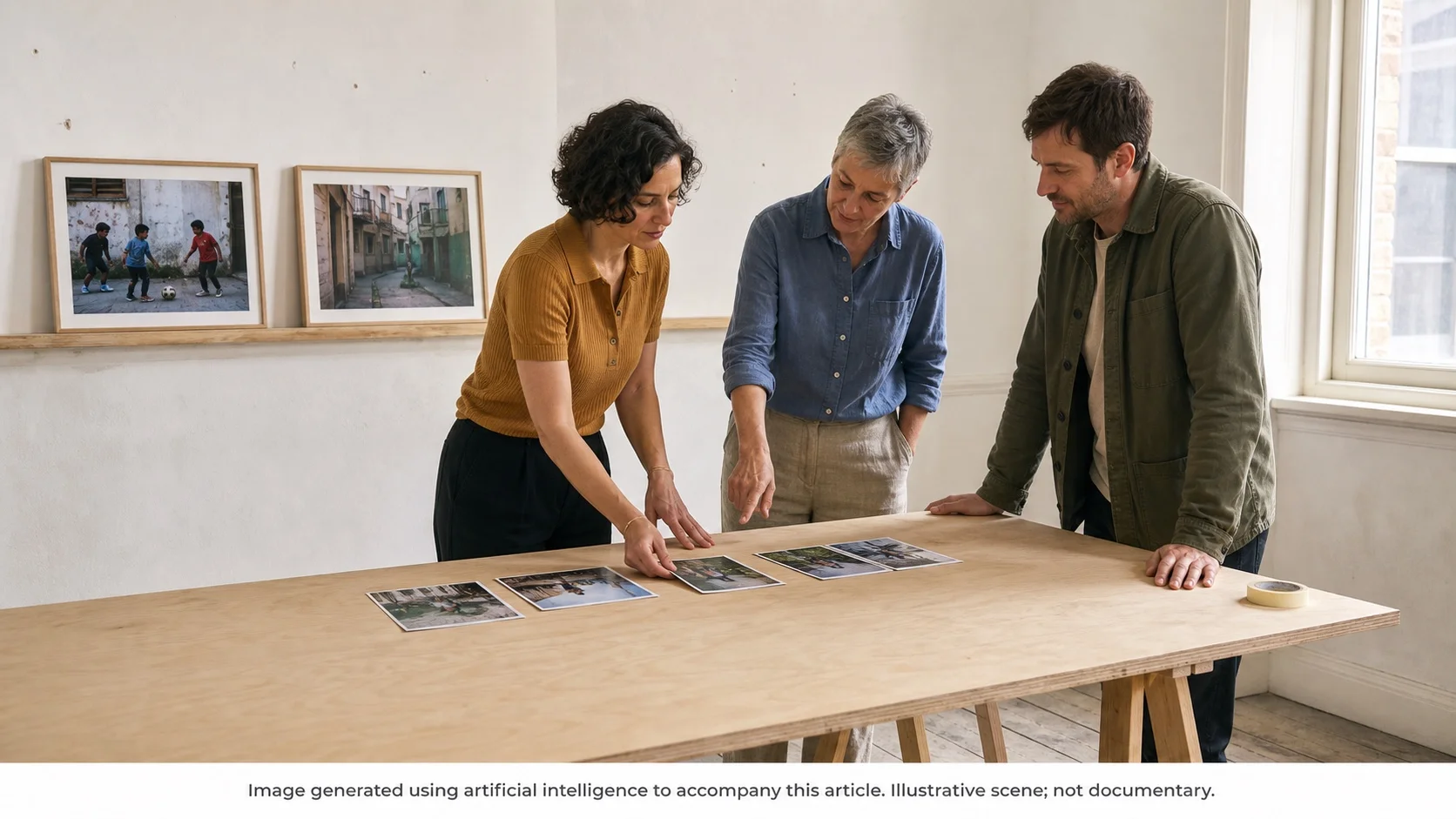
It’s a familiar scenario. Several people are connecting from different cities and time zones. A name, a timetable, a budget and several commitments made to the funder are already on the table.
The meeting begins with a promising statement: “We want to co-create this project with you.”
Ideas, questions and proposals start flowing. As the conversation progresses, it becomes clear that there is little room for manoeuvre on certain decisions. Perhaps an activity can be adapted, but the budget has already been allocated. Or a local organisation is asked to mobilise the community, even though it has not been involved in defining the project’s purpose.
The conversation can still be useful. It also reveals an important discrepancy: the number of people invited, and the workshop’s positive atmosphere say little about the influence they will have afterwards.
Co-creation in international cultural projects becomes credible when partners are involved at every stage, know which decisions they can influence, have the resources to participate, and recognise the impact of their contributions on the outcome. Legal, budgetary or institutional constraints can form part of the process, provided they are clearly explained.
In short, co-creation means sharing influence over relevant decisions and creating the conditions to exercise that influence. To put this into practice, five issues need to be addressed: what can be changed, who is involved, how responsibilities are shared, what time and budget are required to sustain the work, and how the collaboration will be evaluated.
Co-creation requires agreeing on the extent to which decisions are made jointly.
In a consultation, an organisation listens to input but retains the final decision. In co-design, various parties jointly define objectives or activities. Co-production involves sharing both the implementation and the creation of outcomes. Joint governance extends that influence on priorities, resources and major changes.
These forms describe different degrees of influence; they do not constitute a universal scale. Furthermore, they can coexist within the same project.
An institution may need to retain legal responsibility whilst, at the same time, sharing decisions on artistic, budgetary or communication matters. The important thing is to explain honestly what degree of influence exists at each stage.
A clear consultation can be more respectful than a so-called ‘co-creation’ with no scope for change.
The Organisation for Economic Co-operation and Development (OECD) guidelines on participation offer a useful reference: these processes require scope for influence, clear expected outcomes, time, resources and subsequent feedback on how the contributions have been used.
Building on this, I propose organising the design around five decisions.
Before inviting partners or participants, it is advisable to draw up a decision map.
Can they influence the problem the project will address? The artistic approach? The activities, the audiences, the timetable or the budget? Will they be involved in communication and evaluation? Which elements are determined by the call for proposals, the contract or legal liability?
In any project, they are set in advance. These constraints may be reasonable and even necessary. The difficulty arises when partners only find out too late, after participating with the expectation that they could still influence them. Frustration then stems from the gap between the scope that seemed open and the scope that existed.
It is advisable to explain this from the outset: ‘This objective has already been agreed, but we can decide together on the activities, the allocation of resources and how to present the results.
It is also worth explaining what has happened to the proposals received. When an idea cannot be incorporated, the team should explain why and highlight which contributions have shaped the project. This way, those who took part can recognise the impact of their input, even if the outcome does not include all proposals.
When a local partner joins after the main decisions have been taken, their scope is usually limited to adapting or developing activities that have already been defined. Their knowledge can greatly improve the outcome, but it comes too late to shape the purpose and priorities.
Involving them from the earliest stages allows discussion of that purpose, identification of flawed assumptions, and adaptation of the design to the context. It also helps to identify which people and which perspectives are still missing.
Here, representation and influence must be analysed separately. A person may appear in every photograph yet still have little say in decisions. An organisation may also be treated as the voice of a much more diverse community.
The European Union National Institutes for Culture (EUNIC) framework on fair collaboration calls for a review of the inequalities and power dynamics present in cultural relations. Its materials apply this reflection to different stages of the project, from preparation through to evaluation.
In practice, participation requires translation, accessibility, connectivity, preparation time, travel and compatible timetables. An invitation that does not meet these conditions limits participation to those who can afford the associated costs.

An international project usually requires a lead organisation. Someone must sign the contract, receive the funds and report to the funder. That administrative responsibility does not determine who sets the direction.
The British Council’s guide ‘Connections Through Culture 2026’ explains this clearly: having a lead partner does not mean that a single party shapes the project. The programme calls for prior agreement on roles, budget, decision-making, intellectual property and mechanisms for resolving conflicts.
The working agreement should clarify who proposes, who decides, who approves and who implements. These roles may vary depending on the subject matter. The artistic team may decide on the creative process; the local organisation, on community engagement; and the contractual partner, on matters affecting compliance with the grant conditions.
Another British Council study of ten international collaborations identified joint decision-making, shared ownership of outcomes and a fair distribution of funding as factors that helped to build trust. Whilst this is a limited sample, it links the quality of the relationship to specific governance decisions.
It is also advisable to agree on the authorship of the outcomes, the subsequent use of images and materials, and how to acknowledge the expertise contributed by each partner.
At the start of a collaboration, when enthusiasm is still high, it may seem unnecessary to discuss potential disagreements. However, agreeing on who will mediate, how a decision will be reviewed and what will happen if the partners cannot reach an agreement provides a common framework for managing tensions. This prevents the first conflict from revealing a hierarchy that had never been made explicit.
The budget shows very clearly how power is distributed.
If one organisation chairs the meetings, manages the funds, and receives the lion’s share of the resources, while another translates, recruits participants, and receives the lion’s share of the resources, and another translates, recruits participants, and contributes expertise without equivalent remuneration, the relationship can hardly be considered reciprocal.
The recommendations published by EUNIC for the 2026 Spaces of Culture call for the budget to reflect activities, roles and responsibilities. They also highlight the need to include contingencies and to consider equitable remuneration between local and European partners.
In its 2026 call for proposals, the British Council proposes a 50/50 split for ‘Connections Through Culture’, where appropriate and realistic. If the split is different, it asks for an explanation of why it remains fair and proportionate.
That figure relates to a specific programme. The question – which can be applied to other contexts – would be this: does the split correspond to the work, responsibility and circumstances of each partner?
The budget should cover coordination, translation, accessibility, travel, visas, preparation, evaluation and time spent engaging with communities. It also matters when the money arrives and who to cover expenses in advance.
Time also distributes power. Requesting urgent approval leaves little room for discussion. Co-creation requires time to understand, negotiate, test and refine.
The number of attendees, publications, or social media reach explains part of the project. They say little about how decisions were made or whether the collaboration was reciprocal.
A more comprehensive evaluation might ask which proposals changed the design, how much leeway the partners felt they had, how resources and authorship were shared, whether to voice disagreements, and which relationships continued afterwards.
The Europeana Impact Playbook recommends incorporating qualitative metrics – for example, relating to learning – to complement figures such as visitor numbers or social media interactions. It also suggests integrating diverse perspectives into the various stages of the evaluation.
This can be done through brief interviews, joint discussions, project diaries, records of decisions or evaluation sessions led by the partners themselves. Measuring qualitative aspects requires asking specific questions and documenting the responses.
The Connections Through Culture evaluation covered 137 projects across the UK and six countries in South-East Asia. Among those who responded to the questionnaire, 88 per cent stated that their relationship with their partner organisation was ongoing, and 82 per cent rated its fairness as high or very high.
These are perceptions reported by participants and should be read within that context. Nevertheless, they show that the continuity of the relationship and the perception of equity can be incorporated into the evaluation.
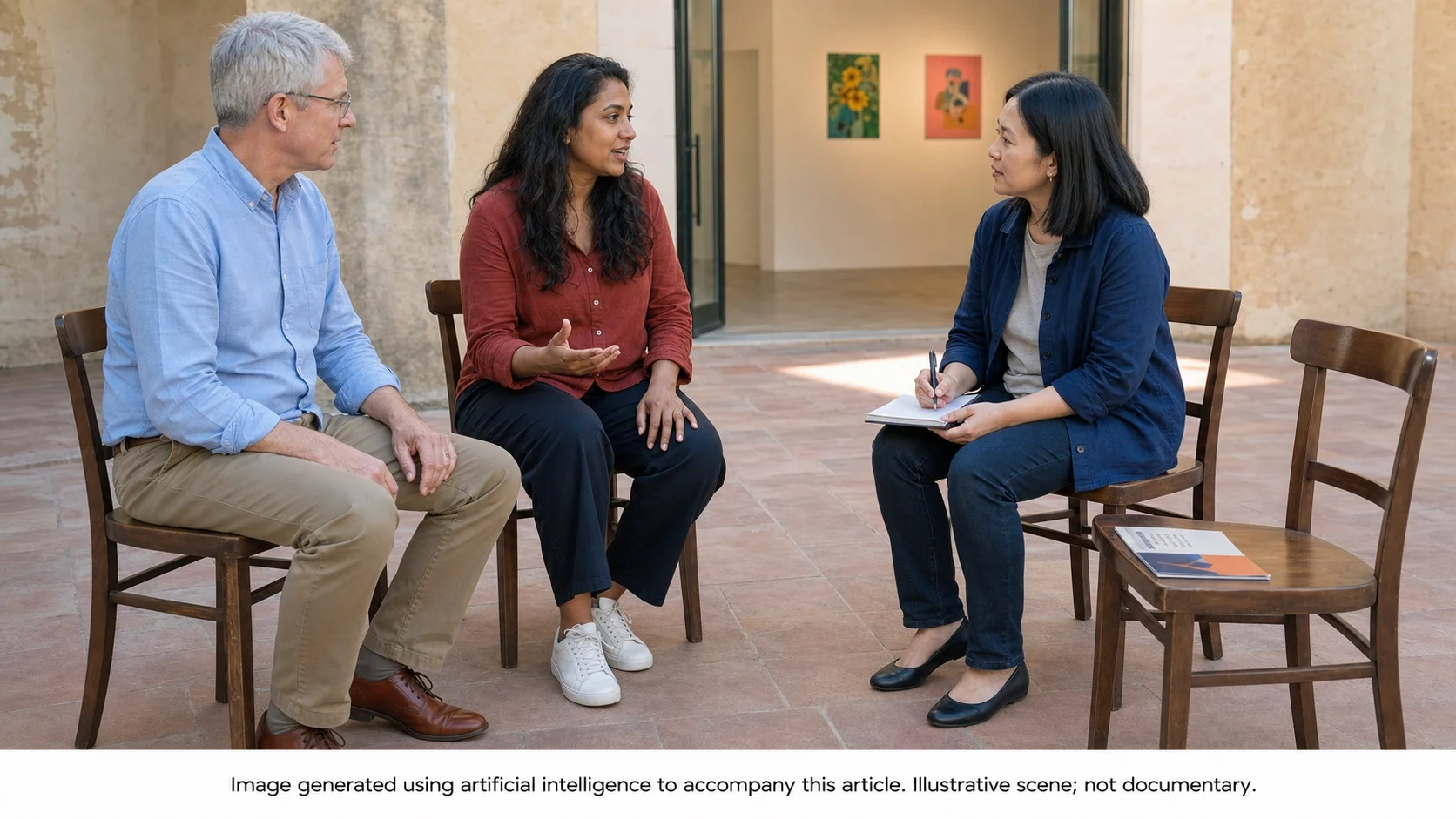
Co-creation is evident in the decisions that other people were able to influence and in the resources they contributed. A meeting or a note in the project log barely tells that story.
When boundaries are explained early on, roles are clear, and the budget supports each party’s work, collaboration becomes more consistent. The evaluation allows us to recognise what changed, what the partners learnt and whether the relationship has generated sufficient trust and capacity to continue. That continuity is also part of the outcome.
Before describing a project as co-created, it is worth asking a simple question:
What can others change, and with what resources can they do so?
If you work on international cultural projects and recognise this tension, I’d be interested to hear from you on LinkedIn: where is it most difficult to share decision-making – in the design, the budget, the timelines or the evaluation?
It can occur during problem definition, design, production, communication, resource allocation or evaluation. Each project may involve different degrees of shared influence depending on the phase.
It is advisable to make decisions jointly where the partners’ knowledge and experience are beneficial: objectives, activities, target audiences, creative approach, timetable, communication or evaluation.
Legal, contractual or budgetary constraints must be explained from the outset, along with the responsibilities retained by each party.
Roles should specify who proposes, decides, approves and implements each part. The budget should reflect the work involved, responsibilities, local costs and the capacity to take risks, as well as funding for coordination, translation, accessibility and evaluation.
There are clear signs: people arrive once decisions have already been finalised; their presence is visible, but their influence is difficult to identify; they work without sufficient resources; or they never receive any feedback on their contributions.
These include influence, the quality of mutual learning, the capacity to disagree, the changes introduced because of contributions, the distribution of authorship and resources, and the continuity of relationships after the project.
This article is based on a topic, approach and editorial criteria defined by me. Artificial intelligence tools were used in its preparation to support the research, organise the content and produce a first draft. Before publication, I reviewed the text to check the data, linked sources, context, tone and final wording. I, Laura Mellado, approve the published version and accept editorial responsibility for it.
A campaign can carry a responsible message while being distributed through an experience that pressures people. Trust is also designed.
Cultural practices can support civic repair by creating recognition, shared presence and institutional learning without reducing culture to propaganda.
Media literacy should not sound like a lecture. Its value lies in helping people read, question, verify and participate more thoughtfully. Spotting a hoax is the starting point, not the destination.