Expert
Culture as democratic infrastructure: what can contribute to public trust
Culture can leave more than visibility behind. When it provides access, continuity and decision-making power, it creates valuable conditions for democratic life.

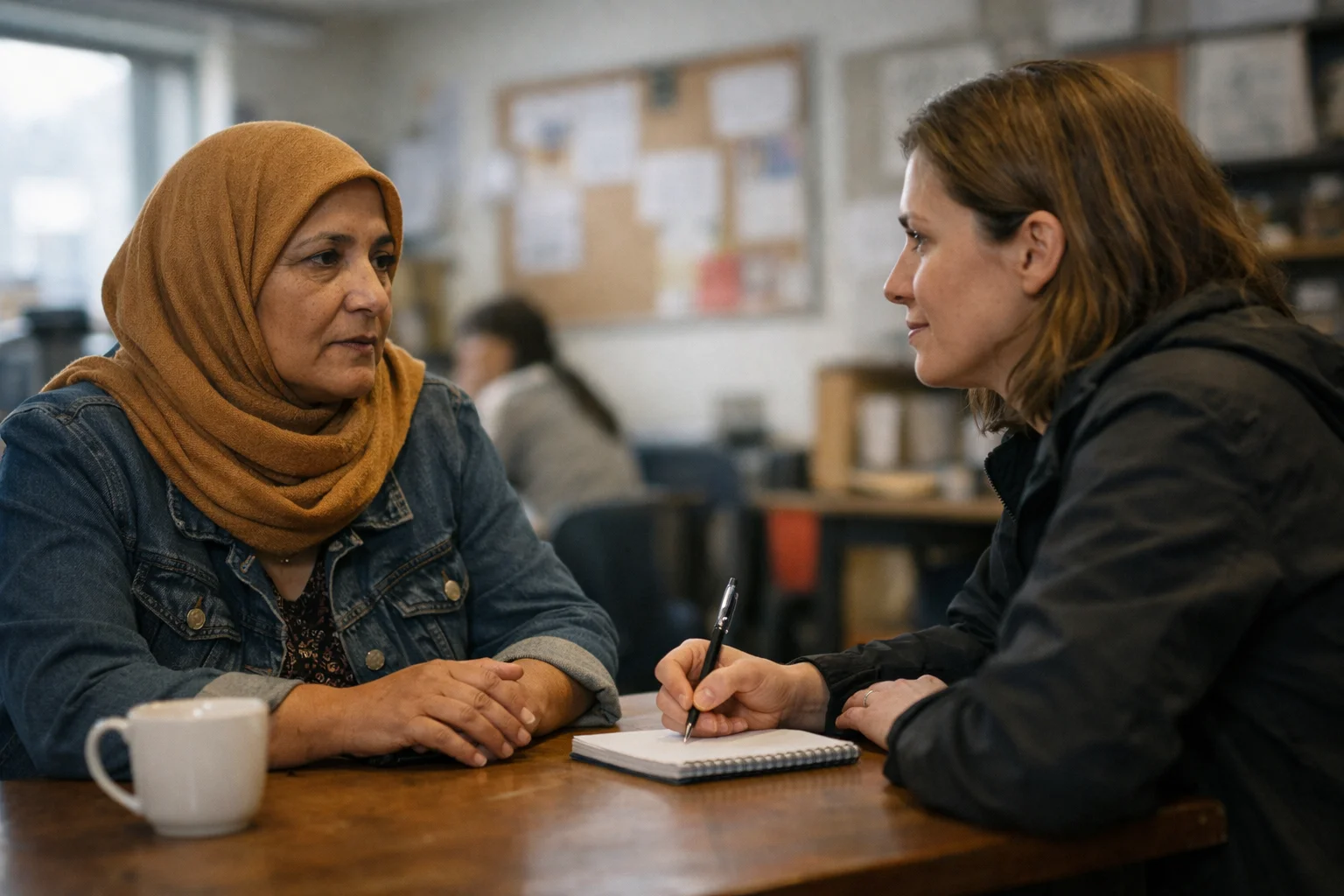
In social and cultural projects, testimonials work. Whether it is to explain a complex problem in two minutes, to bring a distant reality closer, or to bring a report to life. The risk is that when they work too well, they can also cause harm.
Harm to the person telling their story (through exposure, stigmatisation, or loss of control). Harm to their community (through simplification or a paternalistic view). Harm to the organisation (through loss of trust when someone feels that their voice was used as a resource).
This blog is not about storytelling or advocacy in the usual sense. It is about something else: ethical governance of human narratives.
In other words, clear rules for collecting, editing and publishing stories without turning people into communication material.
Most problems do not stem from bad intentions. They stem from haste, format and power imbalances.
A story that “works” usually has three ingredients: emotion, clarity and a narrative arc. But real life rarely fits into a narrative arc without cuts. That’s where the invisible risk comes in: to make it quick for the audience to understand, you simplify; to make the story impactful, you intensify; to make it shareable, you cut out context.
In 2024, the International Committee of the Red Cross (ICRC) published very clear guidelines on the ethical collection of content for public communication: dignity, care, informed consent, and special attention to vulnerable groups, including in the editing and post-production phase.
This approach puts the focus where it belongs: the problem is not “telling stories”, it is how you collect them and what consequences they have.
Another useful framework, widely used by international organisations, is the Dóchas Code of Conduct on the use of images and messages: it insists on respecting dignity, avoiding stereotypes or sensationalism, and representing situations in their context rather than as emotional postcards.
When this care is lacking, very specific things tend to happen:
None of this can be fixed with a “signed form” if the process is not dignified.
You don’t need a lengthy manual. You need six principles that you can always apply, even when time is short.
Real consent means that the person understands what will happen to their story.
They understand where it will be published, for how long, whether there will be translations, whether it may circulate beyond your control, and whether there is an option for anonymity.
The ICRC emphasises informed consent as a basis and reminds us that extreme care must be taken with vulnerable groups.
And, from a legal standpoint, the European General Data Protection Regulation (GDPR) provides a very useful idea for communication: withdrawing consent should be as easy as giving it.

A trick that works: instead of asking “Do you agree?”, ask “How do you understand this?” If they cannot explain it in their own words, there is no real consent.
Decision-making capacity means that the person decides what counts, what does not count and how they are referred to. It also means that you do not push the story towards the script that suits you.
If the testimony only shows deprivation, suffering or dependence, there is a lack of autonomy and voice. Dignity is not “talking nicely”: it is about showing respect to the person with decision-making capacity, even in difficult contexts.
This aligns with good journalistic practices when working with minors: UNICEF insists on representing without compromising rights or well-being, and on protecting children and young people in particular in its reporting.
The Dóchas Code states it bluntly: the situation must be represented in its immediate and broader context to improve understanding and avoid messages that stereotype or discriminate.
Context does not mean adding an academic paragraph. It means the minimum necessary to prevent the public from drawing false conclusions. For example:
Context also protects the person: it prevents it from appearing to be “individual blame”.
Some words stick. “Vulnerable”, “beneficiary”, “marginalised”, “without resources”. Some are useful in reports, but in public communication, they can fix identities.
Not stigmatising means reviewing language and framing so that it does not reduce the person to one trait: poverty, migration, disability, trauma.
If in doubt, try this question: would that person like to be presented that way in a room with their community? If the answer makes you uncomfortable, it’s time to rewrite.
This principle prevents much long-term damage. People change their minds. Their context changes. Their risks change.
The GDPR explicitly includes the right to withdraw consent at any time and the idea that withdrawing consent should be easy.
In communication, the practical standard would be: explain from the outset how to withdraw consent, who to write to, and what you can do (withdraw publication, delete from your own channels, stop future reuse).
Do not promise the impossible (you cannot control screenshots or reposts), but do promise what is within your power.
This point changes the tone of the entire relationship. Review means that the person sees (or hears) how their story will look before it is published, especially if it could affect their safety, reputation, or well-being.
Review is not “asking permission twice” for bureaucratic reasons. It is about avoiding surprises and correcting interpretations that, in editing, sometimes slip in without malicious intent.
Here is a simple process that you can apply whether you are conducting a written interview, recording a video, or taking photos.
Before talking to anyone, clarify three things internally:
Also, prepare a consent form in plain language—two paragraphs, not two pages. And define the “exit door” from the outset.
If there are minors or particularly vulnerable people involved, raise the standard. The International Federation of Red Cross and Red Crescent Societies (IFRC) reminds us that minors should not be interviewed or photographed without the prior consent of their legal guardian, and that even “anonymous” interviews can allow identification through details.

In the conversation, first explain the framework: where it will appear, what they can decide, and what they can stop.
Then let the person set the pace. Your role is to accompany, not direct. If you notice signs of discomfort, do not insist. And if the subject is sensitive, avoid questions that force them to relive the trauma “to make it more powerful”.
In photos and videos, this point is key: many people agree to be interviewed, but are not aware of what a public image entails. The ICRC insists on care also in the capture and subsequent processing of the material.
Before publishing, review with two pairs of glasses:
This is also where the level of identification is decided: real name, initials, pseudonym, visible face, blurring, modified voice. This is not paranoia: it is prevention.
When working with minors, UNICEF reminds us of the duty to protect their rights and well-being in the way they are represented.
Before publishing, share the final version with the person (when feasible) or, at a minimum, key excerpts and images. If they correct something, listen: they sometimes detect risks you don’t see.
After publishing, leave a channel open for revocation or adjustment. And archive the material carefully: who has access, where it is stored, and for how long.
This is governance: it’s not about “we’re good people”, it’s about ensuring that the system leaves no one unprotected.
About consent
On decision-making capacity
About context
On stigma and language
On security and privacy
About review
If this checklist forces you to rewrite a part, it is a good sign: you are taking dignity seriously.
Testimonials are not content for marketing and communication. They are people who lend you something fragile: their voice, their image, a part of their life. When the organisation manages it well, the story gains strength without losing its humanity. When it is managed poorly, the story may ‘work’ yet still cause damage.
If you feel like it, please tell me on LinkedIn what part you find most difficult when working on human stories: consent, the balance between emotion and context, or the final review before publication.
Culture can leave more than visibility behind. When it provides access, continuity and decision-making power, it creates valuable conditions for democratic life.

Saying AI was used is not enough. This article explains when to disclose it, what a useful notice should include and how to document human review.

The EU AI Act for communications teams is about more than learning new tools. This guide explains the 2026 requirements and how to turn them into clear rules for use, review and transparency.