Expert
Culture as democratic infrastructure: what can contribute to public trust
Culture can leave more than visibility behind. When it provides access, continuity and decision-making power, it creates valuable conditions for democratic life.

There are times when an institution can say the right thing and still fail to spark a conversation.
A statement can set out a position, clarify facts or demonstrate commitment. That matters. But when a community is riven by mistrust, grief, polarisation or conflicting memories, institutional words land on much more fragile ground.
That is where culture to repair the common space begins to make sense. As a practice capable of creating the conditions for people to see, hear and share spaces with one another again, before demanding agreements. It is neither window dressing nor a feel-good campaign.
Culture repairs when it helps to acknowledge experiences, hold difficult emotions and open a conversation that an official message, on its own, cannot contain. Its value lies not in quickly resolving the conflict, but in making it more bearable.
In 2022, UNESCO recognised culture as a global public good in the MONDIACULT 2022 declaration. The idea is important because it shifts culture from the secondary role to which it is often relegated: event, celebration, programme, agenda. It places it where it should be more often: at the heart of how a society acknowledges its memories, discusses its tensions and decides what it wishes to preserve.
The European Commission has also explored this relationship between culture and democracy. Its report Culture and Democracy: the evidence analyses how cultural participation connects with civic engagement, democratic life and social cohesion.
The useful question goes a little further than whether culture helps us communicate better. European evidence on culture, democracy and civic engagement points to something deeper: culture is also part of how a society builds bonds, trust and participation.
A press release sets out a position. A cultural practice can open a space.
The difference may seem small, but it greatly affects the kind of relationship built with a community. An institutional text usually speaks from a defined position: it explains, responds, clarifies, promises, condemns or informs. Sometimes this is necessary. The problem arises when that gesture, on its own, is expected to repair a damaged relationship.
There are public wounds that cannot be healed by information alone. They require time, presence and forms of expression that allow us to articulate what does not always fit within administrative language.
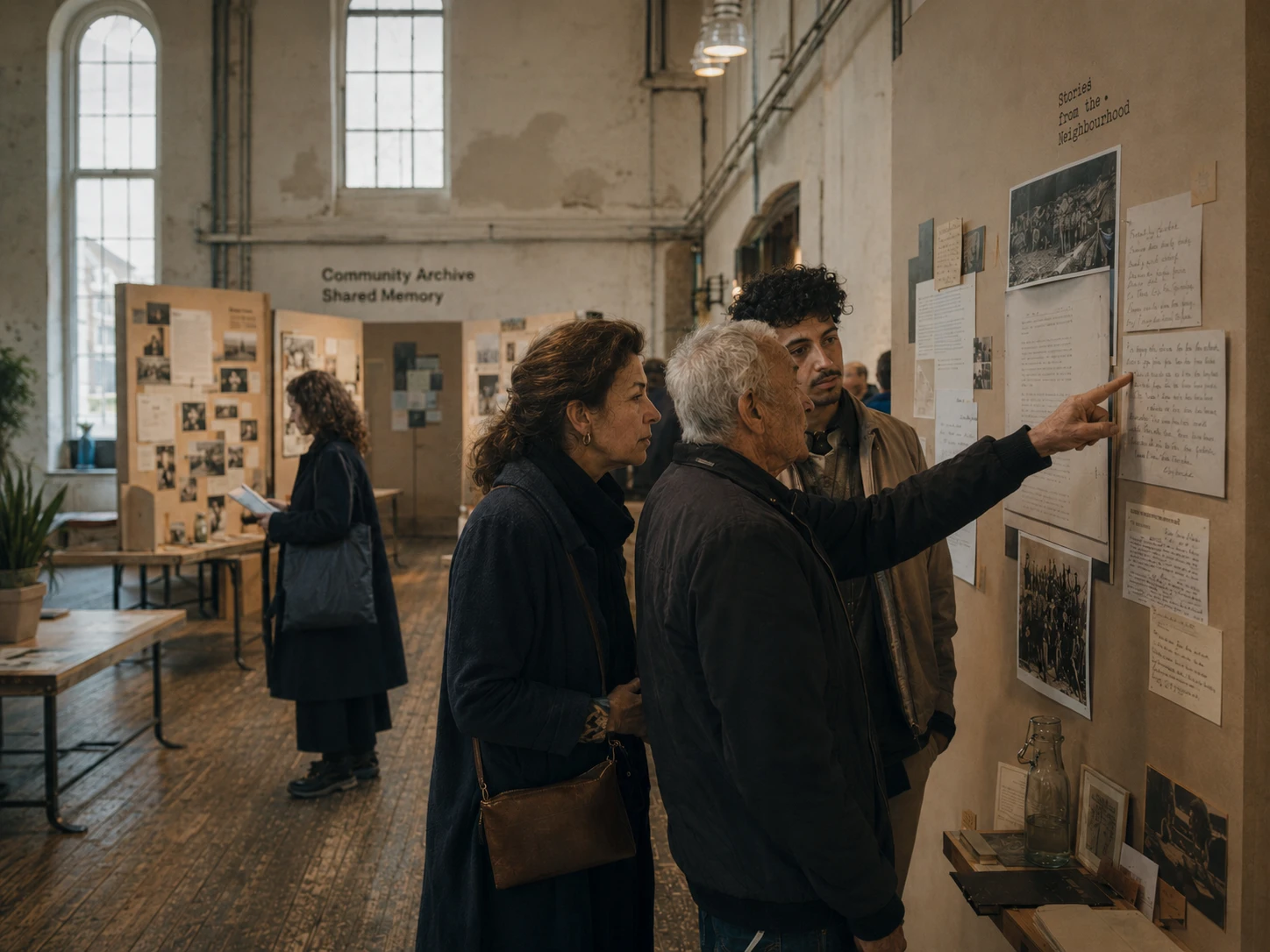
A community exhibition, a living archive, a public reading, an artistic project with young people, a play or a musical project can do something different: bring people together around a shared experience.
That kind of space does not force agreement, nor does it demand that the conversation be ended. Its value lies precisely there: it allows the response not to have to come immediately.
Culture can offer a kind of public pause. A place to look at a story from more than one angle. A language that allows us to say, “this happened to us”, “this hurt”, “this has not been heard” or “this is still here”, without turning it all into a slogan.
That is why, when discussing culture in public communication, it is wise to avoid a common temptation: treating it as a tool to defuse tensions.
When it is used to gloss over a conflict, the community usually picks up on it quickly and trust deteriorates even further. Its value lies not in hiding what is difficult, but in helping us to look at it more honestly.
The word “repair” can lead to misunderstandings. Repairing the common space does not mean erasing differences, forcing reconciliations or fabricating an image of harmony.
Sometimes, repairing starts with something much more basic: creating the conditions for a conversation to take place without breaking down within the first minute.
In polarised societies, wounded communities or institutions with low public trust may find that calling for dialogue too soon can sound almost aggressive. Some people still do not feel acknowledged. Others feel they are being asked to give in before they have even been heard. And many enter the public sphere tired of messages that talk of participation but already come with a prewritten conclusion.
Culture can help if it is carefully designed. It can open a middle ground between silence and confrontation. A space where a community does not have to resolve everything, but can begin to share something: a memory, a practice, a question, a presence.
This is important for institutions, NGOs and public communication teams because reparation is often confused with consensus.
Consensus may or may not be reached. Reparation, on the other hand, begins earlier: when people feel that their experience is included in the shared narrative.
Culture does not work by magic. When it works, it usually does so through quite specific mechanisms. Three are particularly useful for devising cultural initiatives aimed at trust, coexistence or participation: recognition, emotional complexity and co-presence.
The first mechanism is recognition.
A community may receive data, reports and official messages, and yet still feel that something essential is missing. Culture helps when it makes an experience visible without needing to be translated into technical language immediately.
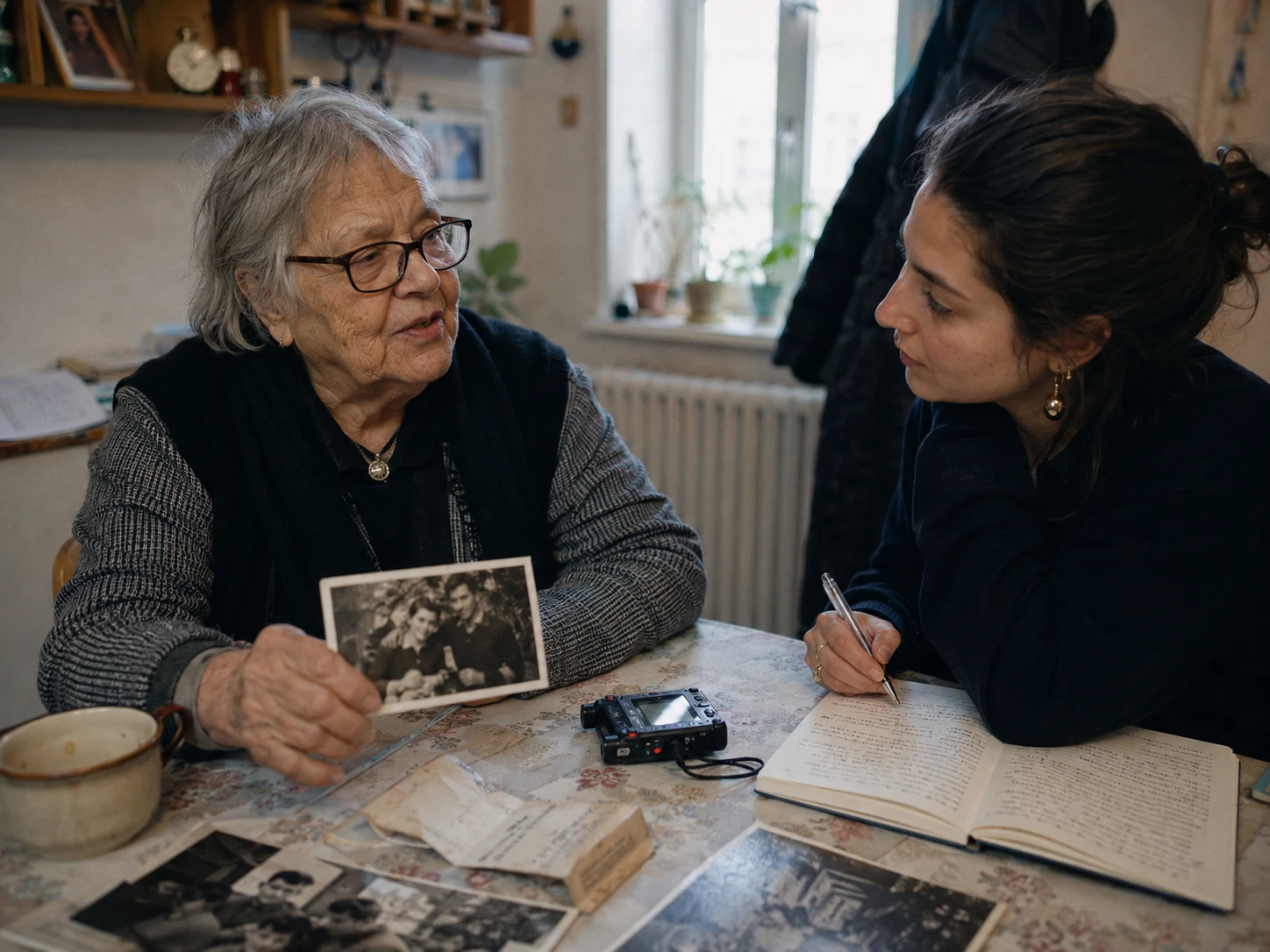
A photograph, a song, a community play, a staged testimony or an oral archive can capture aspects that a press release cannot adequately convey: a loss, a contradiction, a family memory, a sense of belonging, an old anger.
Recognition implies something more precise than simply validating any account without scrutiny. It implies accepting that people need information, as well as a space where their experience can enter the public conversation.
This carries great weight when an institution attempts to repair a damaged relationship. Saying “we listen” may be necessary, but it is not enough on its own. The relationship begins to change when people sense that something of what they experience, remember or fear has genuinely been considered.
The second mechanism is emotional complexity.
Institutional communication tends to seek clarity. And that’s fine. But social processes are not always clear, orderly or comfortable. A single situation can provoke grief, pride, shame, fear, humour, mistrust and hope.
Culture allows these emotions to coexist without immediately reducing them to a single message, and this is where one of its most valuable contributions lies. It can tolerate ambiguity without appearing weak. It can highlight contradictions without resolving them artificially. It can open up a conversation in which the initial aim is not to persuade but to gain a better understanding of what is happening.
In public communication, this matters a great deal. When an institution reduces social tension to a too-neat message, it can lose credibility—the public notices when something has been simplified to fit a campaign.
A well-designed cultural initiative can do the opposite: make space for what doesn’t fit into a perfect sentence.
The third mechanism is co-presence. The word may sound technical, but the idea is simple: being in the same place, around a shared activity, before seeking agreement.
Sometimes, a community needs to share an activity before sharing a position.
This is clearly seen in the case of the Mostar Rock School, in Bosnia and Herzegovina. Mostar is a city marked by ethnic divisions and the memory of war. The school began as a space for music education for young people and has been evaluated by NIRAS with support from the Swedish Embassy in Sarajevo.
What is interesting about this case is not that music ‘solves’ a historical division. That would be too simplistic an interpretation. What is relevant is how a cultural practice creates a space where young people from different backgrounds can play together, listen to one another, form bands, rehearse and build relationships that might not have developed in other settings.
According to the evaluation published by NIRAS, almost 90% of the students surveyed stated that the school helped them improve their teamwork skills, and 81% noted that it helped them become more tolerant of others. It also found that 83% of students formed lasting friendships with peers from different backgrounds.
The data matters, but the most interesting learning emerges from the space’s design. The school does not present itself to young people as an initiative to ‘reconcile’ them. It offers them a place to make music.
That design changes the way the conversation begins. Rather than asking young people to adopt a discourse of reconciliation, it offers them a shared activity in which trust, respect and conversation can emerge more naturally.
In short: it doesn’t ask them to start by reconciling. It gives them a space to do something together.
A cultural initiative can open dialogue. It can also become propaganda if it is designed from the top down, with a predetermined conclusion.
The difference lies in how it is designed, who participates, and the scope for uncomfortable questions to arise.
An institution can organise an exhibition, a festival, a cultural campaign or a citizens’ workshop and call it participation. But if the questions are already closed, if uncomfortable voices are left out, or if culture is used to dress up a decision that has already been made, the community picks up on it quickly.
When that happens, culture ceases to be a remedy and becomes merely a decoration for a decision that has already been made.
Designing cultural initiatives without propaganda requires certain safeguards.
The first is to start by really listening. Before deciding on the format, the institution needs to understand which divide it wishes to acknowledge, who is experiencing it, who has been left out of the narrative, and what languages already exist within that community.
The second is to work with cultural and community mediators. Not everything can come from the communications department. Some people know the codes, the wounds, the jokes, the silences, and the tensions of a community far better than any institutional briefing can.
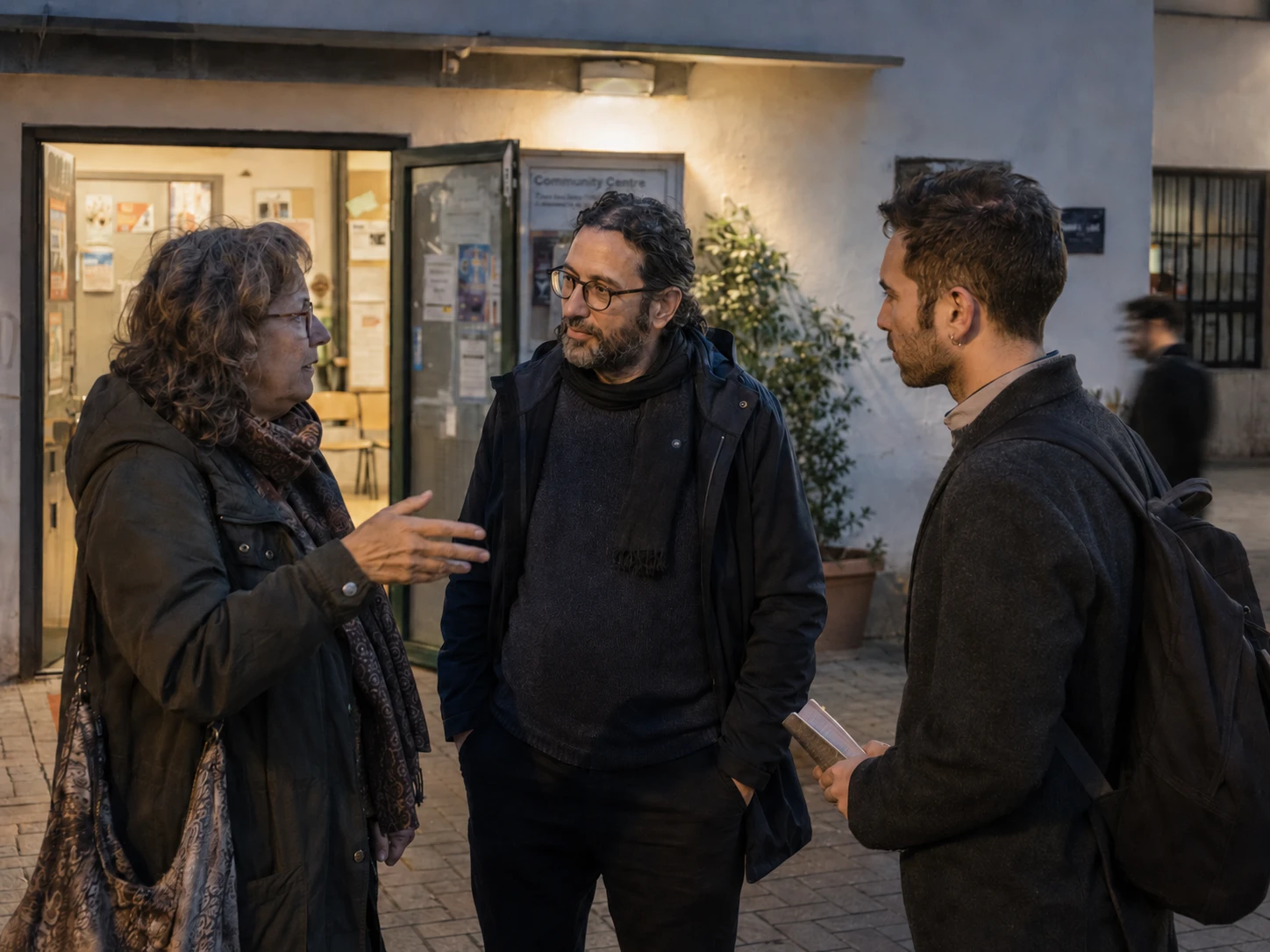
The third is to be mindful of who speaks and who facilitates. A cultural initiative can fail if it invites the right people at the very end, when everything has already been decided. Participation begins at the design stage, not in the final photo.
The fourth is not to turn pain into institutional aesthetics. This is a delicate point. Some projects turn difficult experiences into highly attractive visual pieces but leave communities in an almost decorative role. If an initiative deals with memory, inequality, violence or exclusion, it needs more care than glamour.
The fifth is to leave room for ambiguity. A cultural practice does not have to end with a single message. Sometimes, its value lies in allowing questions to emerge that previously had no place.
The European Economic and Social Committee has highlighted the link between cultural participation and civic engagement, social cohesion and democracy, whilst also stressing the importance of avoiding top-down measures. This warning is very useful: culture can strengthen bonds, but it loses legitimacy when it becomes an instrument of institutional validation.
A cultural initiative gains value when it does not end once the lights go out, the exhibition is dismantled or the summary is posted on social media.
If it has opened an important conversation, the institution has a responsibility: to learn from what has emerged.
This is one of the most strategic and least visible aspects. Many cultural initiatives are evaluated based on attendance, media coverage, satisfaction or digital impact. All of that can be useful. But if we are talking about repairing the common space, there are deeper questions.
What did we hear that we didn’t know?
Which tensions emerged most strongly?
Which audiences did not feel included?
What institutional language created distance?
Which narratives coexisted without intersecting?
What decision should be changed following this initiative?
This is where culture connects with institutional learning. It ceases to be an event and becomes a way of better understanding the relationship between an institution and its audiences.
The Council of Europe, through its Indicator Framework on Culture and Democracy, links cultural participation to dimensions such as democratic openness, trust in society, well-being and inclusion. This kind of framework helps us take culture more seriously as a form of participation, relationship, and collective learning within democratic life.
For an institution, this raises an uncomfortable but necessary question: do we want culture to confirm our narrative, or to help us listen better?
The first option is more comfortable. The second is more useful.
Before launching a cultural initiative linked to coexistence, trust or public dialogue, it is worth pausing to consider a few questions.
What divide do we wish to acknowledge?
There is no need to frame it dramatically, but it must be addressed honestly. If the problem is mistrust, wounded memory, polarisation, institutional distance or exclusion, the design should start from there.
Who needs to be involved from the outset?
It is not enough to invite a community once the project is already finalised. Those affected should be able to influence the approach, language, format and timing.
What should we not exploit?
Some experiences cannot be turned into campaign material. There are memories, pains or identities that require consent, context and care.
What can culture say that a press release cannot?
This question helps to avoid tokenistic projects. If the answer is “nothing different”, perhaps a cultural initiative isn’t needed. What’s needed is more honest communication.
What will the institution learn afterwards?
Without learning, the project risks remaining a mere gesture. Culture opens a door, but someone has to decide what to do with what appears on the other side.
Culture does not replace public policy, resources, rights or difficult decisions. Nor does it, on its own, heal a social divide.
But it can do something many institutions urgently need: open up spaces where conversation can resume.
Mistrust, polarisation and public fatigue cannot be remedied with more messages. Sometimes we need to create experiences where people can recognise one another, share a space and view a tension from a less defensive position.
That work requires care. It also requires giving up the use of culture as a showcase.
Culture can repair the common space when it ceases to be used as a cover-up for conflict and begins to sustain something more difficult: recognition, emotional complexity, shared presence and institutional learning.
If you work in public communication, community engagement or cultural projects with communities, I’d love to hear from you on LinkedIn: where do you see the greatest risk today – in instrumentalising culture, in designing without listening, or in calling for dialogue too soon?
I look forward to reading your thoughts.
It means designing cultural practices that help to acknowledge experiences, open conversation and rebuild basic conditions of trust. It is not about using culture as institutional decoration, but about creating spaces where a community can look at itself again, listen to one another and share a presence.
Culture can help to open dialogue, but it is no substitute for public policy, rights, resources or mediation processes. Its value lies in creating the conditions for a difficult conversation to begin or be sustained more effectively.
It all starts with the design. A cultural initiative requires prior listening, participation from the outset, trusted mediators, artistic freedom and care regarding the experiences being portrayed. If the institution has already concluded listening, culture becomes validation, not reparation.
Culture can help an institution to listen better, recognise tensions and create less defensive spaces for engagement. For this to happen, the initiative must foster institutional learning, not just visibility.
Civic reparation is the process of rebuilding conditions for coexistence, recognition and dialogue in the public sphere. It does not involve erasing conflicts or fabricating quick consensus. It involves creating spaces where people can participate without feeling that their experience is left out of the public narrative.
Culture can leave more than visibility behind. When it provides access, continuity and decision-making power, it creates valuable conditions for democratic life.
Saying AI was used is not enough. This article explains when to disclose it, what a useful notice should include and how to document human review.

The EU AI Act for communications teams is about more than learning new tools. This guide explains the 2026 requirements and how to turn them into clear rules for use, review and transparency.