Coordinating international projects: 5 mistakes that erode trust

Coordinating international projects: 5 mistakes that erode trust

Let’s imagine someone who has been working on an international project for months. They know the names behind the emails, have learnt to work with people from other organisations, and have made room in their diary when things have got complicated. The final report arrives and, on reading it, they come across a sentence that surprises them: their organisation has committed to continuing the programme. Nobody had consulted them about it.

Now they’ll have to ask where that commitment came from. Perhaps they’re worried about appearing uncooperative, just when everyone else is satisfied with the work. Perhaps they’re thinking about the conversation that awaits them with their team, whom they haven’t been able to ask whether they have the time and resources to continue.

From the coordination team’s perspective, there may be a common explanation: a rush to meet the deadline, an overly optimistic statement, or a review taken for granted. Those involved may have acted in good faith. Even so, someone will have to answer for a commitment they hadn’t agreed to.

International project coordination is also at stake in such moments. We may meet the deadline and deliver the documents, whilst the relationship between partners becomes more strained. In addition to checking which tasks have been completed, we need to know how the people who made them possible felt they were treated.

Trust between partners also depends on feeling valued

Trusting someone makes very specific things easier: asking questions when we do not understand, acknowledging that we need help, or objecting without first preparing a defence. In a professional partnership, these possibilities matter because each organisation brings its own responsibilities, resources and limitations to the table.

The Partnering Initiative and UN DESA’s guide to partnerships distinguish several dimensions of trust: competence, reliability, willingness to act in the partnership’s best interests, and transparency. We can have complete confidence in a partner’s technical ability whilst, at the same time, harbouring reservations about how they make decisions that affect us.

Evidence also shows the importance of these relationships in coordination. A study published in 2024, based on a survey of 118 participants in Horizon 2020 and Horizon Europe research and innovation projects, identifies communication, trust and collaboration as priorities. The timetable allows us to track deliverables; to understand how partners are working together, we also need to listen to their experiences.

I think it’s important to pause here, because it’s easy to attribute a partner’s unease to their personality, without asking what’s worrying them. Perhaps the person now insisting that everything be put in writing is trying to avoid another surprise. Perhaps they’re overwhelmed or have received new instructions from their management. We can observe the change; to understand it, we’ll need to speak to that person.

The following five mistakes highlight specific situations worth reviewing when the relationship between partners begins to suffer.

1. Informing someone of a decision when it is already too late for them to have a say

Imagine several organisations organising a meeting as part of an international project. The coordination team chooses the date without first consulting the local organisation, which is responsible for inviting local associations and confirming their attendance. By the time they communicate the chosen date, other partners have already bought their tickets and sent the official invitations.

The local organisation immediately spots a problem: another event is taking place on that very same day, which many of the organisations that should be attending the meeting will be attending instead. If they’d been asked beforehand, they could have pointed this out and suggested an alternative date. Changing it now means rearranging travel plans and notifying all the guests again. Keeping the original date may exclude some of the people they wanted to bring together.

From the coordination team’s perspective, finalising the date may have seemed like a way to move things forward. For the local organising committee, however, the email creates a difficulty they will have to resolve. Furthermore, they may feel they are being relied upon to secure attendees, but that their input was not considered when deciding when to invite them.

Providing information lets people know what has been decided; consulting in good time allows them to contribute something that might still change the decision. In this case, the local organising team needed to intervene before the others booked their travel arrangements.

To avoid this, we can agree on which decisions the coordination team makes directly and which ones they need to consult the partners involved on. The question is specific: who is aware of the circumstances we need to consider, and who will have to make what we are deciding possible? Consulting these people does not require bringing the whole project together, nor does it mean that every partner must approve every detail.

Sometimes an urgent situation will force us to decide with little leeway. In such cases, it is worth explaining what happened, listening to the difficulties the decision has caused, and working together to find a solution. That conversation also lets us agree on how to involve the affected organisation next time, while still using their input.

2. Setting a deadline without considering the work that lies ahead

An interview recording arrives on Friday, within the agreed deadline. For the person sending it, the task is complete. For the person receiving it, transcription, translation, fact-checking, and institutional approval remain before it can be published.

If the schedule did not take all this into account, someone will have to find time where there is barely any. They may well manage it. The team can be pleased to have published on time, although it is also worth acknowledging the extra work of those who made it possible.

That willingness to help is valuable. Partnerships need people who can adapt and lend a hand. But that help is hard to sustain when it always falls on the same people and deadlines are set assuming they will once again go the extra mile, without discussing it with them.

Before finalising a deadline, one question can spark a useful conversation: what do you need to receive to do your part? Perhaps a version of the text that won’t change any further, authorisation, or a few days for someone else to review the content. What seems like a simple task from one team’s perspective may involve several steps within another.

When those conditions change, the agreement will need to be reviewed: moving the deadline, reducing the scope or allocating resources differently. We may need to ask for extra effort. We also need to be able to say that, this time, we won’t meet the deadline and ask the team to work with us to assess what can be adjusted.


AI-generated scene of a woman wearing headphones discussing an annotated interview transcript with a colleague beside an audio-editing screen.

3. Understanding different interpretations when someone says ‘it’s been reviewed’

Sometimes, each team believes it has done its part properly but understands something different when it receives the same response. The technical team has checked the data and replies that the document has been reviewed. The communications team understands that it can publish it. The organisation’s management only realises later that its name and logo are accompanying text that still needed authorisation.

The technical team meant that the data was correct. The communications team interpreted this to mean that the document had all the necessary approvals. No one had clarified exactly what ‘it has been reviewed’ meant, nor who was responsible for authorising publication. Meanwhile, the content is circulating, and the conversation becomes more awkward than it would have been before publication.

Reviewing content, accepting a deliverable and authorising its release are different actions. The same person, or several people, may be responsible, depending on the project agreements. The European Commission’s PM² methodology includes distinct tools for accepting deliverables, managing communication and recording decisions, which can help to organise these functions.

A request for approval is easier to respond to when it specifies the version, the intended use and what authorisation is being sought. It also helps to know who is authorised to grant approval and what course of action we will take if we do not receive a response in time. Silence can have many explanations. Assuming that publication has been authorised may lead us to disseminate a text without the necessary approval.

We can agree on which routine adjustments can be made directly, and which changes require further approval – for example, those affecting data, commitments or the use of an organisation’s name. Clarifying these distinctions ensures that everyone knows what they are responsible for.

4. Speaking on behalf of everyone without checking what we are committing to

Let’s return to the person who finds an unexpected commitment in the final report. For whoever drafted that sentence, continuing the programme may have seemed like a shared aspiration. For the organisation in question, it could mean maintaining a service, allocating staff or seeking funding.

The same sentence is interpreted differently when one person writes it, and another carries it out. That is why it is worth taking a close look at the words we use to describe our joint work, especially when they refer to the future.

So-called ‘narrative ownership’ can be expressed in quite concrete terms: who participates in the shared narrative, who can validate it, and who takes responsibility for what is stated. The communications team can draft the text; those familiar with the activity can check it; and the organisations concerned can validate the commitments attributed to them.

Then there is the issue of recognition. A discussion about mentions or logos may stem from another concern: that the text does not accurately reflect each organisation’s work. Before reducing that conversation to a question of visibility, it is worth listening to what is being raised.

Partners can present the project on a shared basis whilst retaining their own voice. Once the facts and responsibilities have been agreed, each partner can explain them using the language and examples appropriate for their audience, within the agreed parameters. I have explored this relationship in the article on narrative coordination in EU multi-stakeholder programmes.

For the organisation involved, it is important to discuss this commitment with its team before explaining it to its community.

5. Celebrating progress without glossing over the difficulties

The meeting ends on time. Deliverables have been reviewed, the timetable updated, and everyone’s efforts acknowledged. Later, in a separate conversation, someone mentions that a permit is unlikely to arrive on time.

It is tempting to wonder why they did not mention this during the meeting. There may be several reasons: they still needed to confirm the delay, found it hard to explain the problem in the language of the meeting, or couldn’t find a moment to speak up. Perhaps the last time they raised an issue, they were reprimanded and now prefer to wait. None of these explanations can be assumed without asking.

We can set aside time during the meeting to ask what each team member needs to move forward. ‘Do you need someone to provide information, authorise something or clarify a point so that you can meet the next deadline?’ encourages people to explain specific difficulties. In multilingual teams, sending questions in advance and accepting written contributions makes this easier.

What happens after the issue has been raised is just as important. The person who has raised a difficulty needs to know who can resolve it, when they will receive a response, and how to proceed in the meantime. Thanking them for their honesty is a good start. Next, you’ll need to assess what can be done and communicate the decision, so that the person knows their concern has been considered.

A disagreement expressed freely can fit within a relationship of trust. What would be worrying is if a person feared consequences for speaking out or had stopped expecting agreements to be honoured. That is why a meeting without objections isn’t enough to gauge the state of the relationship.

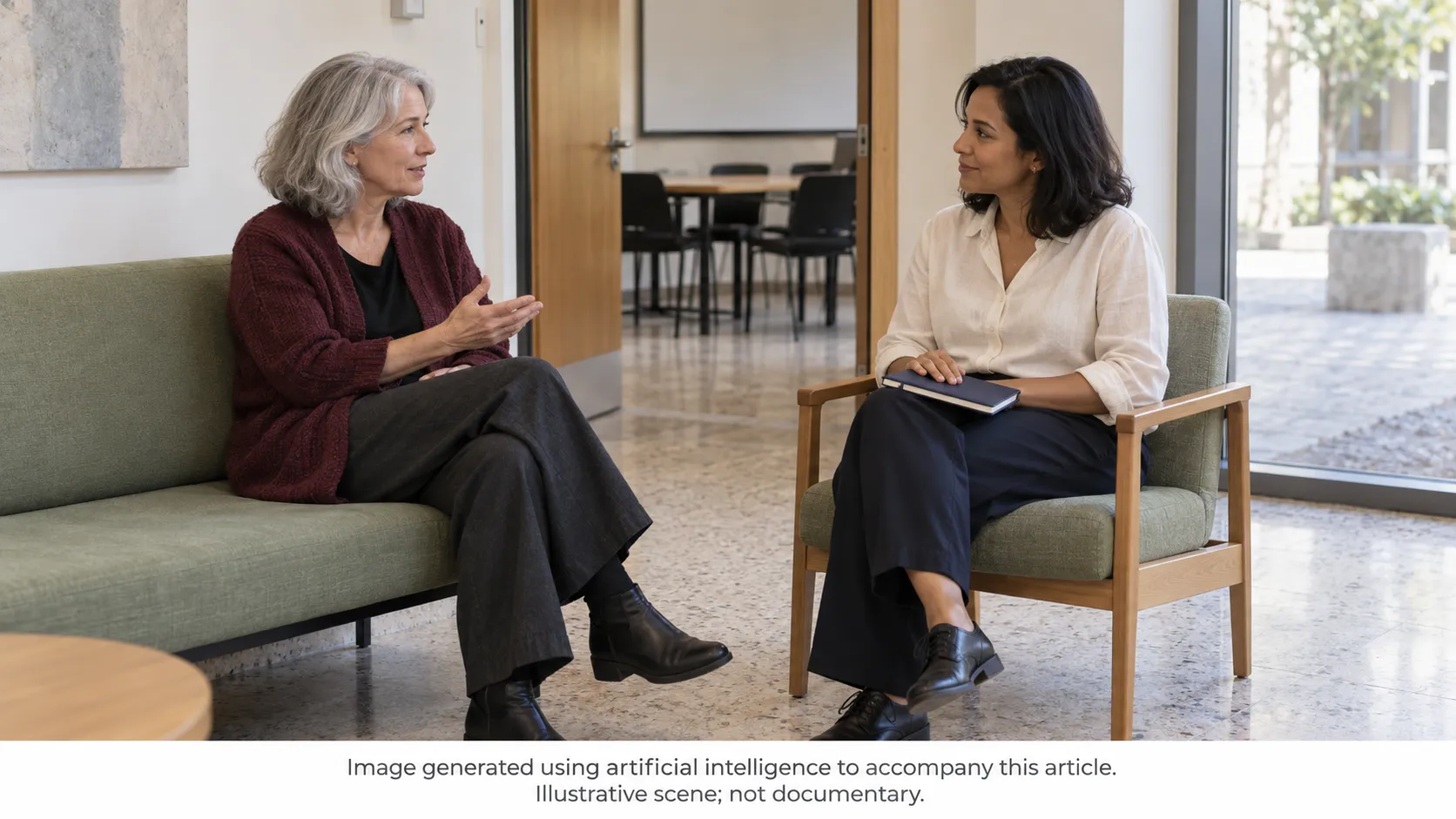
AI-generated scene of two women talking in a bright seating area beside a meeting room, with one listening and holding a notebook on her lap.

How to rebuild trust when coordination has broken down

When someone expresses dissatisfaction, I understand the temptation to explain immediately why we did what we did. Especially if we were in a rush, trying to help, or feel our efforts aren’t being recognised. However, asking what happened and how it affected them before justifying our decision can help us understand their dissatisfaction.

In the example of the report, I would start by clearly acknowledging the mistake: ‘We have stated that your organisation will continue with the programme, but we hadn’t consulted you about it.’ I would then ask what needs correcting. We’ll need to review the text and check who received the previous version, as other organisations or participants may be relying on that continuity. Simply saving a corrected file does not alert them that the information has changed.

To prevent this from happening again, the next step is to agree on who should approve such commitments and who will be responsible for seeking that approval. The timetable will need to allow time for responses and objections before the document is finalised. In the next instalment, we can check whether we have fulfilled that agreement.

Nor should we ask the communications team to resolve authority or resource issues on their own. If these problems recur because of a lack of resources or because it is unclear who has the power to decide, we will need to speak with the people responsible for resolving them. The article on communication as an operating system explores this relationship between decisions, responsibilities and work rhythms.

And if the contact person changes, it is worth facilitating the handover. In addition to the files, the new contact needs to know current agreements, what remains outstanding, and what they are authorised to approve. A handover discussion prevents them from having to piece together, through a series of questions, how the relationship works.

Trust may take time to rebuild. Anyone who was taken by surprise has the right to observe what happens next, even if we have explained our reasons and corrected the document. Adherence to the new agreements will give them the information they need to assess whether anything has changed.

I would like us, when wrapping up a project, to recognise both what has been achieved and what it has taken to do it together. We may discover efforts that went unnoticed or difficulties we can still rectify. Discussing these whilst we continue to work allows us to look after the people with whom we hope to collaborate again.

What specific gesture or change has helped you rebuild trust following a disagreement between partners? I’d love to hear about your experience and continue the conversation on LinkedIn.

Related entries

Laura Mellado
Privacy Overview

This website uses cookies so that we can provide you with the best user experience possible. Cookie information is stored in your browser and performs functions such as recognising you when you return to our website and helping our team to understand which sections of the website you find most interesting and useful.