Popular culture, by giving visibility to certain social realities, offers policymakers an opportunity to connect more genuinely with the public, understanding their concerns and prioritising the issues that really matter to their citizens.
2. Popular culture amplifies social demands
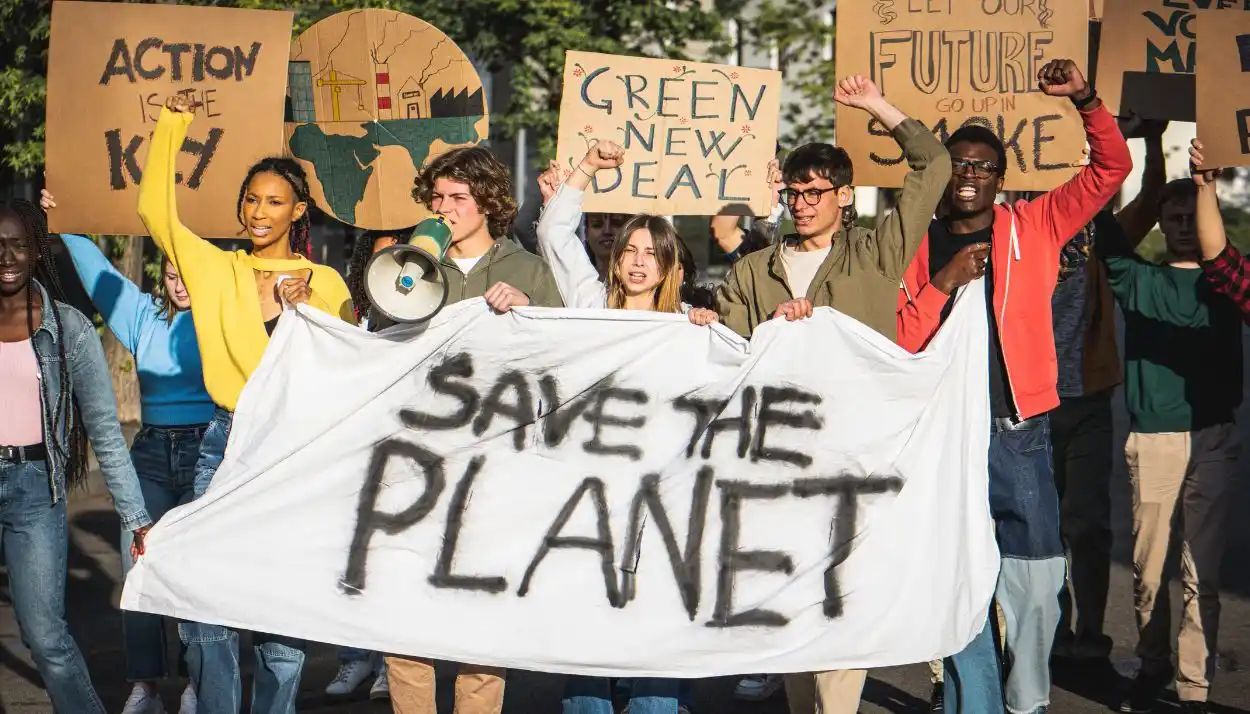
Beyond reflecting values, popular culture has the capacity to amplify social demands, bringing them to greater visibility and, often, accelerating their integration into the public debate. Social movements such as #MeToo or Fridays for Future were born largely thanks to cultural and digital platforms that amplified their messages. These movements succeeded in rallying millions of people around the world to a common cause, driving social change and adding pressure on legislators to adapt their policies to the new demands.
Joseph Nye, in his book “Soft Power”, explains how cultural content generates direct and indirect impacts on politics and the economy. In the case of #MeToo, it was precisely the visibility given to it by celebrities and the media that allowed problems such as sexual harassment to be addressed more urgently, prompting legal revisions in many countries.
The lesson here is clear: popular culture reflects and amplifies citizens’ voices, making it easier for their demands to reach policymakers. If policymakers ignore these cultural currents, they risk disconnecting themselves from emerging social needs.
3. Representation and public perception
The representation of certain issues and groups in popular culture plays a fundamental role in how these issues are perceived by the public and, ultimately, how they are addressed by the political sphere. The media not only inform, but also educate about what is and is not acceptable in society, as McLuhan pointed out.
I will take as an example the representation of racial minorities in film and television. For a long time, these representations reinforced negative stereotypes. However, lately, we have seen a shift towards more inclusive and nuanced representations, which has contributed to greater social awareness of racism and inequalities. This shift in public perception has directly influenced the formulation of public policies that promote racial equality.
The same is true for issues such as gender equality or LGBTQ+ rights. The visibility of these groups in the media and in popular culture has contributed to the promotion of policies that recognise and protect their rights. Representation matters, not only because it makes realities visible, but also because it influences how policies affecting these groups are created.
4. Popular culture simplifies complex concepts
One of the great challenges in creating public policy is how to convey complicated issues in a way that the public can understand and support. This is where popular culture comes in. Through accessible narratives, such as films, documentaries or series, complex issues can be explained in a clear and engaging way.
For example, Al Gore’s documentary An Inconvenient Truth helped transform climate change from a distant, scientific issue into a global concern. Popular culture has the power to translate scientific or political debates into stories that resonate with the public, making it easier to understand the problems and the urgency of solutions.
The ability to simplify complex concepts and make them accessible should not be underestimated. Public policies can benefit enormously when they draw on popular culture to educate and raise awareness on issues of general interest, achieving a broader and deeper impact.