
Expert
How to communicate difficult public decisions without sounding defensive
A decision may be well-founded yet still come across as poorly explained. This happens in a call for proposals where many organisations are left out.

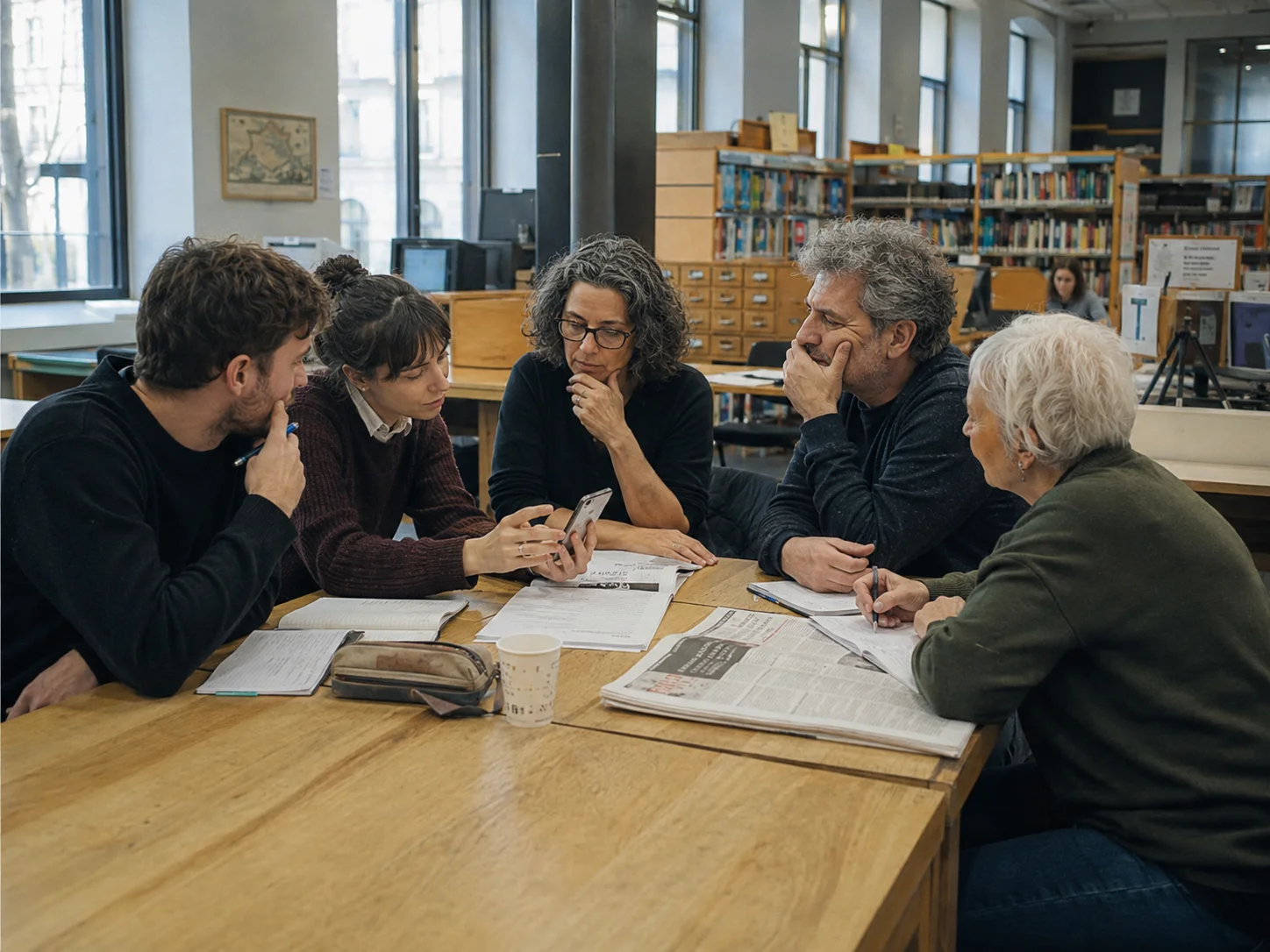
In media literacy, the initial question matters. Before assessing whether a person can spot a hoax, it is worth looking at how they engage with the information environment they inhabit every day.
This is where media literacy as participation makes sense: it helps us view information as a social practice. Verifying facts matters, of course. It is also important to understand which emotion a piece of information triggers, which narrative it reinforces, and the responsibility we take on when we share it, respond to it, or ignore it.
For years, many media literacy initiatives have been presented almost like a vaccine: learn to verify, identify the source, don’t fall for the deception.
All of that matters. A great deal.
But it falls short if the problem is reduced to a list of tricks for spotting fake news. Today, disinformation rarely spreads because there are no facts to support it. It spreads when it finds something to latch onto: fear, identity, a sense of belonging, exhaustion, anger, humour or mistrust.
And that is where media literacy needs to go a step further.
The aim is for citizens to develop sound judgement, not to emerge from the process suspecting everything.
The European Commission defines media literacy as the capacity to navigate the information environment, make informed decisions, and participate in open democratic debate. It also links it to social resilience in the face of disinformation and foreign information manipulation.
In short, media literacy also underpins democratic participation. It helps citizens defend themselves against deception and engage more critically in public discourse.
When an institution approaches media literacy by asking, “How do we teach people not to fall for hoaxes?”, the programme often launches into a gap that is difficult to bridge. On one side are those who possess the knowledge; on the other, those who must receive it. That logic may serve to explain a technique, but it proves fragile when what we need to build is trust.
Because when it comes to disinformation, trust does not come after the content: it is part of the content. If a person feels they are being corrected from above, even correct information may arrive too late, in the wrong form, or be met with resistance.
A more useful question would be:
How do we help a person or a community to navigate the information landscape more judiciously?
That change may seem small, but it alters the programme’s entire design.
Thus, media literacy can become a space for developing four very specific skills: reading better, asking better questions, verifying better and participating better.
This is particularly important with young people. Their information environment constantly blends information, entertainment, identity, friendship, activism and reputation.
A short video can be a news item, a joke, a political stance, a sign of belonging or a provocation designed to trigger a reaction. Sometimes, all at once.
That is why it remains necessary to determine whether a piece of information is true or false. The problem begins when we believe that is where learning ends.
We must also ask:
What emotion is this content trying to elicit from me?
What narrative is it trying to get me to accept?
Who does it portray as a threat?
Which group is it reinforcing?
What am I doing when I share it?
That is where informed participation begins.
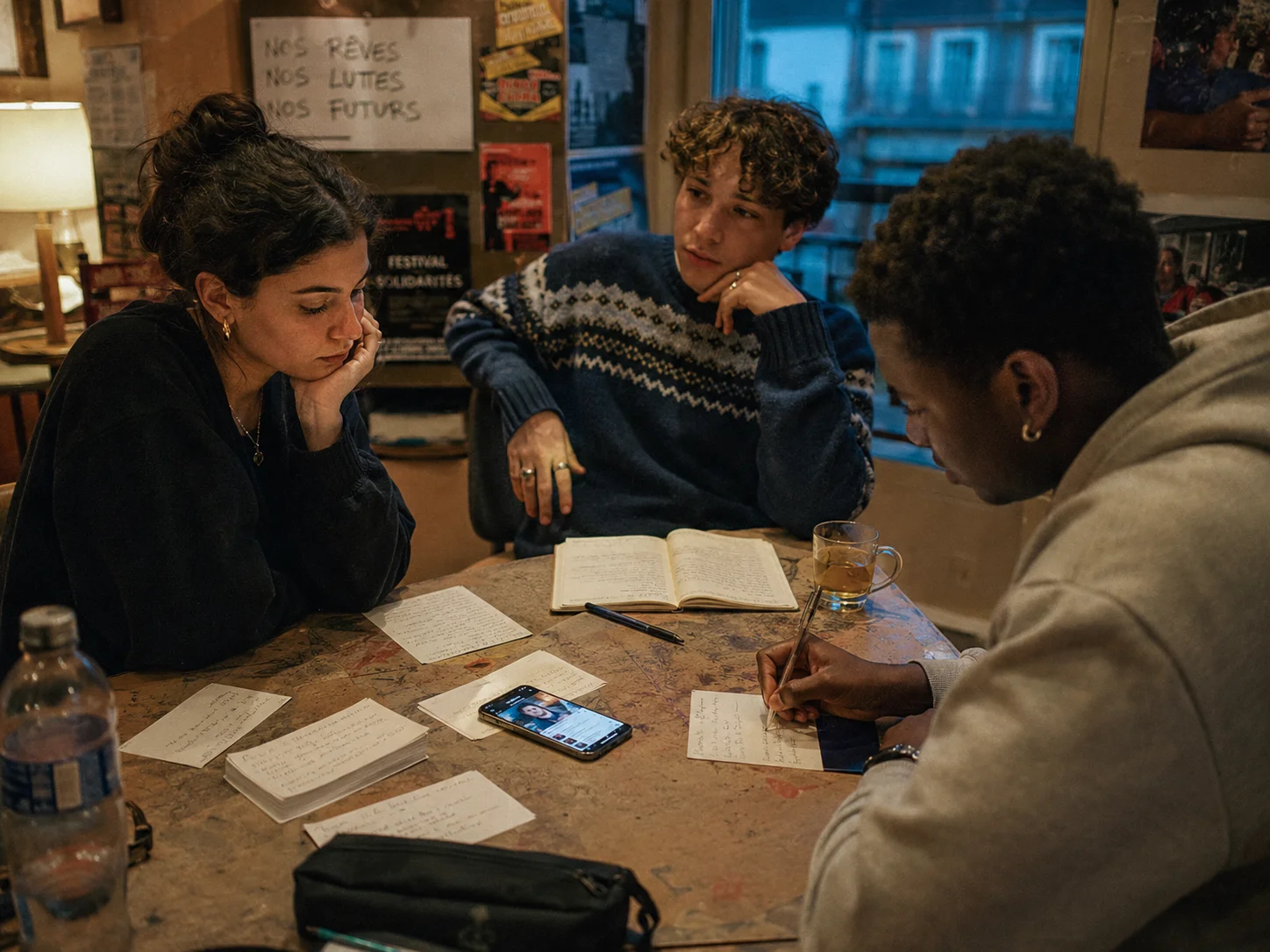
The European Union no longer treats media literacy as a minor educational issue. It integrates it into a broader agenda on democracy, media freedom, information integrity and society’s ability to respond to manipulation.
The European Democracy Shield, adopted by the European Commission on 12 November 2025, is structured around three pillars: protecting the integrity of the information space, safeguarding free elections and the media, and strengthening social resilience and media literacy.
This tells us something important: media literacy has moved beyond the classroom. Today, it forms part of how a society prepares to live in a more unstable information environment.
The Commission itself identifies new challenges that go far beyond classic hoaxes or fake news: the influence of platforms and influencers as sources of information, coordinated inauthentic behaviour, algorithmic amplification, the manipulative uses of generative AI, and foreign information interference.
Against this backdrop, teaching people to verify information remains useful, but is no longer sufficient on its own.
Algorithms, identities, platform incentives, crises of trust and artificial intelligence all come into play. That is why the response needs to be more structural: designing spaces where people can practise critical thinking in real-life situations, with doubts, social pressure, emotions and imperfect conversations.
We also need to work with trusted mediators: teachers, youth organisations, libraries, cultural centres, journalists, social organisations, community leaders and spaces where people already gather to talk.
Media literacy, when properly approached, reaches a community as a better-designed conversation, not as an external correction.
One of the most common mistakes in media literacy programmes is the tone.
Sometimes, unintentionally, the organisation speaks as if the public were the problem: “they can’t tell the difference”, “they fall for hoaxes”, “they share without thinking”, “we need to raise their awareness”.
There may be some truth in this assessment. The tone, however, can ruin the programme before it even begins.
No one is keen to engage with a programme that makes them feel like a simpleton.
That is why a good media literacy programme should be based on a simple idea: people share information for many reasons, and the truth is just one of them. They also share a sense of belonging, express anger, protect their group, joke, warn others, or feel part of something.
If we don’t understand that, fact-checking becomes a cold correction.
And correcting without understanding often creates distance.
EDMO’s guidelines for effective media literacy initiatives emphasise that a good initiative must have clear objectives, be tailored to its audience’s needs, be piloted on a small scale, be reviewed, and aim to be useful beyond a one-off event. They also recommend seeking feedback during the intervention and designing resources that others can continue to use afterwards.
That idea is key: a good programme must leave something in place afterwards. An inspiring talk or a well-designed campaign can open the door, but they should not be the endpoint. It must leave behind tools, criteria and resources that can continue to be used afterwards.
UNESCO is also working in this direction. Its Media and Information Literacy page links these skills to the ability to engage critically with information, navigate the digital environment safely, and contribute to trust in the information ecosystem and digital technologies.
This fits very well with a cultural and social approach. Because information never circulates in a vacuum. It circulates within codes, memories, symbols, jokes, wounds and ways of belonging.
Culture matters because it helps us understand why certain messages take hold so quickly in a community, whilst others never do.
A useful way to design media literacy programmes, especially with young people or communities, is to organise the process into four layers: emotions, verification, narratives and public accountability.
It serves as a simple framework so that the programme does not revolve solely around “true or false”.
Before verifying, it is worth pausing to consider the reaction.
What has this video made me feel?
A sense of urgency?
Indignation?
Fear?
Laughter?
A sense of group pride?
A desire to respond?
This first layer is important because much content is designed to trigger a reaction before it informs.
A workshop could start with a viral clip and ask the group to identify which emotion it is trying to provoke. We haven’t yet discussed whether it is fake or real. First, we observe what it does.
That step slows things down. And slowing things down, in today’s news environment, is already a form of discernment.
Verification remains central. But it is best to teach it without turning it into a competition to catch someone out.
Verification can be taught as a practice of caring for the public sphere, not as a form of moral superiority.
EDMO’s Be Election Smart campaign, launched ahead of the 2024 European elections, was conceived precisely in a context where millions of Europeans were set to vote whilst disinformation campaigns aimed at undermining the electoral process were being detected.
This kind of initiative works best when it proposes specific habits: looking beyond the headline, checking the context, cross-checking sources, understanding who is speaking and with what intention.
The nuance matters. Instead of saying “you’ve fallen for it”, it’s better to ask: what do we need to check before sharing this?
Information rarely circulates as pure data. It usually travels within a story.
A narrative might suggest that someone is threatening us, that an institution is hiding something from us, that a group is receiving unfair privileges, that all is lost, or that only one voice speaks the truth.
That is why good media literacy also teaches us to read narrative frameworks.
The question “Is this true?” is necessary, but it leaves out an important part of the problem. It is also worth asking:
Who is portrayed as the culprit?
Who is portrayed as the victim?
What solution is presented as obvious?
What part of the story is left out?
This layer is particularly important in cultural, youth or community projects, because many public conversations are not driven solely by facts. They are driven by identity, memory and a sense of belonging.
And this is where culture can act as a bridge: it helps us understand the codes that make a narrative credible to some people and alien to others.
Ultimately, it all comes down to a very specific question: what do I do with this information? Media literacy also involves developing decision-making skills: knowing when to share, when to wait, when to ask questions, when to correct, and when not to amplify something that seeks to provoke a reaction in us.
A media-literate person does not stop at spotting mistakes. They learn to make better decisions about what to do with what they see, feel and share.
They know when to share.
They know when to wait.
They know when to ask.
They know when to correct without humiliating.
They know when not to amplify something, even if it provokes a strong reaction.
This is where media literacy becomes participation.
UNESCO also approaches this through youth leadership. Its practical guide, Journey Through the MILtiverse, helps youth organisations integrate media literacy into their policies, strategies and operations, so that it is not reduced to a one-off activity.
And the UNESCO Youth Hackathon highlights another valuable idea: young people can play a much more active role than that of a vulnerable audience. They can also strengthen the information landscape by designing solutions, collaborating with other young people and bringing new questions to conversations where they are often discussed without being consulted.
Media literacy is best learned through real-life practice. There is no need to turn every workshop into a technical class or fill the session with tools. Sometimes it is enough to design short exercises that help participants slow down, look more closely and make more responsible decisions.
A first activity could be an emotional map of a viral piece of content. Choose a public piece and ask the group to observe three things: what emotion it triggers, what reaction it seeks, and which group it appeals to. Only then should you discuss veracity. This order matters because much content circulates before anyone asks whether it is true.
The second activity could be a comparative fact-check without any embarrassment. Several groups work on the same claim but follow different routes: media outlets, institutional sources, search engines, fact-checkers or databases. Ultimately, the interesting comparison isn’t about who got it right first. It’s about the path each group took to verify it.
The third could be an exercise in responsible rewriting. A polarising post is taken, and facts, interpretation, emotion and the call to action are separated. Then, each group transforms it into a public question, a clarification or a brief piece of context.
These activities are simple, but they change the logic of learning. The individual no longer receives a lesson on what they should believe. They practise engaging more effectively in public conversation.
That is much more like participation than obedience.
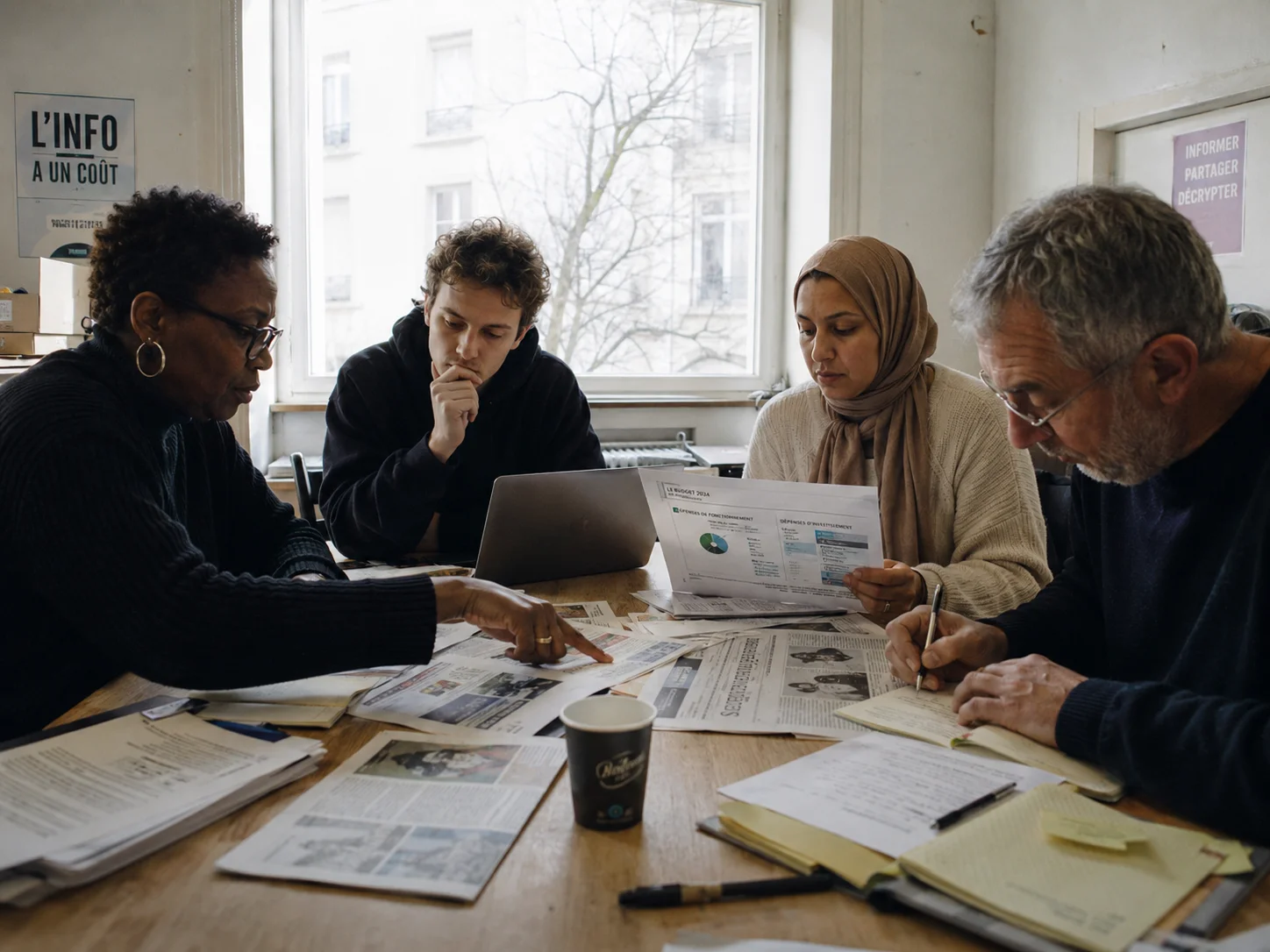
Evaluation matters. But measuring well doesn’t always mean filling the programme with indicators. Sometimes, the most useful signs appear in something simpler: how the group asks questions, how it cross-checks information, or how it changes the way it participates.
In small trials, community workshops or cultural programmes, a brief baseline, structured observations, and a final task to show whether the way people read, ask questions, or participate has changed may be sufficient.
The fact that someone remembers the definition of disinformation says little if they do not subsequently change the way they read, ask questions or share information.
What we should be asking ourselves is:
Do they ask better questions before sharing?
Do they distinguish better between fact, opinion, emotion and narrative?
Do they check more than one source?
Do they recognise when content is designed to provoke them rather than inform them?
Are they able to correct without ridiculing?
Do they make more useful contributions to public discourse?
Measuring the ability to decide and act judiciously is more difficult than measuring whether someone remembers a definition. But it says much more about what the programme has achieved.
If a person leaves a programme more afraid of making mistakes, something has gone wrong. If they leave with a greater ability to read, ask questions, cross-check and participate, the programme has left them with something more valuable than a list of recommendations.
It has left them with sound judgement.
Media literacy loses its impact when it becomes a list of warnings: be careful what you read, be careful what you share, be careful what you believe.
Warnings have their place. The important question comes next: what kind of citizens are we helping to shape?
Disinformation, generative AI, influencers, algorithms and democratic fatigue are already part of the public conversation. That is why it is not enough to teach people to be sceptical. We need to help people read better, ask better questions and participate with greater discernment.
This requires designing programmes that do not humiliate, oversimplify, or treat their audiences as passive recipients. Programmes that address emotions, verification, narratives and public accountability. Programmes that understand that trust cannot be demanded: it is built through listening, explaining, practising and correcting.
Ultimately, media literacy works when it stops sounding like a lecture and becomes a shared practice: looking at information more calmly, understanding what it provokes in us, and making better decisions about what we do with it.
If you work on media literacy, youth participation or public communication programmes, I’d love to hear from you on LinkedIn: where do you see the biggest challenge today – in fact-checking, in emotions, in narratives or in the lack of spaces to practise?
I look forward to hearing from you.
It means shifting from a defensive perspective to a citizen’s perspective. Media literacy helps us to interpret the information landscape better, recognise emotions, interpret narratives, cross-check sources and decide how to engage in public discourse.
In this approach, the individual is not seen as a vulnerable recipient. They are seen as someone capable of participating with greater discernment and responsibility.
Because the current problem is not limited to isolated fake news stories, algorithms, influencers, generative AI, group identities, loss of trust, and coordinated manipulation campaigns also play a part.
A person may know how to verify information and still share it out of fear, anger, a sense of belonging or social pressure. That is why it is also important to address emotions, narratives and public responsibility.
The first step is to move away from a patronising tone. A programme benefits greatly when it starts with a more honest question: what experiences of information does this group bring to the table, and how can we practise critical thinking together?
It also helps to work with trusted mediators, adapt the language and examples to the context, trial activities on a small scale and seek feedback throughout the process. Media literacy works best when it is designed with people, not just for them.
A robust programme should address at least four areas: emotions, verification, narratives and public accountability.
Emotions help us understand why content provokes a reaction. Verification allows us to cross-check without humiliating. Narratives show which stories shape the conflict. Public responsibility connects learning with concrete decisions: sharing, waiting, asking, correcting or not amplifying.
Culture helps us understand why certain messages take hold quickly in a community, whilst others never reach it. The same information can be interpreted differently depending on each group’s codes, memories, symbols, jokes or collective wounds.
That is why a media literacy programme needs to work with data and with the contexts in which that data circulates.
Measuring the impact of a media literacy programme does not require a cumbersome system of indicators. In short workshops, community pilot schemes or cultural programmes, a simple baseline, observation during activities and a final practical task may suffice.
The most useful signs usually emerge in practice: if the group asks better questions, consults more sources, distinguishes between facts and opinions, identifies emotional frames, and makes more thoughtful contributions to public conversation.
In this type of programme, remembering a definition matters less than changing how people read, ask questions, cross-check information, and participate.
A decision may be well-founded yet still come across as poorly explained. This happens in a call for proposals where many organisations are left out.
A campaign can carry a responsible message while being distributed through an experience that pressures people. Trust is also designed.
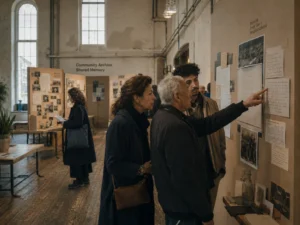
Cultural practices can support civic repair by creating recognition, shared presence and institutional learning without reducing culture to propaganda.