Knowledge Sharing
Continuous training, the key to success for communication professionals and teams
Explore the transformative power of continuous learning in the communication sector, driving innovation, adaptability, and professional growth.

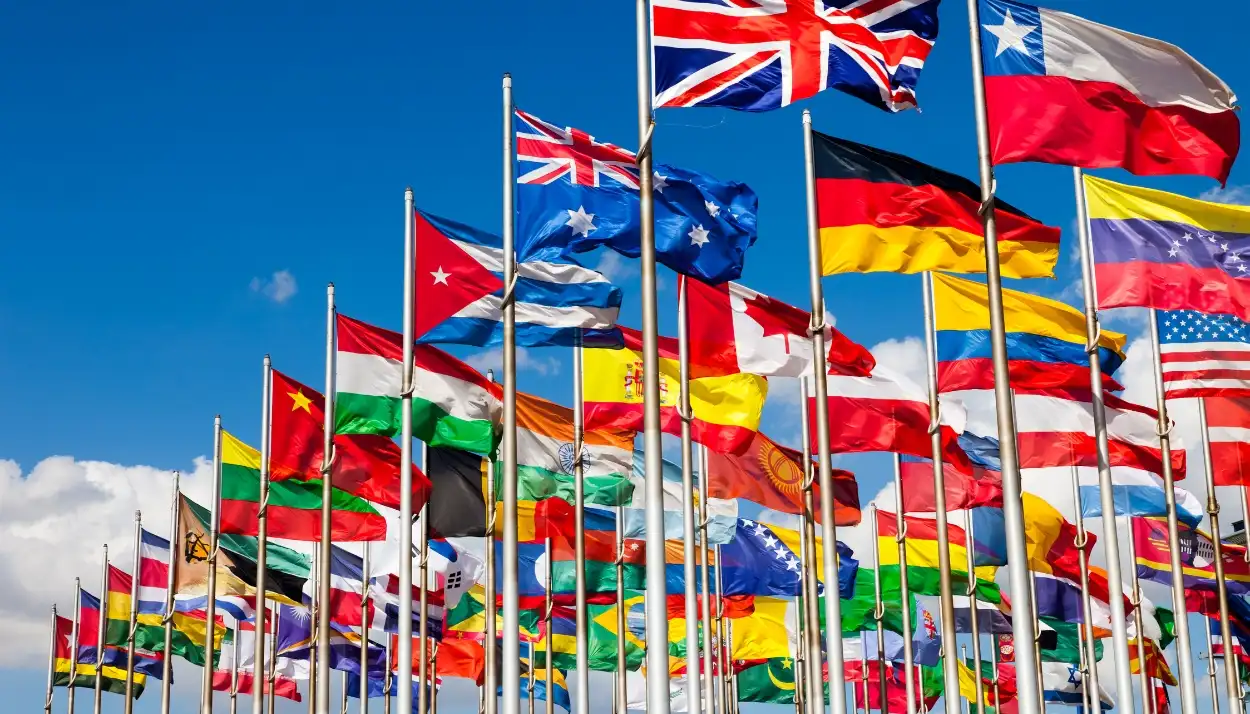
When we communicate, we project our understanding of the world. In other words, how we interact with “the other” is at the heart of our communication. In international relations the three classical theories of international relations influence communication strategies.
This blog is designed to introduce the communicative styles that are more or less used in the international arena, depending on the objectives and the type of relationships we establish with “the other.” If you are interested in learning more about how politics, communication, and culture operate and want conceptual tools and practical examples, don’t miss this blog!
This theory proposes that states are the main actors in an international system characterised by anarchy, i.e. the absence of a central authority to impose order. According to this theory, states operate in a context of self-help, where each seeks to maximise its security and power, essential resources for survival.
Theorists such as Hans Morgenthau and Kenneth Waltz analysed how states adopt rational behaviour to manage this competitive environment. Morgenthau identified power politics as centred on conserving and expanding state power. At the same time, Waltz developed the concept of balance of power, suggesting that states adjust their capabilities in response to those of potential adversaries to maintain or restore an equilibrium that prevents dominance or threats to their security.
In this balancing context, relations with ‘others’ are seen as a series of strategic actions, such as forming alliances, signing treaties, and, in some cases, engaging in conflict, all aimed at maintaining or enhancing the state’s position of power. This view holds that international cooperation is valued primarily when it contributes directly to the state’s security and power interests.
Imagine that two countries, “A” and “B”, compete for influence in a strategically vital region. “A” seeks to expand its influence by installing military bases. “B” tries to counter this move through alliances with other regional states, showing a straightforward zero-sum game typical of realism.
Also known as the Magic Bullet Theory, it describes the vast impact the media can have on an audience that is considered passive and uniform. Emerging during the world wars, this theory suggests that the media can convey messages that the general public can accept without question, immediately affecting their opinions and behaviour.
This theory highlights the role of propaganda in consolidating support for the war effort and boosting national morale. Researchers such as Harold Lasswell noted that propaganda messages were designed to be consistently adopted by the public, evoking emotional responses designed to incite action or change public perception.

On a practical level, this passive exposure to the media message results in a homogenous interpretation by the audience, representing a considerable simplification of the diversity of human responses to the media. Although this view has been criticised and supplanted by more interactive and complex communication theories, it remains a framework for understanding initial assumptions about the media’s influence and ability to shape society directly.
During a political crisis, as in the example above, the government of “A” uses the state media to disseminate propaganda portraying “B” as an imminent threat, expecting the public to absorb these messages and support government actions uncritically, reflecting the “hypodermic needle” dynamic.
Both international relations realism and hypodermic needle theory present a deterministic and authoritarian perspective on control and influence. Realism focuses on how states seek to maximise their power and security, seeing war and competition as inevitable elements in an anarchic international system. In parallel, hypodermic needle theory suggests that the media act as tools of direct, one-way control over a passive audience, capable of injecting messages that are assimilated uniformly and without room for dialogue or response.
This synergy and understanding of the other requires maintaining state secrets and emphasising national security, relegating citizens to mere recipients of government policies with no opportunity for feedback or active participation. Later, we will look at other schools that promote open dialogue and feedback as pillars of effective and respectful communication between states and their citizens. This evolution reflects a growing recognition that legitimacy and sustained influence depend not only on coercive power but also on consensus and collaboration.
This theory views international interactions as complex and multifaceted. Unlike realism, which sees the state as the leading actor in an anarchic system, liberal theory identifies a diversity of actors (states, international organisations, NGOs and multinational corporations) as significant influences on forming global norms and promoting cooperation.
Thinkers such as Robert Keohane and Joseph Nye have contributed significantly to the development of this approach, primarily through the proposal of ‘complex interdependence’ in their joint work ‘Power and Interdependence’. They argue that economic, social, and political connections between countries reduce the effectiveness of challenging power strategies and make peaceful cooperation more viable and sustainable. This analysis is particularly relevant in globalisation, characterised by intense cross-border flows of capital, products, ideas, and people.

Moreover, international institutions and legal regimes facilitate cooperation and manage conflicts peacefully and predictably. In practice, they promote diplomacy, trade, and international dialogue in which diverse actors work together to resolve disputes and foster partnerships on common challenges such as climate change, economic inequality, and humanitarian crises, underlining that a nation’s security and well-being are linked to global stability and prosperity.
Assume a free trade agreement between countries “A” and “B” involving several international organisations and NGOs promoting sustainable development. This treaty seeks to reduce trade barriers and establish common standards for environmental protection, demonstrating how cooperation can facilitate both economic growth and social and environmental responsibility.
This recognised framework within the communication field explains the media’s influential role in shaping the public agenda. It argues that the media, sometimes driven by political or economic agendas, cannot control the public’s thoughts. For this reason, they highlight certain narratives while downplaying others, underlining the power dynamics within communication and their direct effect on forming public opinion and political decisions.
Formulated in the 1970s by Maxwell McCombs and Donald Shaw, the theory illustrates how the media’s presentation of news establishes a hierarchy of importance for issues on the public agenda, affecting the perception of their relevance through the frequency and prominence of their coverage.
The media’s role in shaping the public agenda is crucial, especially during periods of elections, political crises, or intense social debates. The focus on certain issues can steer public discourse in specific directions, sometimes pushing other equally important issues into the background.
In the context of the free trade agreement mentioned above, the media in both countries, “A” and “B”, focus their coverage on the agreement’s economic benefits, especially on how it can generate employment and foster innovation. However, they also give space to debates on the environmental implications, leading the public to consider not only the economic advantages but also the ecological responsibilities associated with the agreement.
Liberalism and agenda-setting theory converge on the importance of diversity of voices and interaction in constructing reality and politics. This interaction facilitates a richer and more nuanced environment, where influence is exerted through imposition, consensus, and the relevance of media-driven issues. This approach highlights the media’s ability to mirror existing reality and as a shaper of reality through the selection and focus of topics that shape public perceptions and international policies.
This theory revises conventional assumptions in International Relations, emphasising that global power structures and policies emerge significantly from social and cultural interactions. It argues that material capabilities such as economics or military force define the world order and the ideas, beliefs and identities that international actors express and share.
Theorists such as Alexander Wendt and Nicholas Onuf have explored how social interactions shape international relations and the collective perception of possibilities within global politics. Wendt, in his Social Theory of International Politics, describes states not as isolated rational entities but as actors whose identities and actions are the product of their mutual interactions.
In this context, the international system is seen as dynamic and constantly redefining itself through discourse and social practices. This encompasses how nations understand each other, define their roles and threats, and how they set policy. For example, international human rights and sovereignty norms have developed socially over time and continue to evolve through dialogue and conflict between states and other global actors.
The symbols and narratives employed by political leaders and the media reflect reality but also actively participate in shaping it, influencing the perceptions and actions of governments and citizens.
In a diplomatic crisis between countries “A” and “B”, where tensions have traditionally existed, cultural dialogues and educational exchanges begin to change public perception of each other. These programmes, supported by NGOs and international organisations, help redefine “A” and “B” as potential partners in promoting regional peace and sustainable development.
Narrative Approach Theory proposes that communication and media go beyond simply reflecting events, actively constructing reality through the stories they choose to tell and how they present them. This framework argues that narratives, disseminated through media, politics and popular culture, are key tools that shape public perceptions and behaviours and redefine social and political problems, offering new solutions.
For example, how an economic crisis or humanitarian emergency is reported can significantly change public understanding of and response to these situations, highlighting the power of ‘soft power‘ in diplomacy and global politics.
Finally, Narrative Focus Theory reminds us of narrative makers’ responsibility in constructing social reality, from politicians to journalists to filmmakers. It recognises that the dominant stories in public discourse reflect the world and have the power to transform it, highlighting the need for careful and ethical communication in shaping our shared realities.

The media in countries “A” and “B” broadcast documentaries and series that showcase success stories and cooperation between the two countries. These narratives highlight the benefits of collaboration and interdependence, influencing public opinion towards a more positive view of the bilateral relationship and facilitating greater openness and cooperation in future political and economic negotiations.
Both theories illustrate the importance of immaterial factors in international relations. While constructivism focuses on how identities and norms are co-created and maintain the structure of global politics, narrative approach theory demonstrates the power of media and communication to shape these perceptions and realities. Combined, we highlight the role of dialogue, education and media narrative.
I hope that this introduction to the main theories of international relations and how they explain the goals and techniques of international actors in relating to each other can give you some answers to the different approaches to communication.
If you have questions or suggestions on how to implement these theories, I invite you to connect with me on LinkedIn now.
Explore the transformative power of continuous learning in the communication sector, driving innovation, adaptability, and professional growth.

Explore essential networking techniques for emerging communication professionals, from creating a personal brand to engaging in meaningful events and collaborations.

Explore the keys to a successful career in communication and how my mentorship can guide you to success.