Have you ever felt that no matter how much you hone headlines and schedule publications against the clock, your words are diluted among saturated inboxes and narratives competing for seconds of attention? If, as a communications professional, you sense that the public is no longer satisfied with passively receiving information, this article is for you.
In the accelerated pace of contemporary communication, polishing messages is no longer enough: the audience wants you to look them in the eye, listen to them, and help them navigate the complexity of information.
That is why I propose a change of perspective: to move from merely broadcasting content to building shared meaning, the territory where trust in the media is won (or lost) today.
Communicating with purpose between cultural and professional codes
My first international projects made me believe that everything depended on finding “the perfect phrase“. I soon discovered that it is much more complicated than that. At round tables where policymakers, academics, activists and business representatives met, the same sentence that excited one group left another indifferent (or irritated). The obstacle was not the language used, but the cultural and professional frameworks from which each group interpreted reality.
More than once, I have heard interlocutors say: “We don’t see ourselves reflected in this narrative”, and I have understood that valuable ideas are lost because the format, tone or timing was not appropriate.
Communicating with shared meaning requires more than linguistic precision; it involves connecting divergent realities and translating interests that do not share the same symbolic code to begin with.
When these bridges appear (sometimes two sentences anchored in everyday experience are enough), the conversation ceases to be a succession of monologues and becomes a meaningful exchange.
Communicating complexity: simplifying without losing depth
Of all the verbs that underpin communication, listening remains the least mentioned and the most decisive. Conscious listening implies delaying, giving up the initial protagonism, and accepting that “what we think we are saying” rarely coincides with “what the audience understands”. It also involves recognising the weight of words in the recipient’s culture.
When we speak of “empowerment”, do we think of financial autonomy, political participation, access to information… or all of the above? This polysemy is not a defect; it is an opportunity to convey complexity without sacrificing depth. The key is to open up the conversation before setting messages—questioning, cross-checking, reformulating, in short, co-creating.
At the end of the process, the resulting text may not be the most rhetorically brilliant, but it will be the one that resonates best in the shared imaginary.
Building trust, the silent foundation of any digital communication strategy
The latest Edelman Trust Barometer reveals that only 56% of the world’s population trusts institutions—business, government, NGOs, and media—and distrust of online information is at an all-time high. This distrust is the backdrop of public conversation: it is not visible in reach metrics, but it decides whether a piece of content catches fire or evaporates.
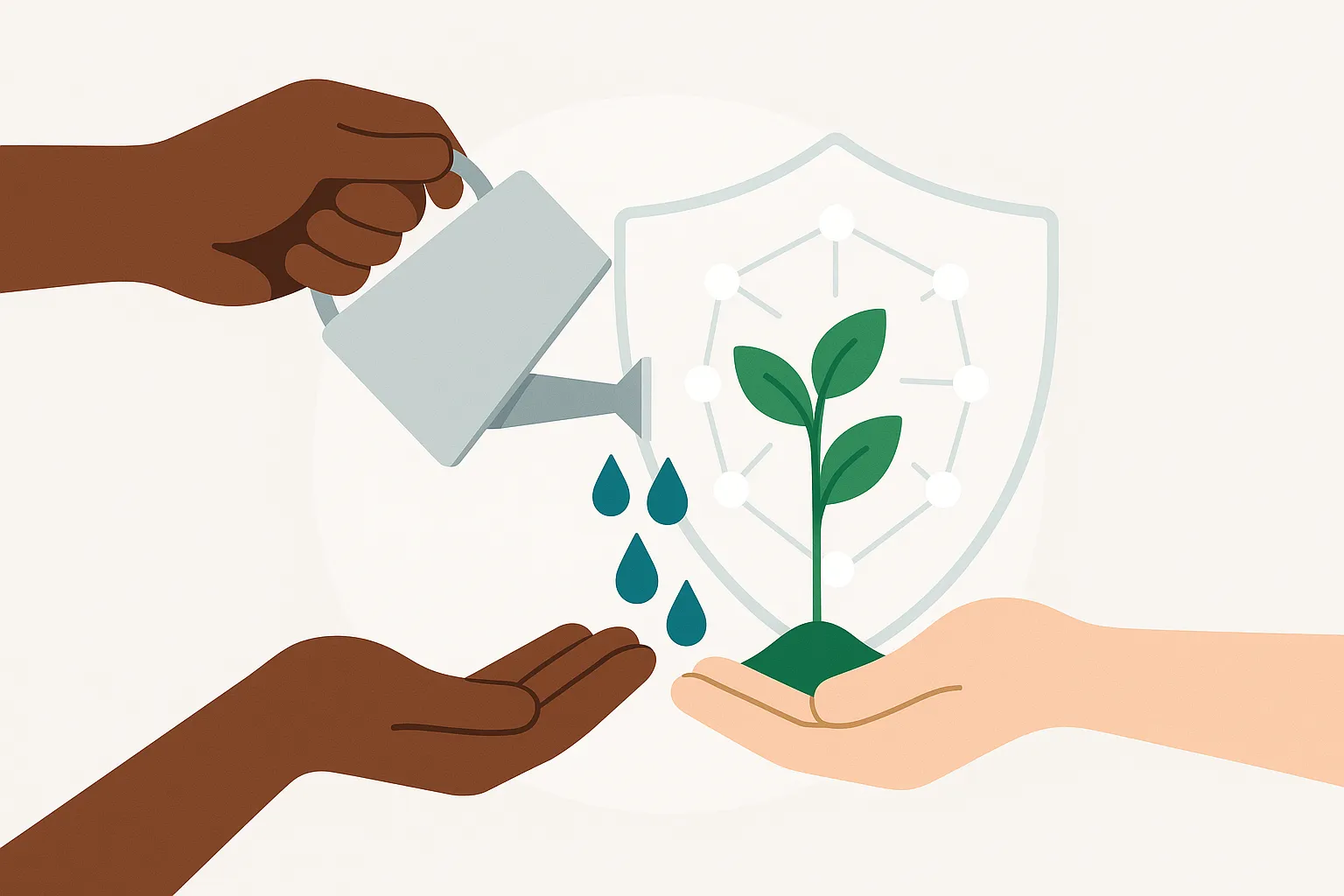
Trust is not given away with a flawless message; it is watered with gestures of transparency, coherence and humility. Showing the process (sources, verification criteria, even legitimate doubts) creates a space of co-responsibility where the audience can agree, question or contribute. That calculated vulnerability is the price of credibility in 2025: we assume we don’t know everything, but we demonstrate how we arrived at our conclusions.
Trust takes time, but once cultivated, it multiplies the impact of everything we do.