Storytelling vs. Storydoing: Boosting your strategic communication
Storytelling connects emotionally, while storydoing drives action. Learn when to use each to build stronger connections and measurable impact in your communication strategy.
Publishing data is not the same as generating understanding. Having reports on a country does not mean understanding it. And understanding it does not guarantee trust.
As we saw earlier, the difference between information and communication is more than semantic: it is the difference between transmitting and connecting. In international relations, that gap is amplified. Information flows constantly (development reports, impact assessments, context analyses), but it rarely becomes the kind of knowledge that builds sustainable collaborations or generates the expected social change.
We have more data than ever before, but trust between countries is at an all-time low. So, the question is no longer how to produce more information, but how to turn it into shared knowledge that builds trust through long-term collaborations and measurable results.
International organisations produce tons of information: impact studies, context mapping, lessons learned, and external evaluations. Everything is archived. Little is shared in a useful way, and even less is applied.
To better understand the context, I will use a fictional example: an international organisation implements development programmes in 50 countries over a decade. It produces 500 reports. When another country in the Global South wants to replicate a successful model, it finds no practical answers, only 80-page documents with no executive summary.
The result is predictable: every country, every organisation, every programme starts from scratch. Years are wasted reinventing solutions that have already worked in another context. Mistakes that someone documented but no one read are repeated.
But the deeper problem is not inefficiency. It is mistrust. When information is not shared horizontally, when knowledge is concentrated among certain actors, when data does not translate into practical collaboration, international relations become transactional, not transformative.
The difference between information and knowledge is the application of interpretation. Information is data and facts. Knowledge is when someone has already done the work of reading, filtering, reflecting on, and translating them into concrete guidance for the next decision.
This process is not automatic. It requires four intentional steps:
This process not only generates efficiency. It generates trust. Because when one country shares practical knowledge with another, without a hidden agenda, without paternalism, with transparency about what worked and what did not, sustainable relationships are built.
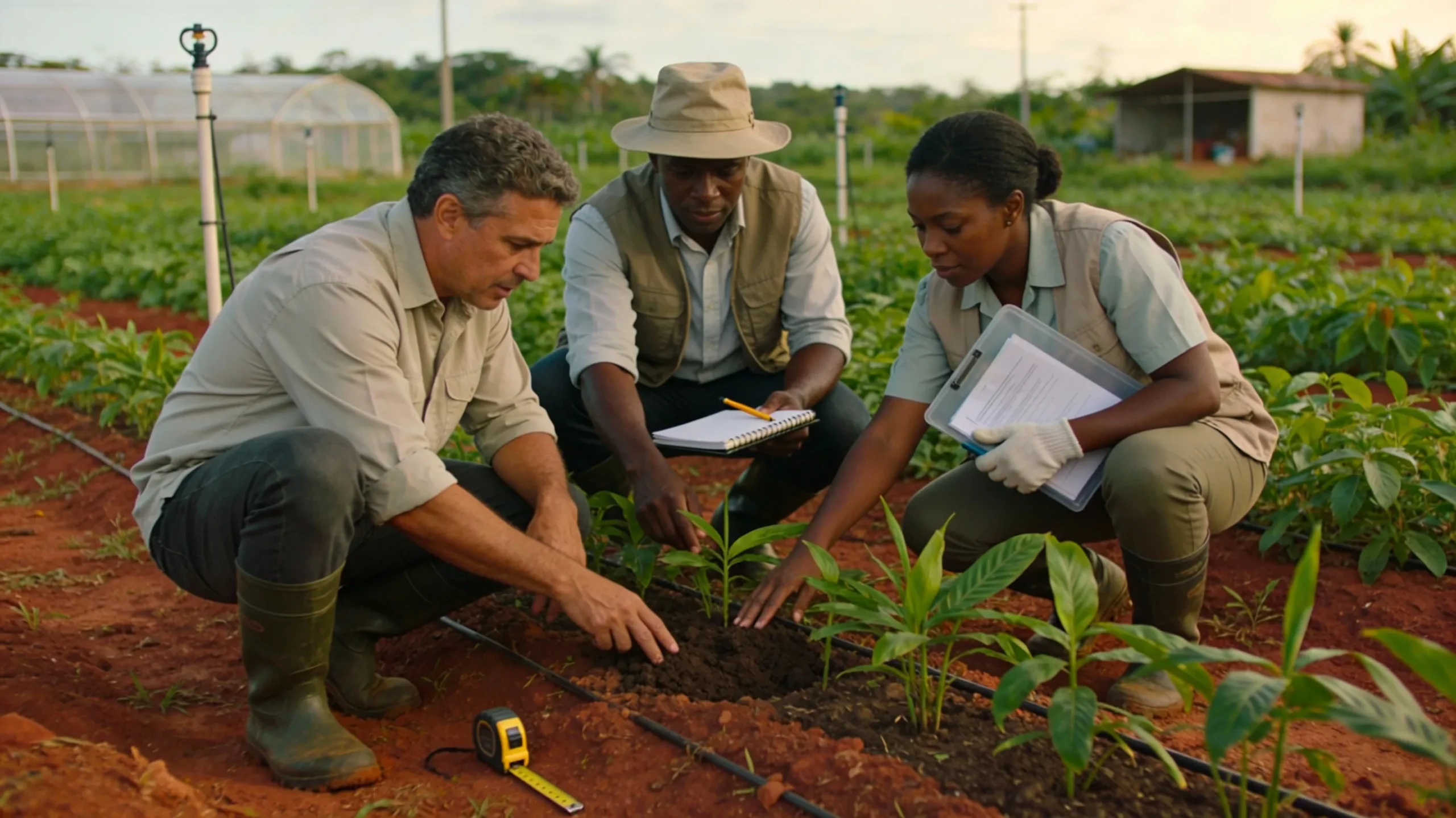
In March 2025, Brazil launched a strategic partnership with African countries to share the model that transformed its tropical agriculture. EMBRAPA, the Brazilian agricultural research company, turned 100 million hectares of the Cerrado (previously considered infertile) into an agricultural powerhouse.
Africa has 65% of the world’s unused arable land and 10% of its fresh water, but spends £30 billion a year importing food. Brazil had a similar context decades ago: acidic soils, complex tropical climate, dependence on imports.
The programme did not just send reports. Thirty African researchers travelled to Brazil for a technical exchange on regenerative agriculture, food security and land restoration. Knowledge was transferred through shared experience, not manuals.
Measurable results: by 2024, Brazilian exports to Africa had grown by 25%. But the most profound impact is the trust that has been built: Africa now has a partner in the Global South that has faced similar challenges and is willing to share solutions without imposing models.
Since 2017, India and the United Nations have implemented a £150 million fund for South-South cooperation: 84 projects in 62 countries, all driven by local demand, not external agendas.
Specific examples:
The model works because India does not export generic solutions. It adapts innovations tested in its own context to the specific needs of each country. Information (telemedicine technology, water infrastructure design) is converted into applied knowledge through direct technical collaboration.
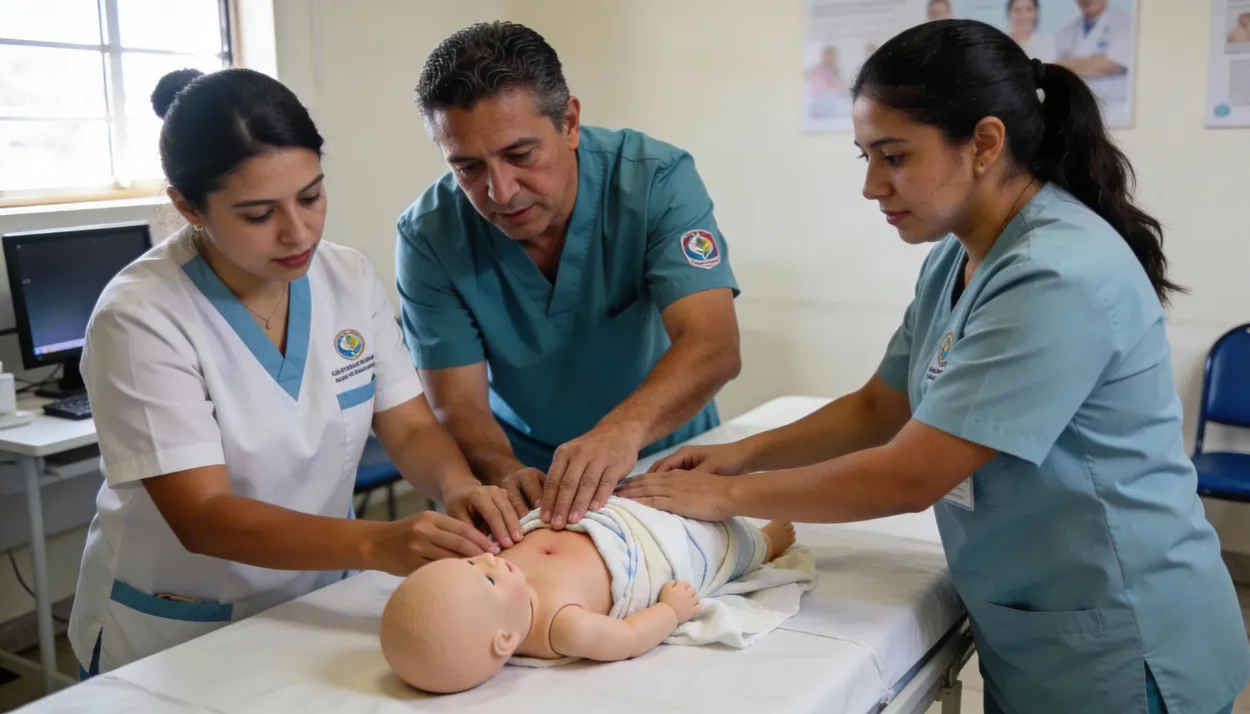
In Latin America and the Caribbean, 57% of deaths of children under 5 occur in the first 28 days of life. Colombia developed the Kangaroo Mother Method (skin-to-skin contact for premature babies) 40 years ago when its neonatal mortality rate was 70%.
Ecuador replicated the model in 2024, with a neonatal mortality rate of 4.6 per 1,000 births, adopting the method with technical support from Colombia. The programme included:
Measurable objective: to reduce neonatal mortality to 4.0 per 1,000 births, contributing to SDG 3 (Good Health and Well-being).
Colombia has already shared this knowledge with Bhutan, the Philippines, Indonesia, Pakistan, Kenya and Ghana. It is not a question of exporting a standard medical protocol, but of transferring a validated model that each country adapts to its health system.
The cases of Brazil, India, and Colombia work because they overcame structural obstacles that block most international programmes. Three barriers explain why so much information remains in files without being converted into practical knowledge.
Organisations and countries accumulate information as a “strategic asset” instead of sharing it. The reasoning is: “If I share what I know, I lose my competitive advantage. If others replicate my model, I lose relevance.”
This thinking kills cooperation. Information is stored in silos, mistakes are repeated because no one documented what went wrong, and each actor starts from scratch to protect their “differentiation.”
How South-South cases overcame this:
They operate under explicit reciprocity. Brazil did not “give away” knowledge to Africa; it established a partnership in which both parties generate learning. Africa contributes understanding of local contexts, and Brazil contributes proven agricultural technology. No one takes credit; both benefit.
The India-UN Fund works the same way: India finances, the UN facilitates, and recipient countries co-design. Everyone gains visibility, but no one monopolises knowledge.
The problem is not a lack of information. It is an excess of uncurated information. Eighty-page evaluations, technical reports full of jargon, presentations with 60 slides… all archived, nothing synthesised.
When someone needs to know “what works to reduce neonatal mortality in rural contexts?”, they don’t have time to read 15 complete reports. They need a synthesis with key lessons, valuable contacts and mistakes to avoid.
How South-South cases overcame this:
The India-UN Fund has dedicated knowledge managers who synthesise patterns across multiple projects and proactively share them. They do not wait for someone to search for information; they send executive summaries to relevant teams when they start similar programmes.
Colombia did the same with the Kangaroo Method: it not only published academic articles but also created practical guides (20-page manuals, training videos, checklists, etc.) that Ecuador could adopt immediately.
Decades of “North-South” cooperation left mistrust. Many countries in the Global South received “technical assistance” that imposed European or American models without adapting to local contexts. International consultants arrived with preconceived, one-size-fits-all implemented programmes that collapsed when funding ended and left.
The result: scepticism about any transfer of knowledge. “What hidden agenda does this programme have? What conditions come with this collaboration?”
How South-South cases overcame this:
South-South cooperation builds trust because it is grounded in shared experiences. When Colombia shares the Kangaroo Method with Ecuador, there is no paternalism. Both countries faced health systems with limited resources, both understand budgetary constraints, and both know the reality of rural areas without infrastructure.
Brazil and Africa share tropical climates, complex soils, and food security challenges. It is not a “developed” country teaching an “underdeveloped” one; they are partners with comparable contexts exchanging proven solutions.
This horizontality generates operational trust, not rhetorical communiqués. And trust is what turns information into applied knowledge.
The three cases above share a pattern:
If we do not measure the impact of knowledge sharing, it is impossible to improve or justify the investment of time. Successful South-South cases do not measure “reports delivered” or “workshops held.” They measure concrete results.
Three concrete indicators:
If these indicators grow, shared knowledge is generating trust. And trust is the basis of sustainable international relations.
The cases of Brazil, India, and Colombia did not work by accident. They worked because someone took responsibility for turning information into practical knowledge.
That role—knowledge manager—is what separates organisations that learn from their experience from organisations that accumulate it without applying it.
It is not about creating new structures. It is about someone within the organisation systematically asking:
International institutions, governments, NGOs, cooperation agencies, and companies: they all produce valuable information. Few invest in turning it into shared knowledge. And without that investment, the information remains in files, trust is not built, and each programme starts from scratch.
Shall we discuss how your organisation can get started? Connect with me on LinkedIn.

Storytelling connects emotionally, while storydoing drives action. Learn when to use each to build stronger connections and measurable impact in your communication strategy.

Having lots of data doesn’t mean you’re communicating effectively. Learn how to turn information into meaningful communication and achieve impactful strategies.

Balancing confidentiality and transparency is crucial in strategic communication. This blog explores practical ways to protect sensitive information while maintaining trust and visibility with stakeholders. Learn how to implement these principles in your organisation for better communication outcomes.