
Expert
Culture as democratic infrastructure: what can contribute to public trust
Culture can leave more than visibility behind. When it provides access, continuity and decision-making power, it creates valuable conditions for democratic life.


Do you identify with this frustration? “We have incredible stories and a real impact on our communities, but when we try to compete for international funding or appear in global media, it’s as if we were invisible.”
This experience is not unique. It is a pattern that repeats itself from Latin America to sub-Saharan Africa, from environmental movements to human rights organisations.
The problem is not the quality of the stories or the passion of those who tell them. It lies in something much more structural: how framing works in global strategic communication and who has the power to define which narratives scale up.
For grassroots organisations and the consultants who support them, this is one of the most complex challenges in the sector. Because it is not just a question of resources or techniques, but of understanding how power dynamics operate in international communication ecosystems.
The narratives that emerge from communities often have an emotional power and authenticity that large organisations envy. However, when these stories try to compete on global platforms, they face a problem of cultural and strategic translation.
A clear example of this can be seen in grassroots communication movements in Latin America, where collective experience becomes a tool for political construction. As the movement’s communicators explain: “Communicating from the grassroots is a collective process. It is more than taking a photo, posting a video on social media or writing a news story; it is a way of building a movement.”
The problem arises when these organic narratives must be adapted to formats, metrics, and languages that were not designed for them. Global platforms prioritise content that generates quick engagement, is easily shareable, and fits algorithms intended for mass audiences, rather than for sustained impact.
This gap is not only economic, although financial considerations are important. There is a gap in specific strategic capabilities, including knowledge of international markets, access to influential networks, understanding of global media cycles, and, fundamentally, the time needed to develop long-term communication strategies.
When organisations such as BOLT Safety manage to scale their impact, they do so by combining technology with more traditional human-to-human partnerships. However, this combination requires resources that many grassroots organisations lack: dedicated teams, budgets for content production, and, crucially, time to build these strategic alliances.
George Lakoff revolutionised our understanding of framing by demonstrating that “frames exist in the brain” and that we cannot simply insert facts into frames that do not match the cognitive structures of our audiences.
In international contexts, this becomes even more complex. Narratives of social change that work in one culture may be completely ineffective in another, not because of literal translation problems, but because they activate different mental frames.
For example, the concept of “community empowerment” that works well in international cooperation contexts may activate frames of “dependence” or “paternalism” in audiences that have experienced failed interventions. The same story, told with the same framing, generates opposite responses.

Metaphors are at the core of effective framing, but they are deeply rooted in culture. A Latin American environmental organisation that discusses “Mother Earth” is activating spiritual and relational frames that may not resonate with European donors accustomed to scientific and technical frames of “environmental sustainability”.
This disconnect is not superficial. As documented in the analysis of narratives in the Global South, there is a constant tension between maintaining the cultural authenticity of local narratives and adapting them for international audiences who operate with different conceptual frameworks.
One of the most complicated paradoxes of framing in social organisations is what we might call “the empathy trap”. Personal and emotional stories are exceptionally effective in generating initial attention and one-time donations, but they can be counterproductive in building long-term support for systemic change.
When a grassroots organisation tells the individual story of a person affected by poverty, it can generate compassion. But if that same story is not strategically framed, it can reinforce narratives of “victims in need of charity” rather than “citizens demanding justice.”
This tension is especially acute for consultants working with grassroots organisations, as they must balance the pressure to generate measurable short-term results (such as donations and visibility) with the long-term goal of changing systemic structures.
The key is to develop what we might call “layered narratives”: stories that work emotionally at first contact but also offer deeper analytical frameworks for audiences who want to understand structural causes.
The case of the PAN party in Portugal illustrates how a grassroots movement managed to scale precisely by developing this type of layered narrative. They began with emotional stories about animal welfare that resonated with broad audiences, but developed analytical frameworks on sustainability and ethics that enabled them to establish long-term political legitimacy.
Its initial budget of €30,000 for the 2015 elections shows that scalability does not always depend on massive resources, but instead on consistent strategic framing.
Power in global communication is not distributed neutrally. Social media algorithms, international media editorial criteria and the decision-making processes of major funders are designed – consciously or unconsciously – to amplify certain types of narratives over others.
A recent analysis of the international humanitarian system reveals that, despite decades of rhetoric about ‘putting people at the centre’, essential consultations with national NGOs, local authorities, and affected communities have not been carried out in a meaningful manner.
This systemic resistance to change is not accidental. As civil society representatives from West and Central Africa point out, the system remains “deeply resistant to transformational change” because structural incentives favour the maintenance of existing power dynamics.
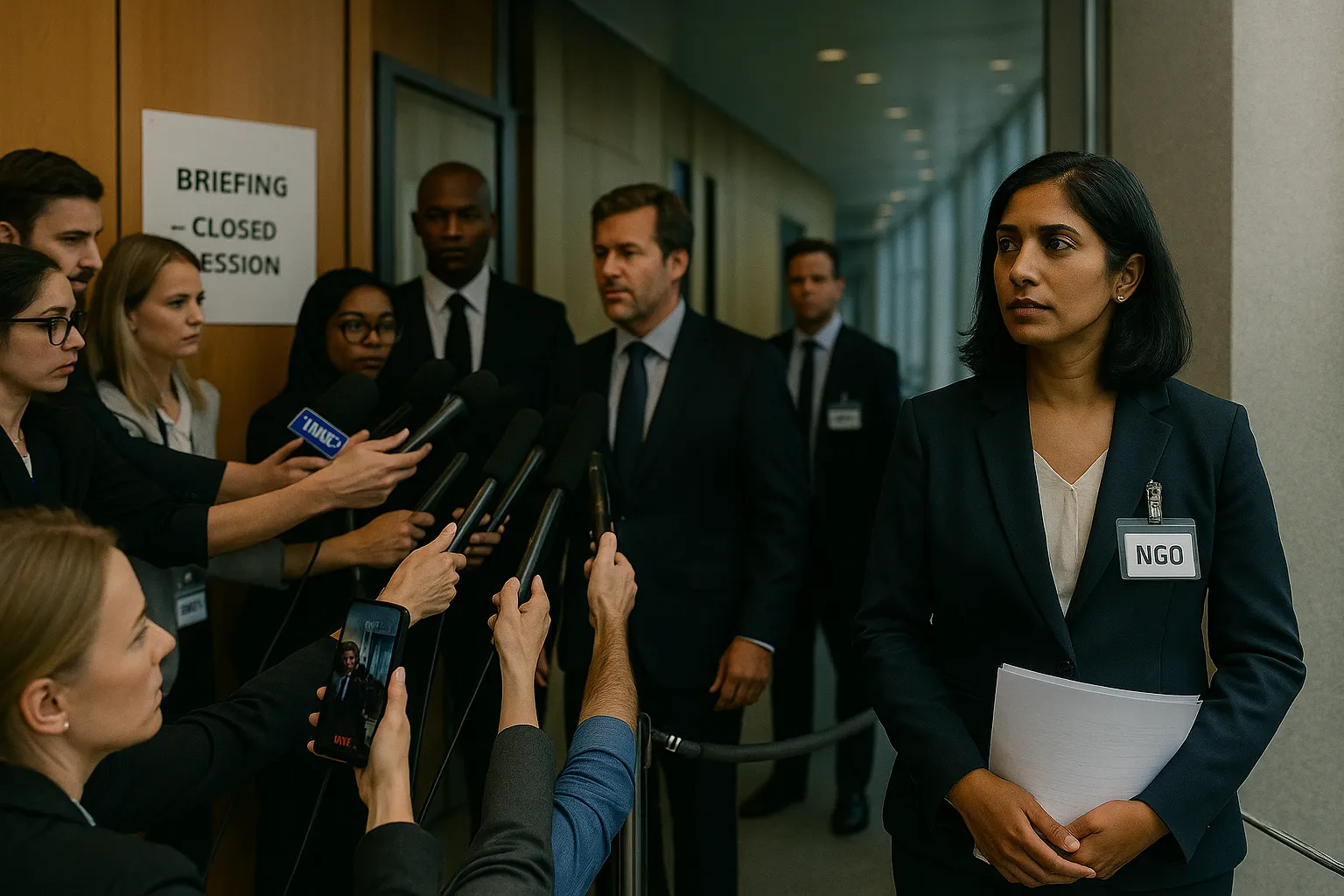
For grassroots organisations, this creates a fundamental strategic dilemma: partner with larger organisations to access global platforms, or maintain narrative independence at the risk of marginalisation?
There are no simple answers, but there are guiding principles. The most effective partnerships are those where grassroots organisations maintain control over their fundamental framing while accessing amplification resources. This requires careful negotiation and, often, the support of specialised consultants who can navigate these dynamics.
Based on patterns observed in cases of successful scalability, I propose a three-layer framework for grassroots narratives:
The obsession with social media metrics has distorted how we measure the success of communication. Likes, shares, and comments are essential, but they do not capture the real impact of narratives on policy change, movement building, or the long-term transformation of public opinion.
Organisations that manage to scale effectively develop more sophisticated measurement systems: they track changes in the language used by other actors, measure their influence on political agendas, and evaluate how other organisations adopt their narrative frameworks.
Global environmental movements offer an instructive example. Organisations such as those that promoted the Global Climate Strikes successfully scaled grassroots narratives by combining authentic personal stories (such as Greta Thunberg’s) with rigorous analytical frameworks on climate science and intergenerational justice.
Their success depended not only on resources but also on a sophisticated understanding of how different audiences process information about climate change and how to construct narrative frameworks that would work for both local activists and global decision-makers.
Framing in strategic communication is not a neutral tool. It is a battlefield where it is decided which stories have the power to change the world and which remain invisible. For grassroots organisations and the consultants who support them, understanding these dynamics is not optional; it is essential to achieving the impact they seek.
The good news is that with strategy and persistence, authentic narratives can compete and win in global communication ecosystems. But it requires going beyond intuition and developing specific strategic capabilities to navigate the complexities of intercultural framing.
The question is not whether grassroots communities’ stories deserve to be heard globally. The question is whether we are willing to develop the strategic capabilities necessary to make that happen.
What experiences have you had navigating these tensions between authenticity and scalability? I am interested in your perspective. Connect with me on LinkedIn to continue this conversation about the future of strategic framing in communication for social change.
Culture can leave more than visibility behind. When it provides access, continuity and decision-making power, it creates valuable conditions for democratic life.

Saying AI was used is not enough. This article explains when to disclose it, what a useful notice should include and how to document human review.

The EU AI Act for communications teams is about more than learning new tools. This guide explains the 2026 requirements and how to turn them into clear rules for use, review and transparency.