Expert
Culture for civic repair: how to reopen public dialogue
Cultural practices can support civic repair by creating recognition, shared presence and institutional learning without reducing culture to propaganda.

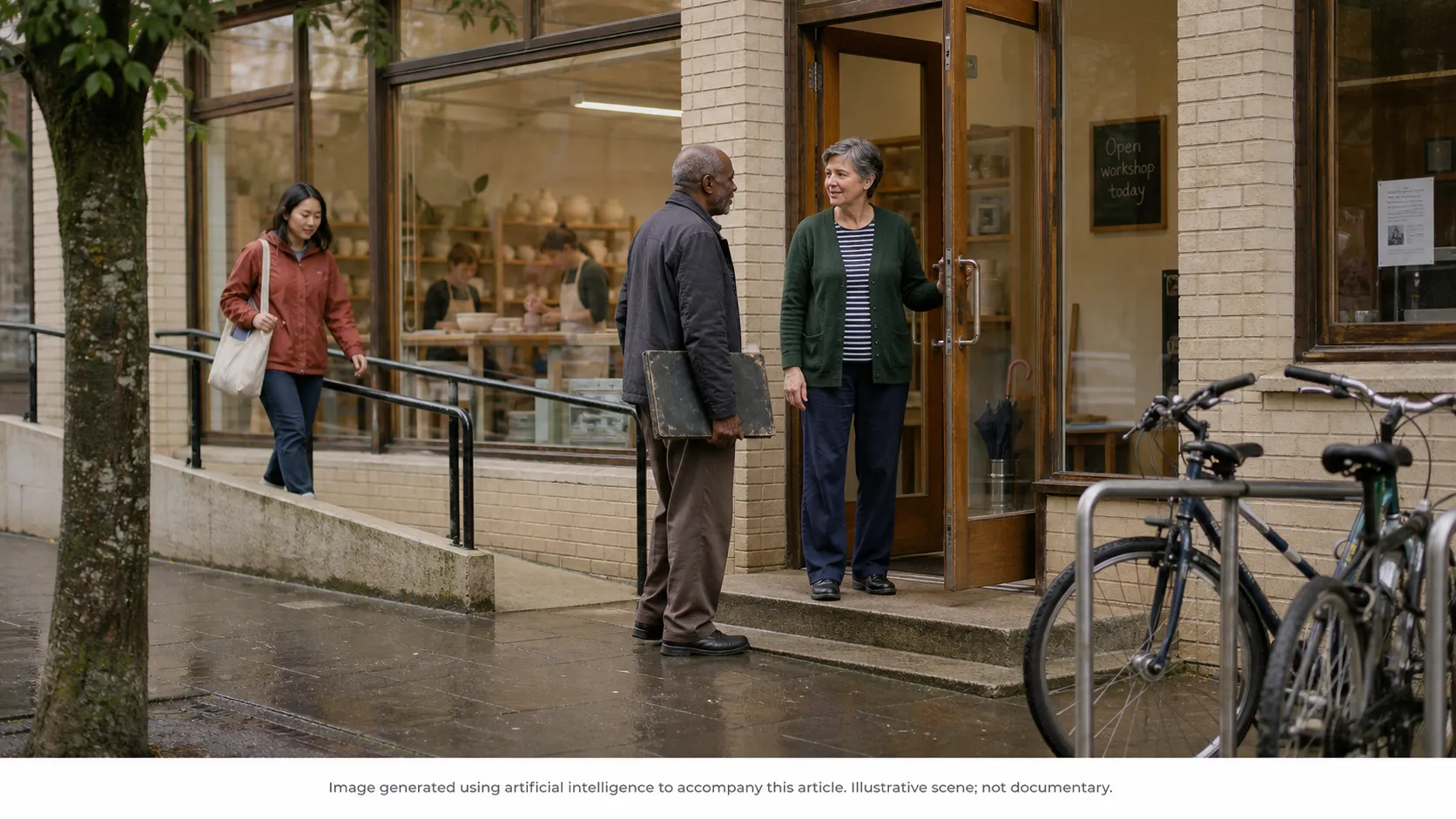
A festival ends on Sunday. By Monday, the team has photographs, attendance figures, press coverage and a collection of social media posts.
All of this demonstrates that the event took place.
But it leaves a more difficult question: what remains once the stage has been dismantled?
Perhaps some people have discovered a cultural space. Perhaps relationships have been forged between artists, organisations and institutions. Or perhaps the programme has ended exactly where it began: as a visible, well-publicised event with no lasting impact.
In recent years, cultural institutions and organisations have linked cultural participation to democracy, social cohesion and public trust. This promise should be handled with care. The report ‘Culture and democracy, the evidence’, produced for the European Commission, brings together research linking cultural participation to greater civic and democratic engagement. It also points out that significant inequalities in access persist.
Culture can contribute to public trust when it offers continuity, artistic freedom and the capacity for genuine participation. Its contribution lies in creating the conditions for encounter, expression and sustained relationships; trust will then depend on how the institution acts.
The word ‘infrastructure’ usually makes us think of buildings. A theatre, a library or a cultural centre are physical infrastructures, but the concept I am proposing – that of ‘democratic infrastructure’ – is broader.
It encompasses the time of those who coordinate, the resources to pay artists, translation, transport, accessibility, the freedom to raise uncomfortable issues, and rules that allow the community to influence decisions.
From this perspective, the building is just one part of the whole. Infrastructure takes on a democratic dimension when that space allows people to meet, create, disagree, participate in decisions and return.
This dimension depends on who participates, who can make proposals and decisions, which voices are given a platform, and how the ideas put forward are received.
The Culture Compass for Europe identifies access, participation, cultural diversity and artistic freedom as among the conditions that European policies must uphold. Its approach helps to shift the conversation away from event programming towards the conditions that make an open cultural life possible.
Therefore, talking about culture as democratic infrastructure means upholding places, relationships, rights and capacities that enable people to participate, express themselves and exert a continuous influence on collective life.
A campaign usually works with a message, an audience and a timetable. It can inform people quickly, mobilise them at a specific moment or raise the profile of a cause. And, if that is its aim, it can fulfil it very well.
A cultural process operates at a different pace. It can open up a space where people interpret, create and discuss, even when they do not reach a common conclusion. That space accommodates other perspectives, in addition to the message the institution wishes to convey.
When such participation is sustained over time, it can contribute to public trust. A community that sees an institution listening, honouring its commitments, explaining its limitations and nurturing the relationship experiences something quite different from a one-off initiative. Trust can grow out of that continuity and consistency.
The Irish Creative Places programme illustrates this difference. Since 2020, the Arts Council of Ireland has funded programmes in areas that had previously not received sustained investment in the arts. Each area has local coordination and develops its programme based on the community’s needs, opportunities and ideas.
By 2025, the organisation had rolled out the programme across 19 communities, investing five million euros and reaching 125,000 people. An evaluation commissioned from an external team found greater local pride, a stronger sense of connection and a heightened sense of cultural possibility.
The case of Creative Places does not prove that cultural investment generates democratic trust in every context. It does, however, show how the questions change when funding is directed towards time, coordination, local participation and continuity, rather than limiting success to attendance figures.
Culture does not arrive in a neutral space. It enters communities marked by inequalities, conflicts, shared memories and varying opportunities to make one’s voice heard.
A programme may use participatory language whilst continuing to give a voice to the same people. It may invite a community when the theme, budget and format have already been decided. It may also select only forms of expression that are convenient for the institution or use artists as spokespersons for a pre-determined message.
UNESCO points out that culture can build bridges, but it can also be exploited for divisive purposes. For this reason, the democratic value of a cultural space depends as much on its purpose as on its rules.
Artistic freedom acts as an important safeguard against such instrumentalisation. The Council of Europe emphasises that artists often bring to light problems, uncomfortable truths and issues that fall outside the usual political discourse.
An institution that supports culture must accept that it cannot control every interpretation. It may set legal, budgetary or security limits, but it must explain these clearly. If every outcome is required to confirm the official narrative, we are dealing with a cultural campaign, not a space for free creation.
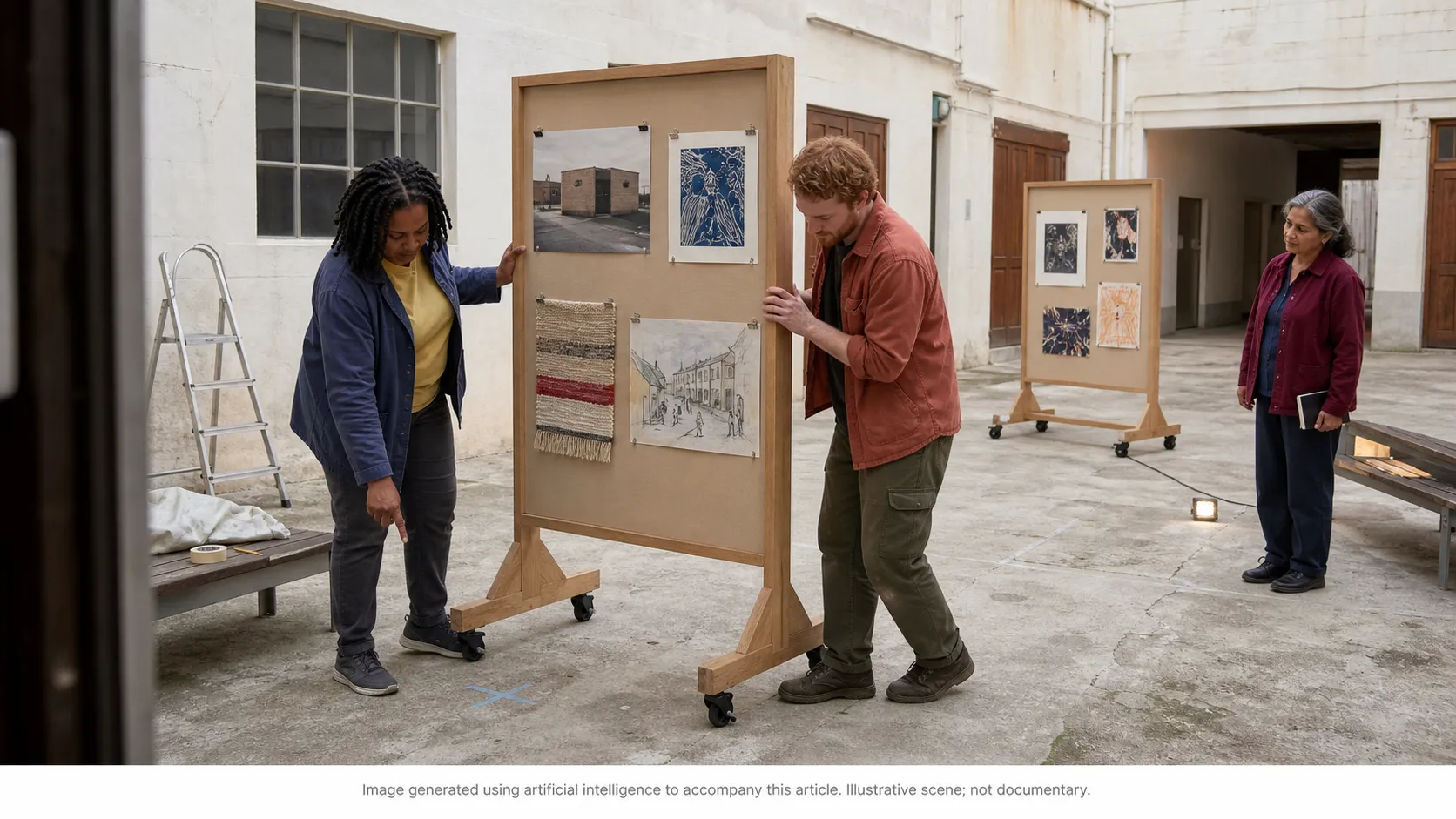
Co-creation has become a common term in European calls for proposals and programmes. Its use, however, encompasses very different experiences.
Seeking opinions on a programme that has already been designed is a consultation. Co-creation implies that contributions can alter some relevant part of the process: the agenda, the formats, the use of resources, the selection of participants, authorship or evaluation.
This does not mean that all decisions must be shared equally. An institution retains legal and budgetary responsibilities that it cannot delegate. The important thing is to explain from the outset what is open to decision, what limits exist and what return participants will receive.
Participation with the capacity to influence has also featured in recent European debates. At the 2025 World Forum for Democracy, the Council of Europe argued that making cultural policies more participatory involves reviewing how decisions are made, how resources are allocated and how citizens are invited to contribute.
The same approach has extended to international cultural relations. In 2026, the European External Action Service described a shift away from cultural promotion or exhibition towards mutual exchange, people-to-people relations and co-creation. Its principles include mutual trust and a long-term commitment to communities and cultural professionals.
In practice, sharing capacity requires time and resources. It also demands that local knowledge be remunerated, authorship recognised, and that the outcome may differ from what the funding body envisaged.
Attendance matters. It tells us whether an event reached a hundred people or ten thousand, whether the budget was reasonable, and whether the programme reached part of its intended audience.
However, this figure falls short when it becomes the sole measure of success. Knowing how many people attended does not tell us who was left out, how fully they were able to participate, whether they returned, what relationships emerged, or what the institution learnt.
UNESCO’s Culture|2030 Indicators framework combines quantitative and qualitative data through 22 thematic indicators and various sources. The lesson for a specific programme is simple: to measure effectively, one must look not only at the activity itself but also at the conditions it created.
Access can be analysed by looking at the diversity of participants, the barriers identified and the measures that proved effective. Decision-making capacity is assessed by comparing what was open to participation with what changed as a result.
Sustainability requires examining whether people return, whether new collaborations emerge, and whether resources or knowledge remain in the local area. The institutional relationship is best understood by asking whether commitments were clear, whether there was a return on investment, and how disagreements were managed.
Interviews, observation, stories of change and relationship maps complement the attendance data. A good evaluation system combines both types of evidence and acknowledges what cannot yet be attributed with certainty to the programme.
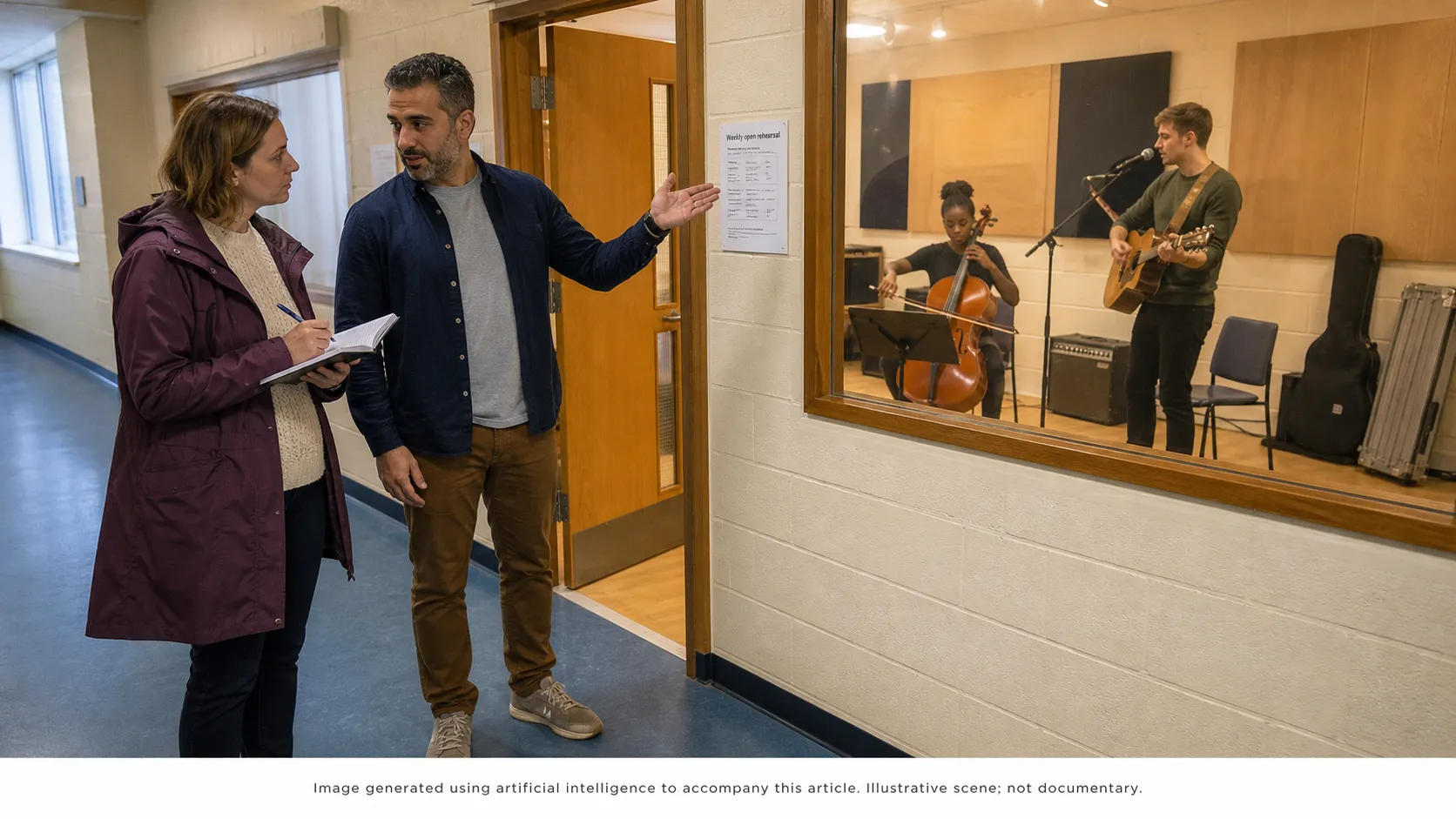
What should remain once the programme has ended? The answer might be a local network, new capacities, an accessible space, a relationship with artists, or a method of participation that the institution will continue to use.
In which decisions have people been able to participate meaningfully? Attending an activity, offering an opinion and having a say in its design are different forms of participation. It is worth explaining what scope for decision-making existed and what changed as a result of the feedback received.
Which individuals or groups are still being excluded? Presenting an activity as open to everyone does not guarantee equal access. Cost, distance, language, timetables, physical accessibility or the feeling of not being welcome can all act as barriers. Identifying these barriers is also part of the design process.
How much creative freedom remains? If the outcome is intended to confirm an institutional conclusion, the proposal needs to be presented as a communication initiative or themed programme, not as an open co-creation.
How will we know what has changed? The answer should include activity, access, decision-making capacity, continuity and learning, without promising democratic effects that the project cannot demonstrate.
Raising these questions early on helps to structure the design, clarify what kind of intervention we are creating, and discuss its outcomes with the necessary caution.
Culture can contribute to democratic life, something that is difficult to achieve through a one-off intervention: shared time to create, interpret, disagree and build relationships. This possibility arises when there is access, artistic freedom, continuity and a recognisable influence on the part of the participants.
It also requires institutional humility. Culture loses some of its democratic value when it is used to reinforce a closed message, embellish a decision or gain visibility. Its strength lies precisely in opening a space that the institution does not fully control, even though it remains responsible for how it funds and nurtures it.
When designing a cultural programme, it is worth looking beyond reach figures and asking what people will be able to achieve together and whether, once it is over, they will have more connections, knowledge or spaces in which to continue creating and participating.
If you work in culture, public communication or international programmes, I’d be interested to hear about your experience on LinkedIn: what would need to remain in place after a cultural project for us to be able to talk about democratic infrastructure, beyond the event itself?
It means sustaining spaces, resources, rights and relationships that enable people to create, participate and have some influence over the cultural life of their community. It includes buildings, but also continuity, accessibility, coordination, artistic freedom and decision-making capacity.
It must clearly distinguish its institutional objectives from creative freedom. It can set boundaries and responsibilities, but it needs to allow for plurality, criticism and outcomes that do not simply replicate its own discourse.
Co-creation is genuine when participants can influence key decisions. The team must clarify which aspects are open to input, how contributions will be incorporated, what limits exist and what the community will gain in return.
It is advisable to combine figures with qualitative evidence. In addition to attendance, one can look at barriers to access, diversity, continuity, new collaborations, decision-making capacity, learning and changes in the relationship between the institution and the community.
Not on its own. Culture can create opportunities for listening, participation and sustained relationships. Still, trust will also depend on the institution’s behaviour, its fulfilment of commitments, the distribution of power and the way it responds to disagreements.
This article is based on the topic, approach and editorial criteria defined by me. Artificial intelligence tools were used in its preparation to assist with research, organise the content and produce a first draft. Before publication, I reviewed the text to check the facts, linked sources, context, tone and final wording. I, Laura Mellado, approve the published version and accept editorial responsibility for it.
Cultural practices can support civic repair by creating recognition, shared presence and institutional learning without reducing culture to propaganda.
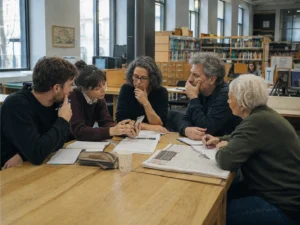
Media literacy should not sound like a lecture. Its value lies in helping people read, question, verify and participate more thoughtfully. Spotting a hoax is the starting point, not the destination.
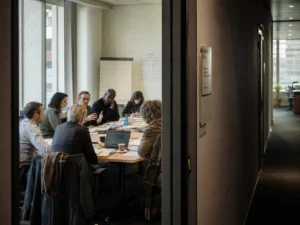
Diverse voices in a multi-stakeholder programme are not the problem. The problem is the absence of an architecture that organises them without silencing them. How to design narrative coherence when multiple actors, logics and audiences must communicate the same programme without fragmenting or becoming uniform.