Expert
Culture as democratic infrastructure: what can contribute to public trust
Culture can leave more than visibility behind. When it provides access, continuity and decision-making power, it creates valuable conditions for democratic life.

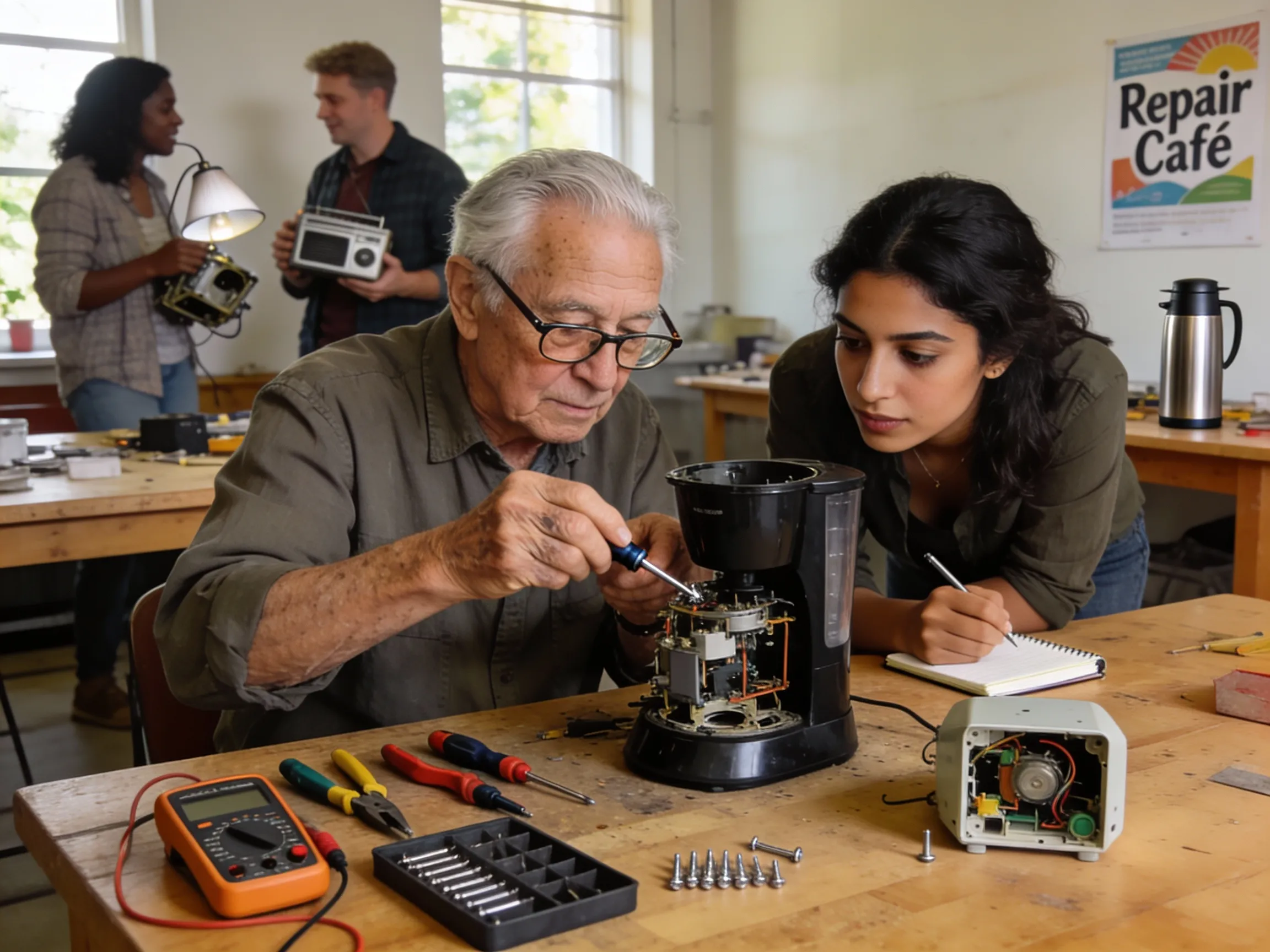
Your coffee maker breaks. You have two options: buy a new one for £40 or try to repair it (even though you don’t know how, don’t have the tools and can’t be bothered to find a technician). What do you do? Most people throw it away and buy a new one. Not because they don’t care about the environment, but because the circular option doesn’t seem viable, accessible or simple to them.
This everyday dilemma sums up the central problem with communicating the circular economy: 78% of Europeans recognise that environmental issues impact their daily lives, and 59% say they are willing to pay more for repairable or recyclable products. However, the repair sector in Europe fell by 15% between 2017 and 2019, from €23.5 billion to €20 billion: high awareness, good intentions, but behaviour in the opposite direction.
The gap is not one of information. It is a narrative. Technical accounts of the circular economy (tonnes of CO₂ avoided, recyclability percentages, life-cycle analyses) do not drive behaviour because they do not connect with the immediate problem, the tangible benefit, or the local community. Cultural narratives do. And there are documented cases that prove it.
Public institutions and environmental NGOs produce rigorous technical communication on the circular economy—reports with solid data, campaigns with the right messages, and well-founded policies. In 2022, the European Environment Agency documented that the repair sector in the European Union employed 149,000 people and generated €20 billion annually but had been in steady decline for years. The data exists, the evidence is clear, and the policies are formulated.
But when we ask European citizens, the figures reveal a disconnect: 66% separate waste for recycling (a stable behaviour since 2007), but the most transformative circular economy practices (repairing instead of buying new, choosing durable products, participating in local reuse systems) have not taken off at the same pace. The willingness to pay more for sustainable products even fell from 72% in 2007 to 59% in 2024, possibly due to inflation and a lack of tangible translation of that abstract commitment.
The typical technical narrative goes like this:
“The circular economy can reduce global greenhouse gas emissions by 45% by 2030 by optimising the use of materials, extending the life of products and improving recycling rates in key sectors such as construction, mobility and food.”
Correct, evidence-based, but completely ineffective in motivating anyone to act tomorrow.
The problem is not technical accuracy. It is that this type of message does not answer the questions people ask themselves: What does this mean for my life today? What do I gain by participating? How do I do it specifically? Who else around me is doing it? Without clear answers to these four questions, the circular economy remains an abstract concept that generates agreement but not behaviour.
In 2009, Martine Postma, a Dutch environmentalist and journalist, organised the first Repair Café in Amsterdam. The premise was simple: a space where people with broken objects could repair them with the help of expert volunteers, available tools and free coffee. There was no technical communication about circularity, no mention of tonnes of waste avoided, no request for long-term commitment: “Bring your broken coffee maker on Saturday, let’s try to fix it together, and if it works, you can take it home repaired.”
Fifteen years later, the Repair Café movement has more than 4,000 active groups globally, has recorded more than 208,000 repair attempts in its public database, and estimates that nearly 190,000 successful repairs are made each year. In 2024, the repair success rate reached 62%, and in that year alone, 37,000 repairs (a historic record) were recorded at 19,986 community events.
It is not just about quantity. It is a documented change in behaviour.
An academic study published in 2024 by Utrecht University analysed what motivates people to attend Repair Cafés and what impact this has on their subsequent behaviour. The results show that participants develop a “shift in mindset from disposable consumerism to a sustainable approach.” The three driving factors identified were: genuine environmental concern, access to the skills of volunteer repairers, and the desire to demonstrate the importance of repair to others.
Most relevant for sustainability communicators: Repair Café does not communicate in technical terms; it communicates through direct experience. It does not say “repairing reduces emissions by X%.” It says, “your coffee maker works again, you have learned how to repair it, and you have met your neighbour who also brought their toaster.” Immediate tangible benefit, concrete action completed, local community built.
So much so that several European countries have integrated the model into public policy: France reduced VAT on repair services and implemented the Reparability Index in 2021 (the first European country to do so), Sweden, the Netherlands and Belgium applied similar measures, and the European Directive on the Right to Repair approved in 2024 explicitly mentions Repair Cafés as an example of good community practice.
What makes the Repair Café narrative drive behaviour when campaigns with larger budgets and technically flawless messages fail to do so? There are four specific narrative elements that any circular economy programme can replicate.
The Repair Café does not talk about “electronic waste” or “planned obsolescence”. It talks about your coffee maker, which stopped working this morning, and now you don’t know whether it’s worth paying £35 to repair it when a new one costs £40. That is the real problem that a person is experiencing, not an industry statistic.
Translation for institutional communicators: Instead of “The EU generates 12 million tonnes of textile waste per year”, try “That jacket you haven’t worn in two years: do you throw it away, donate it or transform it?” Same topic (textile waste), different entry point (the reader’s wardrobe, not European tonnes).
When someone repairs their coffee maker at a Repair Café, the benefit is immediate and tangible: it works again, you saved £35, you learned how to do it, and you have the tool or knowledge for next time. It’s not “you will contribute to reducing CO₂ emissions by 2050”. It’s “your coffee maker works now”.
The Utrecht University study identified access to volunteer repairers’ skills as one of three motivating factors. People don’t just want the object repaired; they want to learn how to fix it themselves. That immediate empowerment (knowing you can do it) is stronger than any data on future environmental impact.
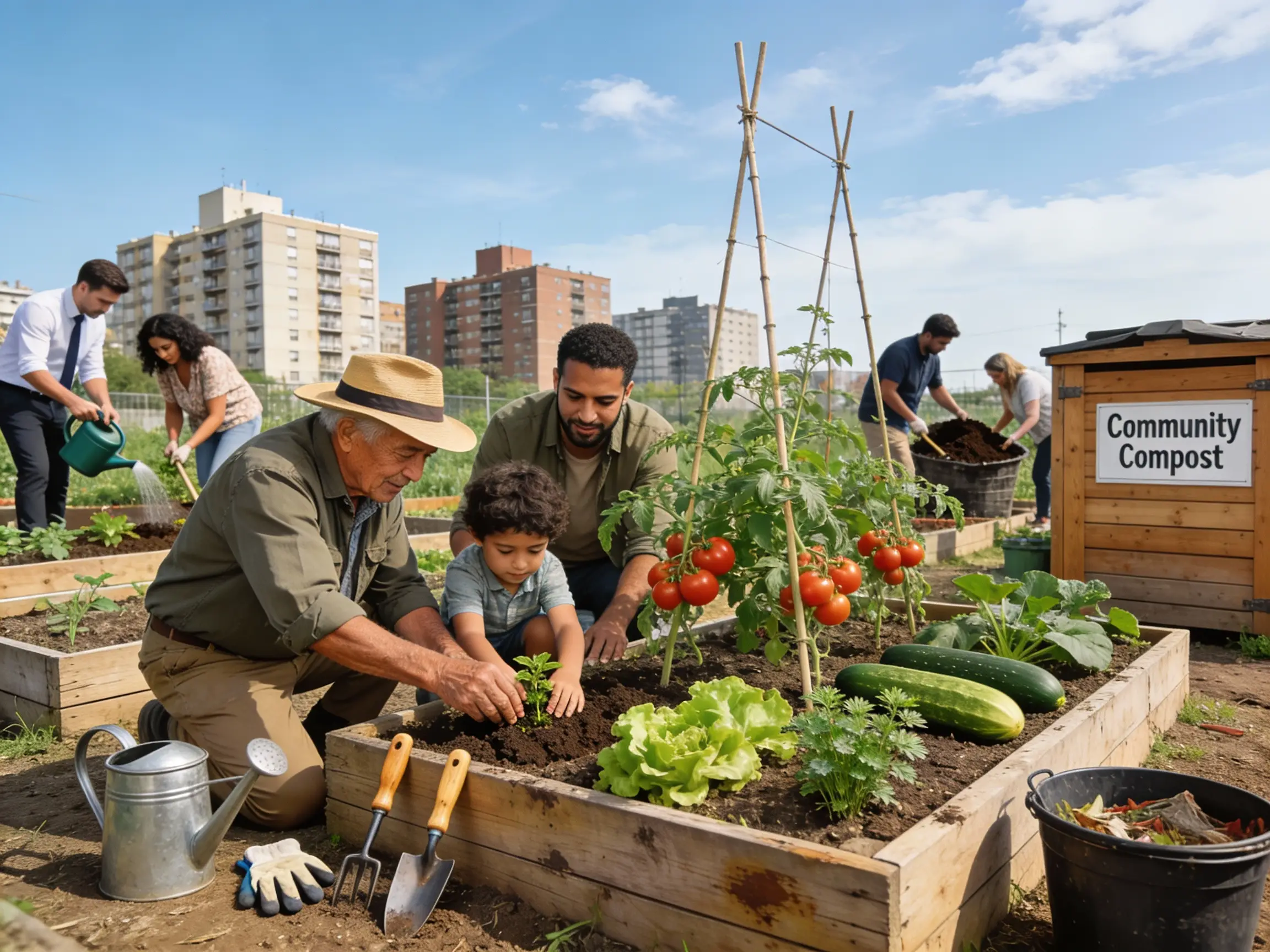
Translation for environmental NGOs: Instead of “Composting reduces your carbon footprint,” try “Composting your kitchen scraps gives you free fertile soil for your plants in 3 months.” Same behaviour (composting), different benefit highlighted (visible and functional result for you, not just for the planet in the abstract).
The Repair Café does not say “we should repair more”. It says “Saturday 10:00-14:00, X Street, number Y, bring your broken item, free admission, no prior registration required”. Date, time, place, what to bring, what to expect. Zero friction between intention and action.
With a 62% repair success rate, the chances of your item working again are high. And if it doesn’t work, at least you tried with expert help and the right tools, at no cost. The barrier of “I don’t know how or where” disappears.
Translation for policymakers: Instead of “We promote sustainable mobility,” try “New cycle route: 4 km protected from neighbourhood X to the city centre, opening 15 January, free bike hire for the first month.” Same policy (sustainable mobility), different communication (specific action that someone can take tomorrow).
Each Repair Café creates a temporary community: participants who bring objects, volunteer repairers who share their knowledge, conversations while waiting their turn, and success stories told afterwards. The Utrecht study highlights that one driver is “showing others the importance of repair”. It’s not just about repairing your coffee maker, it’s about becoming an example to your neighbour, your family member, your co-worker.
With 19,986 documented events, the Repair Café has generated 19,986 temporary local communities, each with its own stories, lessons learned and human connections. This social dimension (doing something with others, not just individually) is what turns a one-off act (repairing an object) into a cultural practice (repairing is something “we” do here).
Translation for cultural institutions: Instead of an exhibition on sustainability with information panels, try participatory workshops where visitors repair, transform or create with reused materials, and at the end share photos/stories on social media with a common hashtag: same theme (sustainability), different experience (visible collective action vs. passive consumption of information).
The Repair Café case works because it combines four narrative elements in a replicable format. But not all circular economy initiatives can (or should) replicate that exact format. What is transferable is not “set up a Repair Café”, but “apply the four narrative elements to your specific context”.
Example 1: Circular public procurement policy
Typical technical communication:
“The city council will implement circularity criteria in 40% of public tenders by 2026, prioritising products with extended useful life, recycled content and repairability options in accordance with European regulations.”
Applying the four elements:
Example 2: NGO campaign on circular fashion
Typical technical communication:
“The textile industry generates 10% of global CO₂ emissions and consumes 93 billion cubic metres of water annually. Buying second-hand significantly reduces environmental impact.”
Applying the four elements:
If we communicate the circular economy through local stories rather than technical data, how do we measure whether it works? The indicators change, but they do not disappear. The Repair Café case study shows three key metrics that institutions and NGOs can adapt.
More than 4,000 active Repair Café groups globally represent 4,000 local organisational commitments (someone coordinates, someone provides space, someone recruits volunteers). More than 208,000 registered repair attempts represent 208,000 individual commitments (people decided to bring their items instead of throwing them away).
Translated into your programme: If you launch a circular initiative, measure how many people/organisations sign up, register, and publicly commit. Not just how many are “aware” of your campaign (awareness metric), but how many take concrete action (commitment metric).
A 62% repair success rate in 2024 means that 6 out of 10 people who brought in a broken item got it repaired. But more importantly, the University of Utrecht study documents that participants develop a “shift in mindset towards a sustainable approach,” which implies repetition of the behaviour (next time something breaks, they try to repair it instead of automatically throwing it away).
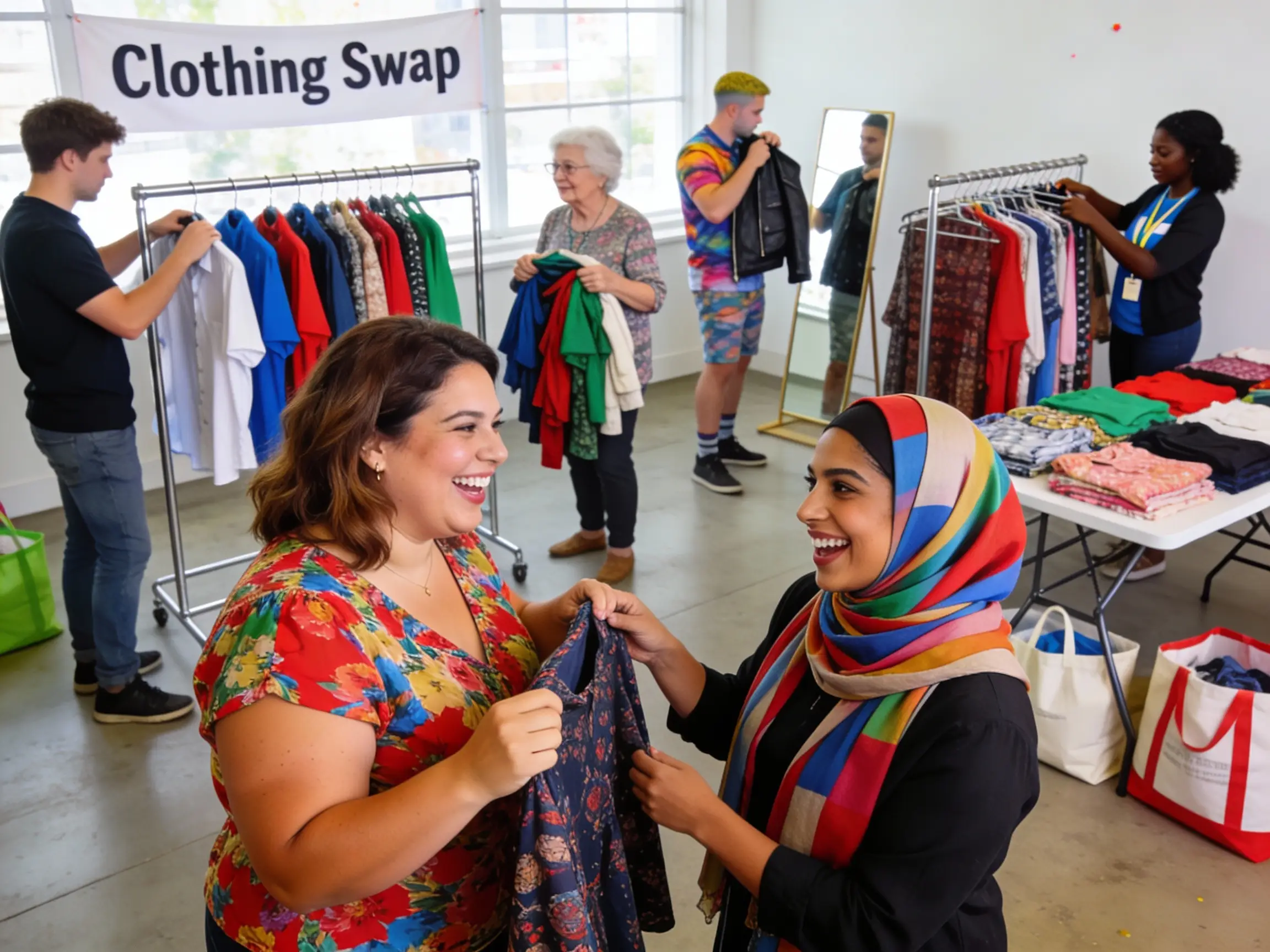
Translated to your programme: Measure not only how many participate once, but how many repeat. If you organise a clothing swap, how many return to the next event? If you facilitate community composting, how many continue to use bins after 3 months? One-off adoption vs. change in practice.
The documented events have generated thousands of stories told by participants: photos of repaired objects, testimonials from volunteers, articles in local media, and mentions on social media. These stories are cultural narratives in action: citizens telling other citizens why it is worthwhile.
Translated to your programme: Measure how much content participants generate (not just what you produce). Photos, videos, posts, testimonials, articles. If your circular initiative generates zero spontaneous stories from participants, it is probably not connecting emotionally. If it generates many, you have evidence that the narrative is working.
Take any circular economy initiative you are communicating (public policy, institutional programme, NGO campaign, etc.) and apply these four steps. If you cannot complete all four clearly, your communication is probably too technical or abstract.
Visual canvas (complete each section):
What specifically does the person gain by participating? (Tangible benefit, not an abstract future promise)
[Example: Coffee machine works again + €40 saving + I learn how to repair it]
What exactly must they do, when, where, how?
[Example: Saturday 10:00-14:00, X Street, bring broken item, free admission]
Who are you doing this with? What community is being created? How is the experience being shared?
[Example: Meet neighbours, volunteer repairer teaches, share photo of repaired object]
If any section is left blank or very vague, review your communication. You are probably using technical language that does not connect with the experience people are looking for.
78% of Europeans recognise the environmental impact on their lives, but the repair sector fell by 15% in two years. That gap cannot be closed with more technical data. It is closed when we translate the circular economy into everyday experience: your coffee maker, your neighbourhood, your savings, your community.
The Repair Café case study shows that local, tangible, community-based narratives drive behaviour where technical reports and awareness campaigns fall short. Not because the data doesn’t matter, but because it alone is not enough. People don’t change their habits because of global statistics. They change when they see the immediate benefit, with clear action and a community that validates it.
If you work in sustainability communications, the question is not whether your messages are technically correct (they surely are). The question is: do they answer the four questions that people ask themselves? Everyday problem, visible benefit, concrete action, local community. If any of these are missing, you have room for improvement.
Are you facing this gap between awareness and action in your organisation? Let’s talk on LinkedIn.
Culture can leave more than visibility behind. When it provides access, continuity and decision-making power, it creates valuable conditions for democratic life.
Saying AI was used is not enough. This article explains when to disclose it, what a useful notice should include and how to document human review.

The EU AI Act for communications teams is about more than learning new tools. This guide explains the 2026 requirements and how to turn them into clear rules for use, review and transparency.