
Expert
How to communicate difficult public decisions without sounding defensive
A decision may be well-founded yet still come across as poorly explained. This happens in a call for proposals where many organisations are left out.

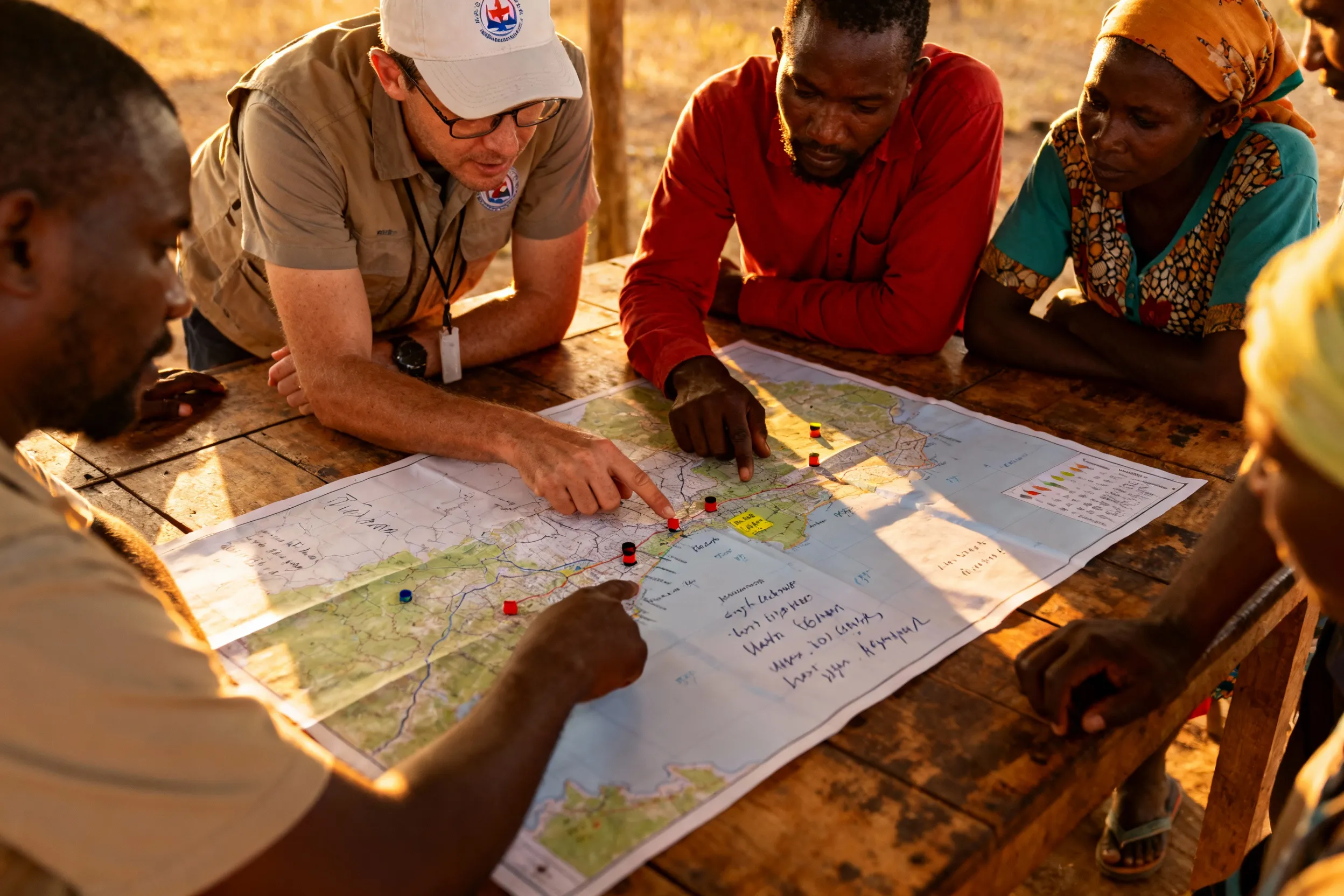
How many workshops did you organise? How many people did you train? These questions do not measure social impact. They measure activity. Every year, hundreds of projects justify budgets with participation figures, the number of events, or the number of materials distributed, while real change (relationships built, behaviours transformed…) remains undocumented.
The problem is not a lack of willingness to measure. It is that traditional Monitoring, Evaluation and Learning (MEL) systems stifle the creativity that social projects need to adapt to local contexts. Logical frameworks with 40 predefined indicators, weekly reports during implementation, and rigid logical matrices that do not capture what is emerging—the result: teams that spend more time filling out forms than generating impact.
But there is a model that balances rigour and freedom. The United Nations Development Programme (UNDP) developed Outcome Harvesting, a retrospective measurement approach that captures real changes without predefining everything before starting. Tested in more than 140 countries by the UNDP, World Bank, UNICEF and multiple NGOs, the results show that it is possible to measure social transformation without bureaucratising the process.
Most projects report outputs (what they did), not outcomes (what they achieved). This confusion has direct consequences for international cooperation:
Funders ask for “evidence of impact,” but receive counts of participants or numbers of activities carried out. MEL managers design logical matrices with dozens of indicators that no one completes because the team is in the field solving real problems. Project teams view evaluation as an externally imposed administrative burden, not a tool for learning and improvement.
This tension between measuring and acting is especially critical in projects that require constant adaptation. A community-strengthening project cannot accurately predefine what changes will occur in 18 months. The reality on the ground generates emerging results that no logical framework can anticipate.
The problem lies in the measurement logic. Traditional MEL systems assume that you can predict and plan all outcomes at the outset. But social change does not work that way.
The UNDP operates development projects in more than 140 countries. They cannot afford to measure poorly. For more than a decade, they have been implementing Outcome Harvesting, a methodology that reverses the traditional logic of evaluation.
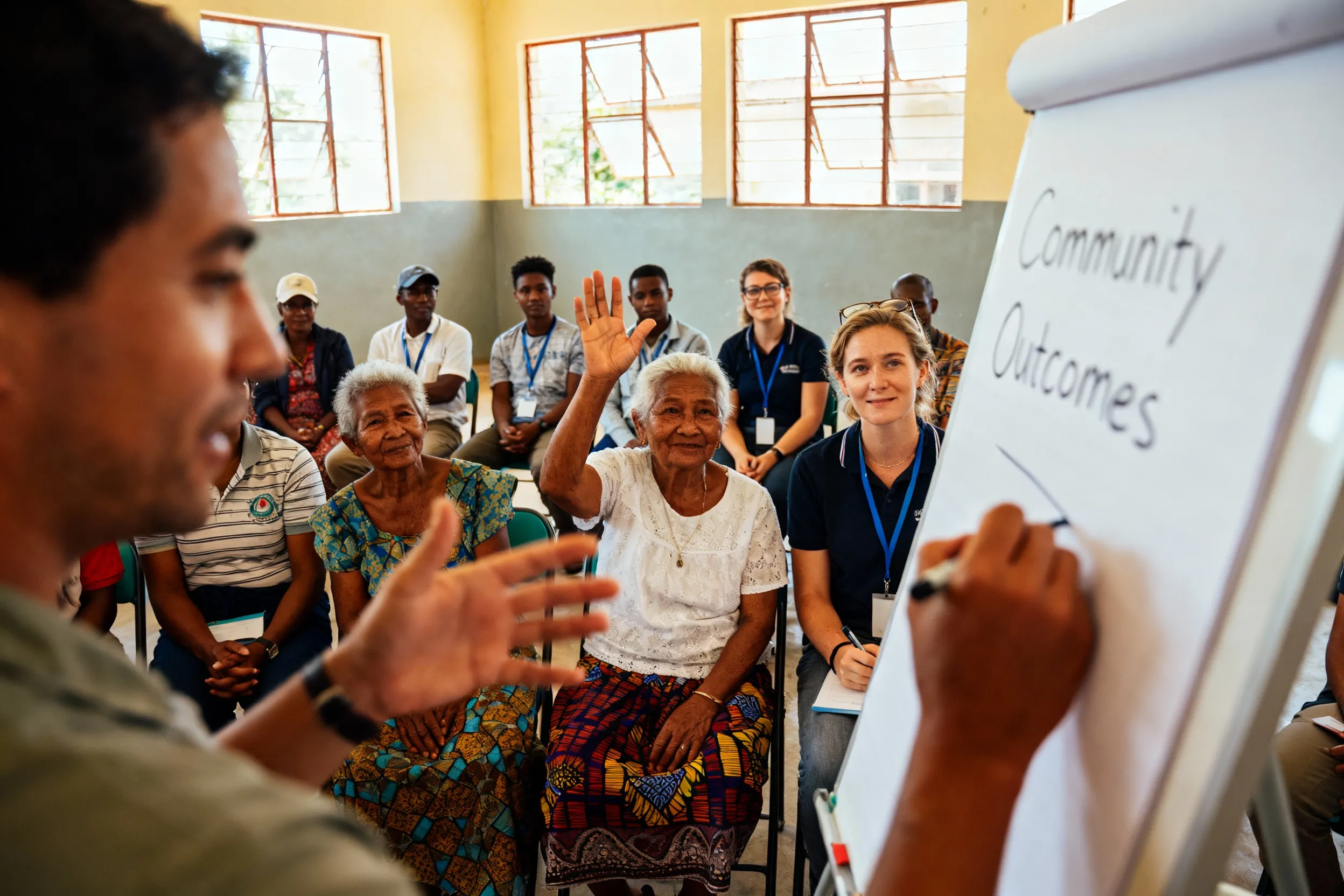
It is not an abstract metric. It is a retrospective and participatory measurement approach that identifies changes (outcomes) that have already occurred and documents how the project contributed to those changes. It validates the information with independent third parties.
Instead of asking at the outset, “What changes do we hope to achieve?” (predictive), they ask during and after, “What actual changes occurred and how did we contribute?” (retrospective). This difference frees teams from having to predict the unpredictable.
Solid waste management in Bosnia and Herzegovina: The project did not predefine rigid indicators of “success.” During implementation, they captured emerging outcomes: institutional reforms that improved communication among municipal stakeholders, technical solutions tailored to specific local conditions, and unplanned institutional capacity building. The project generated systemic changes that no logical framework had anticipated.
World Bank evaluation across multiple countries: The World Bank implemented Outcome Harvesting in public-sector reform projects. Documented results: changes in leadership and institutional authorisation environment, reforms through adaptive learning (rather than rigid planning), results-oriented problem solving rather than compliance with predefined activities.
Community health project (case not specified geographically in UNDP): Outcome Harvesting revealed unexpected changes: greater health awareness in the community beyond direct participants, improved health-seeking behaviour, and strengthened community ties (social capital not anticipated as an outcome).
These cases share a pattern: the most valuable outcomes were not in the original plan.
Outcome Harvesting has four characteristics that balance rigour and creative freedom:
No rigid predefined indicators. It does not require defining 40 KPIs at the start of the project. The team identifies observable changes as they occur, without being limited by a closed list of “expected results”.
Participatory data collection. It involves direct beneficiaries and stakeholders in the formulation of outcomes. Participants are not “subjects of evaluation”; they are co-evaluators who identify what has changed in their contexts.
Validation with independent third parties. Each documented result is verified with actors outside the project (local authorities, neighbouring organisations, independent experts). This ensures rigour without bureaucratising day-to-day implementation.
Focused retrospective evaluation. The team operates freely. Results are collected systematically at specific times (mid-project, end of project, post-project follow-up), not weekly. There are no daily forms or reports to interrupt the action.
You don’t need a big budget to apply Outcome Harvesting. You need to change the measurement logic: from predictive to retrospective, from extractive to participatory.
The right question is not “Did we meet the indicators in the original plan?” but “What real changes occurred in behaviours, relationships, actions or policies?”
Specific examples of documented emerging outcomes:
An urban micro-enterprise project generated unplanned local female leadership. The women who participated not only increased their income (expected outcome) but also took on roles representing the community before municipal authorities (emerging outcome).
An institutional reform project in the public sector found that its most significant impact was a change in the “authorisation environment”: hierarchical superiors began to allow experimentation within technical teams, something no indicator had been designed to measure.
The case of Bosnia and Herzegovina in waste management showed that improved communication among municipal stakeholders had a greater impact than the technical solutions implemented.
These changes would not have been captured with rigid predefined indicators; it is retrospective measurement that makes them visible.
Outcome Harvesting is not anecdotal storytelling. Each documented result is validated with actors independent of the project:
Validation with local authorities: Do they confirm the reported change?
Triangulation with neighbouring organisations: Did they observe the same transformation?
Verification with sector experts: Is the change significant in that specific context?
This external validation process ensures rigour without requiring heavy monitoring systems during implementation. Verification occurs afterwards, concentrated at key moments.
The most advanced Outcome Harvesting model incorporates real beneficiary participation in the design and implementation of the evaluation. UNICEF implemented this in six African countries (Mozambique, Namibia, Uganda, Malawi, Tanzania, Zimbabwe) with documented results:
One hundred twelve adolescents formed evaluation panels that collected peer voices through 73 interviews and focus groups. The adolescents did not respond to surveys designed by adults. They co-designed the questions, conducted interviews, analysed data, and generated recommendations. Of the 112 participants, 11 adolescents formed a regional advisory group that validated findings and provided feedback on conclusions before publication.
The achievement: unexpected results emerged because young people asked questions that external evaluators would never have thought of. Participants took ownership of the project because they saw that their voices really mattered. Post-project sustainability improved because beneficiaries deeply understood what worked and what did not.
This participatory approach is not just “good ethical practice.” It is a rigorous methodology that captures information that other evaluation types miss.

Use these four questions/diagnoses to assess whether your measurement system balances rigour and creativity:
If your final report says, “we met 15 of 18 predefined indicators,” you are measuring adherence to the plan. If it says, “we identified eight significant changes, 3 of which were unplanned but critical,” you are measuring real impact.
Do beneficiaries respond to surveys designed by your team (extractive) or do they co-design what to ask, how to collect data, and how to interpret findings (participatory)? The difference determines what information you will obtain.
Documenting changes without external verification is anecdotal. Does your system include validation with local authorities, neighbouring organisations, and sector experts? That triangulation turns stories into evidence.
If your team completes weekly “progress towards indicators” forms, you are interrupting action with bureaucracy. If you evaluate retrospectively at key moments (midway, closure, follow-up), you are unleashing operational creativity.
The dilemma between evaluative rigour and operational freedom disappears when you change the logic of measurement. Lightweight KPIs do not mean vague KPIs. They mean indicators that capture real change (behaviours, relationships, actions, policies) rather than compliance with predefined activities.
Outcome Harvesting demonstrates that such a model works on a global scale: implemented in 143 countries by UNDP and used by the World Bank, UNICEF, and multiple NGOs. But you don’t need to operate in 143 countries to apply these principles. You need clarity on what constitutes real change in your context, a willingness to capture what is emerging, rigorous external validation, and beneficiaries as co-evaluators.
Does your organisation measure social transformation or count activities?
If you work on cooperation projects where traditional evaluation stifles creativity, I am interested in hearing about your experience. Let’s connect on LinkedIn and continue this conversation.
A decision may be well-founded yet still come across as poorly explained. This happens in a call for proposals where many organisations are left out.
A campaign can carry a responsible message while being distributed through an experience that pressures people. Trust is also designed.
Cultural practices can support civic repair by creating recognition, shared presence and institutional learning without reducing culture to propaganda.